
UCL CV Examples and Templates
UCL attracts ambitious postgraduate students from across disciplines and around the world. Your UCL CV should clearly communicate your academic background, research interests, and future direction.

- Our customers have been hired by : *Foot Note
Preparing a strong CV is an important part of your UCL postgraduate application. Whether you are applying for a Master’s, a research degree, or a professional programme, your UCL CV should clearly demonstrate academic achievement, subject expertise, and future direction.
University College London values intellectual curiosity and interdisciplinary thinking, so your CV should reflect these qualities.
On this page, you will find:
- UCL CV examples to guide your structure
- Professional CV templates designed for postgraduate study
- Step-by-step advice on writing a CV for UCL applications
- Answers to common questions about UCL CV requirements
Smarter writing with built-in AI
Get instant, high-quality text suggestions tailored to your specific industry.
SEARCH ALL CV EXAMPLES
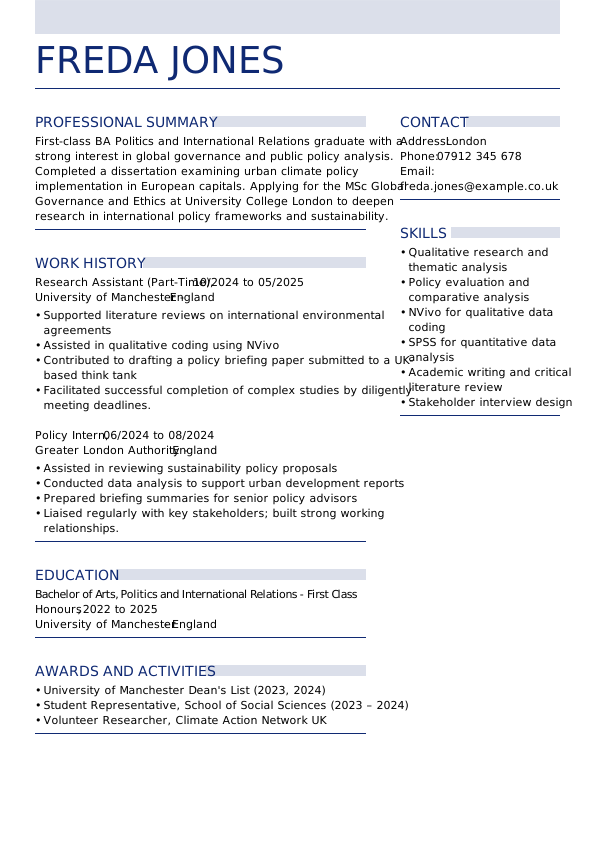
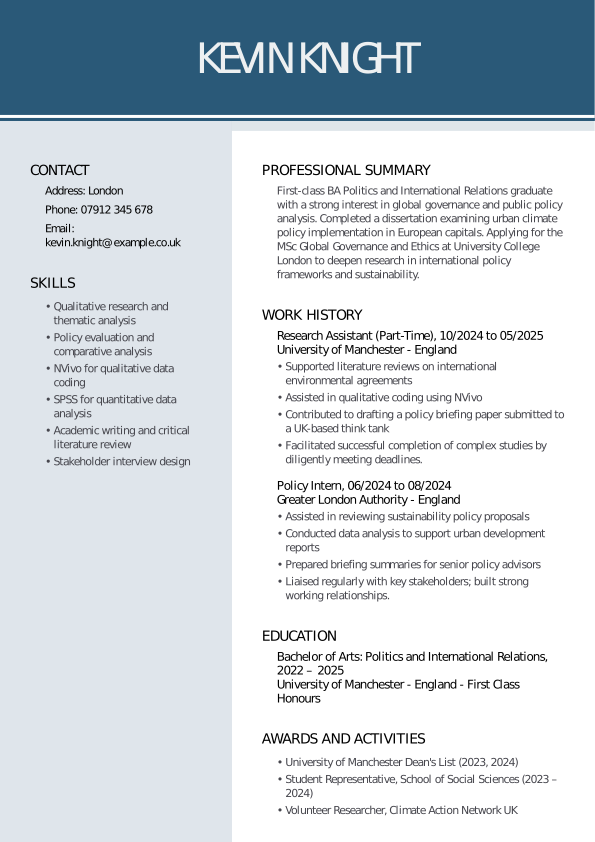
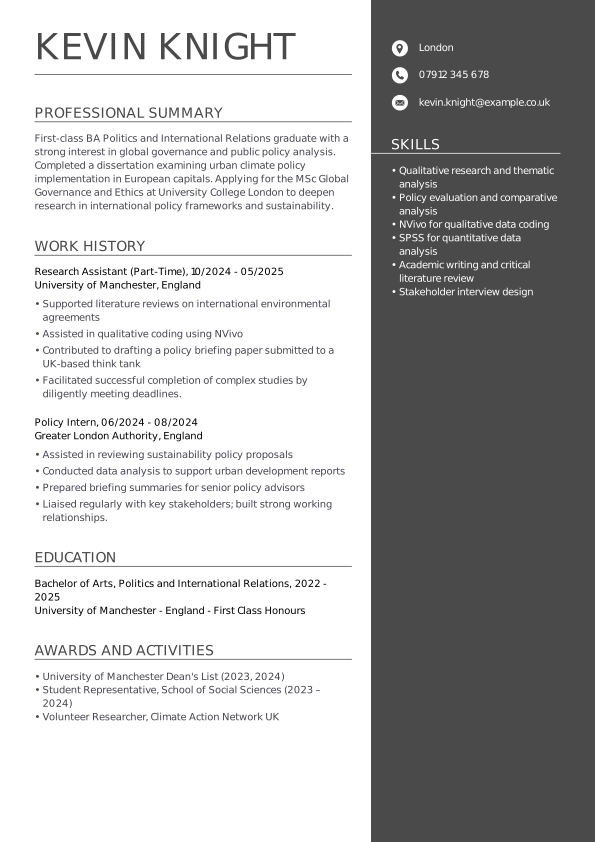
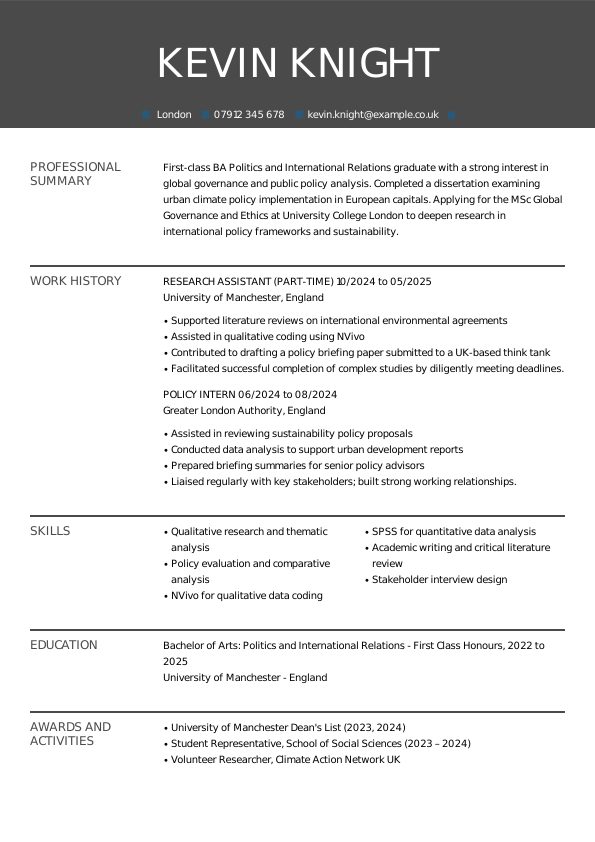
University College London CV example

FREDA JONES
London UK
07912 345 678
freda.jones@example.co.uk
PROFESSIONAL SUMMARY
First-class BA Politics and International Relations graduate with a strong interest in global governance and public policy analysis. Completed a dissertation examining urban climate policy implementation in European capitals. Applying for the MSc Global Governance and Ethics at University College London to deepen research in international policy frameworks and sustainability.
WORK HISTORY
October 2024–May 2025
University of Manchester, England
Research Assistant (Part-Time)
- Supported literature reviews on international environmental agreements.
- Assisted in qualitative coding using NVivo.
- Contributed to drafting a policy briefing paper submitted to a UK-based think tank.
- Facilitated the successful completion of complex studies by diligently meeting deadlines.
June 2024–August 2024
Greater London Authority, England
Policy Intern
- Assisted in reviewing sustainability policy proposals.
- Conducted data analysis to support urban development reports.
- Prepared briefing summaries for senior policy advisors.
- Liaised regularly with key stakeholders; built strong working relationships.
SKILLS
- Qualitative research and thematic analysis
- Policy evaluation and comparative analysis
- NVivo for qualitative data coding
- SPSS for quantitative data analysis
- Academic writing and critical literature review
- Stakeholder interview design
EDUCATION
2022–2025
University of Manchester England
Bachelor of Arts in Politics and International Relations
First Class Honours
AWARDS AND ACTIVITIES
- University of Manchester Dean’s List (2023, 2024)
- Student Representative, School of Social Sciences (2023–2024)
- Volunteer Researcher, Climate Action Network UK
UCL academic CV templates
Create a professional postgraduate CV using professional CV templates designed to present your academic background with clarity and structure. Each layout helps you organise your education, research experience, and skills in a way that is easy for UCL admissions tutors to review.
Choosing the right format for a UCL CV
The structure of your CV should make your academic journey easy to follow. UCL receives applications from a wide range of disciplines, so clarity and logical progression are essential.
For most postgraduate applications, a chronological CV format works best. This approach lists your most recent education and experience first, allowing admissions tutors to see:
- Your degree progression and academic performance
- Dissertation or major research projects
- Relevant professional or research experience
- Increasing responsibility or specialisation
A chronological structure highlights development and intellectual focus. It also ensures your most advanced and recent work receives the most attention.
Keep your layout simple, use consistent headings, and avoid unnecessary design elements. The goal is to present your academic background in a way that is professional and easy to assess.
How to write a CV for UCL
A strong CV for University College London typically begins with a focused CV profile, followed by your education, research or academic experience, relevant professional roles, and a concise skills section presented in bullet points. Additional sections, such as publications, conferences, or awards, can be included where relevant.
In the steps below, I explain how to approach each section and what to include to ensure your CV is suitable for postgraduate study at UCL.
Step 1: Present your contact information clearly
Start your CV with your name and display it prominently at the top of the page. Underneath, include only the key details UCL needs to contact you:
- Your current location
- Professional email address
- Direct phone number
Avoid adding unnecessary personal details such as your full address, date of birth, or a photograph. If you maintain a LinkedIn profile or academic webpage that strengthens your application, you may include it beneath your contact details.
Example
Sophia Bennett
London, United Kingdom
sophia.bennett@gmail.com
07700 456 321
Step 2: Create your CV profile
Your CV profile, or a personal statement, introduces your academic background and future direction. In a short paragraph, summarise your degree, area of specialisation, and the postgraduate programme you are applying for at UCL. Focus on academic achievement and relevant research or projects.
A good personal statement for postgraduate students is concise, around 3-4 sentences, and ensures it aligns with the chosen Master’s or PhD course.
Example CV profiles
“First-class Politics and International Relations graduate specialising in global governance and climate policy. Completed a dissertation analysing sustainability strategies in European capital cities. Applying for the MSc Global Governance and Ethics at UCL to further develop research in international environmental regulation.”
OR
“Psychology graduate with distinction, focused on behavioural economics and decision-making research. Experienced in quantitative data analysis using SPSS and experimental design. Seeking admission to the MSc Behavioural Science at UCL to advance research into cognitive bias and policy applications.”
Step 3: Outline your experience
This section demonstrates your readiness for postgraduate study at UCL. Show how you applied knowledge through research projects, dissertations, academic collaborations, or relevant professional experience.
List your most recent experience first. Prioritise roles and projects that strengthen your application to a chosen Master’s or PhD programme, whether that involves laboratory work, policy research, fieldwork, archival study, or industry placements connected to your discipline.
How to structure this section:
- Position or project title
- Institution or organisation
- Location
- Dates
- Key contributions and outcomes in bullet points
Use academic language and focus on what you contributed, the methods you used, and what the work achieved.
Example experience section
Research Assistant (Part-Time)
Institute for Global Health, University of Manchester
Manchester | Oct 2024–May 2025
- Conducted literature reviews on health inequality and urban policy
- Analysed qualitative interview data using NVivo
- Contributed to a policy briefing submitted to a regional public health authority
Step 4: Showcase your academic achievements
Your academic history should clearly demonstrate how your studies prepared you for postgraduate work at UCL. List your most recent degree first and present the information in a structured format.
When writing this section:
- State your degree and final or predicted result
- Include the institution and years attended
- Reference key modules only if they strengthen your application
- Briefly summarise your dissertation or final project, outlining its focus or methodology
If applicable, you can also note scholarships, academic prizes, or distinctions beneath your degree.
Example
BA History (First Class Honours)
King’s College London | 2022–2025
Selected modules: Modern Political Thought, Global Empires, Historical Research Methods
Step 5: Highlight key skills
The skills section should reinforce your academic readiness for postgraduate study at UCL. Rather than listing broad abilities, focus on competencies that support advanced study and research within your subject area.
Present your skills in bullet points. Around 8–10 well-chosen skills are usually sufficient – quality and relevance matter more than volume.
Select skills that directly relate to your intended programme. These might include:
- Quantitative or qualitative research techniques
- Statistical software or analytical tools
- Laboratory or clinical procedures
- Critical analysis and policy evaluation
- Academic writing and structured literature review
- Fieldwork or primary source research
- Discipline-specific frameworks or methodologies
Step 6: Include additional academic information
To further strengthen your UCL application, include extra sections that demonstrate scholarly engagement and achievement. These are particularly valuable for research-focused Master’s programmes and PhD applications.
Common additions to a postgraduate CV include:
- Publications
Journal articles, book chapters, or submitted manuscripts. Present them using a consistent academic referencing style. - Conference Activity
Papers, posters, or panel presentations. Include the conference name, location, and year. - Awards and Funding
Scholarships, grants, academic prizes, or competitive bursaries. - Teaching or Academic Support Roles
Seminar leading, laboratory demonstrating, or peer mentoring. - Professional Affiliations
Membership of recognised academic or industry bodies relevant to your discipline.
Do’s and don’ts for a UCL CV
Your CV should demonstrate how your studies, projects, and research have developed over time. Make it easy for admissions tutors to see how your undergraduate work has prepared you for postgraduate study at UCL.
Review the course description carefully and reflect relevant themes, methods, or areas of focus in your UCL CV. If the programme emphasises research, highlight methodology and independent study. If it is professionally oriented, include applied experience.
Your UCL CV should complement your wider application, not duplicate it. Use this document to provide structured evidence of your academic work rather than repeating motivations explained elsewhere.
Spelling errors, inconsistent dates, or formatting issues can undermine an otherwise strong application. Academic precision matters.
UCL CV questions and answers
Do I need a CV for all UCL postgraduate courses?
Not every programme requires a CV, but many competitive Master’s and most PhD applications do. Always check the specific course page. Even where optional, a strong academic CV can strengthen your overall application.
Should my UCL CV be different from a job CV?
Yes. A postgraduate CV for UCL programmes should focus on academic achievement, research experience, and subject expertise rather than general employment history. Structure and academic relevance are more important than commercial experience.
How long should a CV for UCL be?
Two-page CVs are typically appropriate for postgraduate applications. This allows space to present your education, dissertation, research experience, and relevant skills in sufficient depth.
What if I have limited research experience?
Highlight your dissertation, major coursework projects, and any research methods training. You can also include relevant internships, academic placements, or independent study that demonstrate analytical ability.
Should I include general work experience on my UCL CV?
You can include general employment, but keep it brief unless it directly supports your chosen programme. Prioritise academic and subject-relevant experience. Part-time roles are most valuable if they demonstrate transferable skills such as analysis, leadership, communication skills, or responsibility.
Related Student CV Examples & Templates

Create a CV that supports your UCL application
Stand out in a competitive postgraduate field with a CV that highlights your education, research, and subject expertise. Choose from expertly designed templates and customise your CV with confidence in MyPerfectCV builder.
*The names and logos of the companies referred to above are all trademarks of their respective holders. Unless specifically stated otherwise, such references are not intended to imply any affiliation or association with myperfectCV.