
How to Make a CV for Your First Job (Examples to get you Started)
Launch your career and land your first job. Build a professional CV that highlights your potential and secures interviews using our expert-backed templates today.

- Our customers have been hired by : *Foot Note
Starting a first job search can feel exciting and a little uncertain, especially when there’s no experience to rely on. The good news is that employers understand this. What they want to see on a first-job CV isn’t a long work history — it’s potential, personality and an interest in the role.
If the idea of creating your first CV feels challenging, this guide will make the process simple. With the right CV structure and a clear way to highlight strengths, achievements and skills, a first CV can be just as good as one with a work history.
In this guide, you’ll find:
- Good CV examples for first-time job seekers.
- Editable first-job CV templates.
- A step-by-step guide to writing your first CV.
- Dos and don’ts for a first CV.
- Helpful answers to common first-job CV questions.
Smarter writing with built-in AI
Get instant, high-quality text suggestions tailored to your specific industry.
SEARCH ALL CV EXAMPLES
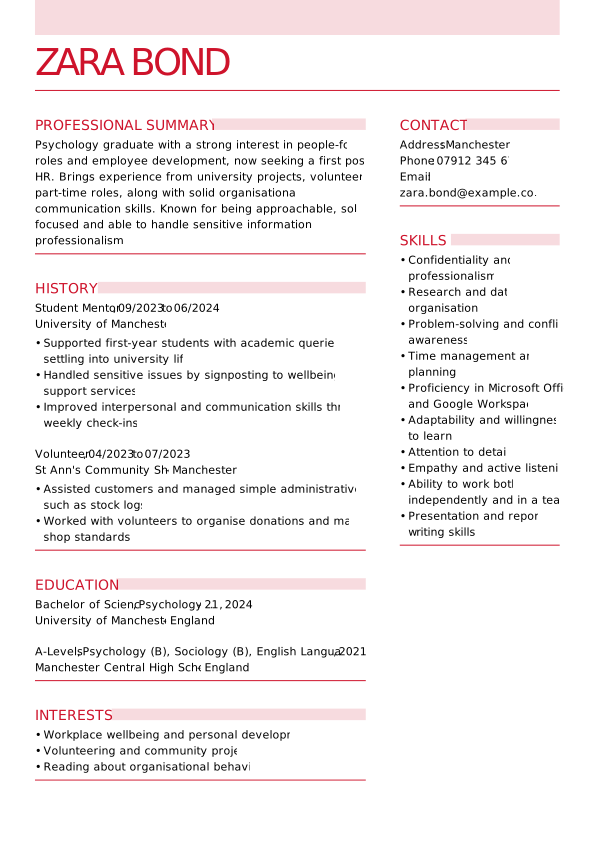
CV example for a first job
This example shows how a recent graduate can highlight skills, education and relevant projects to stand out in an entry-level role. Use it for inspiration when creating a personalised, high-quality first-job CV that reflects your strengths and career goals.

Zara Bond
Manchester
07912 345 678
zara.bond@example.co.uk
PROFESSIONAL SUMMARY
Psychology graduate with a strong interest in people-focused roles and employee development, now seeking a first position in HR. Brings experience from university projects, volunteering and part-time roles, along with solid organisational and communication skills. Known for being approachable, solution-focused and able to handle sensitive information with professionalism.
EDUCATION
2024
University of Manchester, England
Bachelor of Science Psychology – 2.1
2021
Manchester Central High School, England
A-Levels – Psychology (B), Sociology (B), English Language (C)
HISTORY
September 2023 – June 2024
University of Manchester
Student Mentor
- Supported first-year students with academic queries and settling into university life.
- Handled sensitive issues by signposting to wellbeing and support services.
- Improved interpersonal and communication skills through weekly check-ins.
April 2023 – July 2023
St Ann’s Community Shop – Manchester
Volunteer
- Assisted customers and managed simple administrative tasks such as stock logs.
- Worked with volunteers to organise donations and maintain shop standards.
SKILLS
- Confidentiality and professionalism
- Research and data organisation
- Problem-solving and conflict awareness
- Time management and planning
- Proficiency in Microsoft Office and Google Workspace
- Adaptability and willingness to learn
- Attention to detail
- Empathy and active listening
- Ability to work both independently and in a team
- Presentation and report-writing skills
Interests
- Workplace wellbeing and personal development
- Volunteering and community projects
- Reading about organisational behaviour
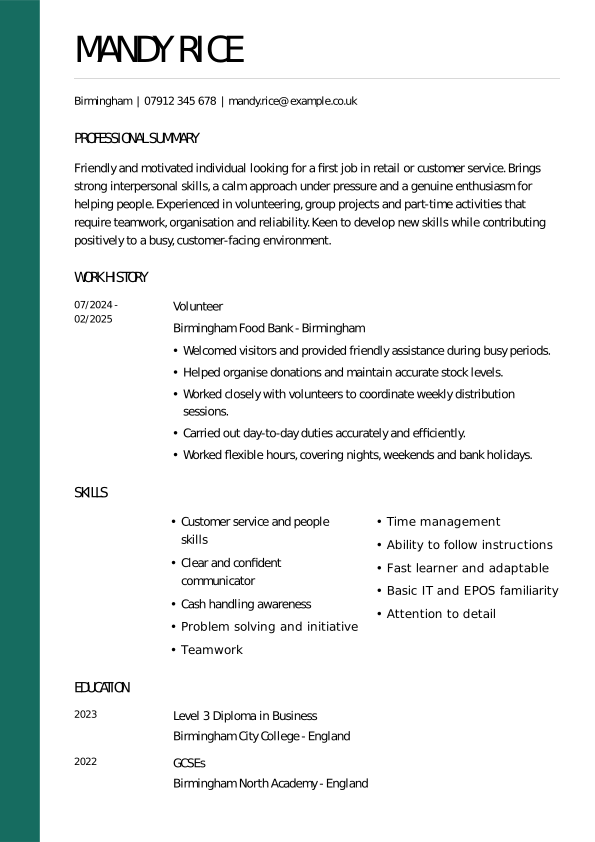
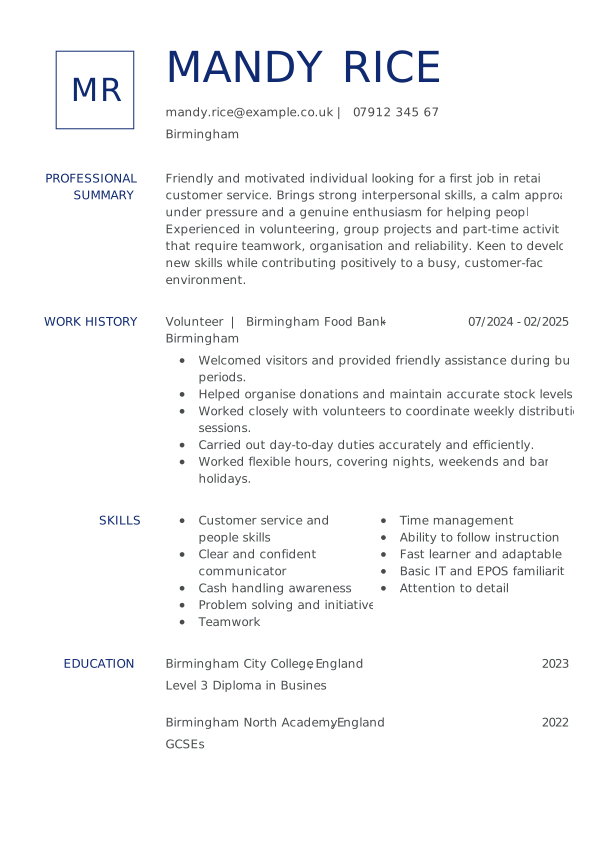
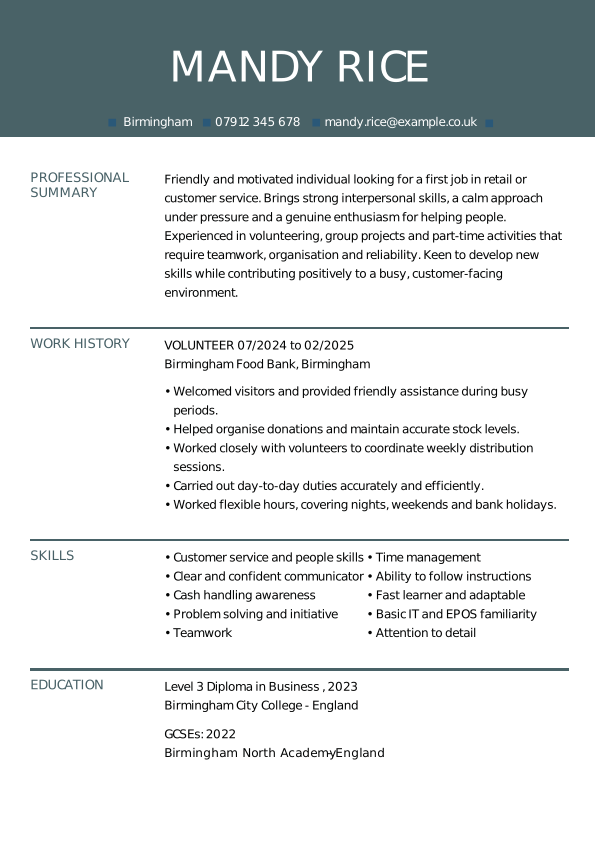
CV template for a first job
Our CV templates help showcase strengths, skills and potential, even without work experience. Each first-job CV template is easy to edit, customisable on any device and built to make a confident first impression. Choose a style that suits your personality and start building a standout first-job CV in minutes.
The best format for a first CV
Choosing the right CV format makes it easier to highlight strengths, skills and education when applying for a first job. Without a long work history, the focus should be on potential, attitude, and what has been learned through studies, projects or volunteering. A clear structure helps employers quickly understand what a candidate can bring to the role.
Two formats work particularly well for first-time job seekers: the skills-based CV and the reverse-chronological CV.
Skills-based CV format
A skills-based CV puts abilities and strengths at the centre rather than previous job titles. It groups skills into sections such as communication, teamwork, organisation or digital skills, making it ideal for anyone applying for a first job.
This format works well if someone wants to:
- emphasise transferable skills rather than experience
- highlight achievements from education, projects, volunteering or part-time activities
- apply for a first job with little or no work history
Reverse-chronological CV format
The reverse-chronological layout lists the most recent education or experience first. It’s the format most employers are familiar with and works well for those who have part-time roles, volunteering, work placements or project experience to include.
There’s no need for a long work history. Even short-term roles or extracurricular responsibilities help demonstrate reliability, initiative and teamwork.
This format is ideal for candidates who want to:
- show recent experience, even if it’s part-time or temporary
- present their education and achievements in a clear timeline
- highlight steady progress or growing responsibility
First CV tips
- Keep it to one page: Your first CV shouldn’t be longer than one page.
- Use clear headings: Include contact details, profile summary, skills, experience and education. Optional sections like interests can also help fill space while adding personality.
- Use a larger font: Choose a font size between 10-12. It will help fill out the gaps on the CV.
- Avoid photos: Photos aren’t typically used on UK CVs.
How to write a CV for your first job in 6 steps
A first CV should include key sections such as contact details, a short CV summary, skills, experience and education. Optional sections like interests, achievements or certificates can help complete the page and give employers a better sense of who you are.
Here are the key steps we’ll cover
- How to format contact details.
- How to write a CV summary.
- How to highlight your skills effectively.
- How to structure your experience section (even with no paid work).
- How to list education and qualifications clearly.
- How to add optional sections to strengthen your CV.
Step 1: Add your contact details
Put your contact details at the top of your CV. Employers should be able to find them quickly if they want to contact you about an interview. Keep this section neat and professional.
What to include:
- Full name – your first and last name.
- Location – your town or city is enough.
- Mobile number
- Email address – use a clean, professional email format.
- Optional links – add LinkedIn or a portfolio if it supports your application.
Example contact section
Emma Smith
Birmingham
07432 678 901
emma.smith@example.com
Step 2: Write your first-job CV summary (personal statement)
A CV summary sits near the top of the page and gives employers a quick snapshot of who you are and what you can offer. It’s especially useful when writing a first CV because it helps you make a strong impression before the employer even looks at your experience.
Focus on your strengths, interests and the type of role you’re aiming for. Keep it positive, clear and no longer than three or four short sentences.
What to include:
- A brief description of who you are (for example, a recent graduate or someone starting their career).
- The key skills or qualities you want to highlight.
- The type of role or environment you’re interested in.
- Any relevant experience, projects or achievements worth mentioning.
Example first-job CV summary
Motivated and organised individual looking for a first role in a customer-focused environment. Brings strong communication skills, a positive attitude and experience gained through volunteering and group projects. Keen to learn quickly and contribute to a supportive team.
Step 3: Highlight your skills
For a first CV, the skills section is one of the best ways to show employers what you can offer. Even without formal work experience, you’ll have built useful skills through education, volunteering, projects, hobbies or everyday responsibilities.
Choose skills that match the type of job you’re applying for and present them in a simple bullet-point list so they’re easy to scan.
Types of skills you can include:
- Communication – speaking clearly, writing well, listening effectively
- Teamwork – collaborating on group tasks or activities
- Organisation – planning, prioritising and managing time
- Problem-solving – staying calm and finding solutions
- Customer service – helping people in shops, events or volunteer settings
- Digital skills – Microsoft Office, Google Workspace or basic software
- Adaptability – learning new tasks quickly
Pro tip: Read the job description carefully and pick out the skills the employer is looking for. If you have those skills, include them in your CV using similar wording. Try to include 10-12 skills total.
Step 4: List your education and qualifications
For a first CV, the education section plays an important role, especially if you don’t have much experience yet. Keep it clear and easy to read by listing your most recent education first. You don’t need to go into too much detail — employers mainly want to see the level you’ve completed and any subjects or achievements that stand out.
What to include:
- Name of the school, college or university
- Course or qualification (GCSEs, A levels, degree, diploma etc.)
- Dates attended
- Key subjects or grades (only list details if they support your application)
- Any achievements such as awards, leadership roles or strong grades in relevant subjects
Example education section
University of Leeds
BA (Hons) Business Management, 2024
Leeds Sixth Form College
A Levels: Business (B), Sociology (B), Psychology (C)
GCSEs including English, Maths and Science
Step 5: Structure your experience section
The experience section shows how you’ve used your skills in real situations. And even if you don’t have any formal or paid work experience, you can still create a strong section. Employers value activities like volunteering, personal projects, university or school assignments, fundraising, tutoring or anything that demonstrates responsibility and initiative.
The aim is to highlight what you’ve done, the skills you used and the contribution you made.
What to include:
- Role or activity – this could be volunteering, a project, part-time work or informal responsibilities.
- Organisation and dates – keep these short and factual.
- Key responsibilities – short bullet points explaining what you did.
- Skills used – link tasks to transferable skills such as teamwork, communication or problem solving.
How to write strong bullet points:
- Start each point with an action verb (assisted, organised, supported, created, managed).
- Focus on what you contributed or achieved.
- Keep points short, clear and relevant to the role you want.
Example experience
Volunteer – Community Shop, Leeds
June – August 2023
- Assisted customers and answered questions in a friendly, proactive way.
- Helped organise donations and restock shelves during busy periods.
- Worked with a team of volunteers to maintain a clean and organised shop floor.
Step 6: Add your interests or hobbies
Including interests or hobbies is optional, but it can be a great way to complete a one-page CV and give employers a sense of your personality. The key is to choose hobbies that reflect qualities useful in the workplace, rather than listing anything at random.
Pick activities that show teamwork, creativity, commitment or personal development — anything that hints at how you might behave in a job.
What to include:
- Team sports – shows teamwork, communication and reliability.
- Creative hobbies – such as art, design or music, which can show creativity and attention to detail.
- Fitness or outdoor activities – demonstrates motivation, discipline and resilience.
- Volunteering – highlights initiative, responsibility and a positive attitude.
- Reading or personal development – shows curiosity and willingness to learn.
Dos and don’ts for a first CV
Adapt your personal statement so it speaks directly to the job you’re applying for. Focus on the strengths that matter most — such as communication, teamwork, organisation or problem-solving — and show why you’re interested in that type of role.
When you’re creating a first CV, skills matter just as much as experience. Use examples from volunteering, university or college projects, group work, hobbies or personal responsibilities to prove you’re reliable, capable and ready to learn.
You don’t need to mention phrases like “I have no experience” or draw attention to what you haven’t done. Instead, focus on what you have learned and how your skills can benefit the employer.
A good CV is only the first step. Once employers show interest, they’ll want to see the same confidence and clarity in an interview. Take time to prepare examples of your skills, think about why the role appeals to you and practise answering common interview questions.
FAQs about first CVs
How do I know if my first CV is good enough?
Check that it:
- is one page long
- uses a clean, simple layout
- includes skills, education and at least some form of experience
- uses clear bullet points
- is tailored to the job
If your CV ticks all these boxes, it’s ready to send.
Do I need a cover letter with my first CV?
Cover letters aren’t typically a strict requirement, but they can give you a real advantage — especially when you’re applying for your first job. A cover letter lets you explain your motivation, career goals and why the role appeals to you, which can help your application stand out. Use our cover letter templates as an easy guide on how to format one.
What should I put on a CV if I have no work experience?
Employers don’t expect a work history for a first job. They’re looking for potential, enthusiasm and transferable skills that show you can learn quickly and contribute to a team. You can still include volunteering, personal projects and responsibilities that demonstrate reliability — such as helping at events, babysitting, tutoring, running a club page or completing group assignments — as valuable experience.
How far back should I go with education?
Include your most recent education first and go back only as far as GCSEs. There’s no need to list anything earlier.
Related Student CV Examples & Templates

Create your first CV today
Creating your first CV doesn’t have to be difficult. Take the guesswork out of the process with our CV builder and expertly made templates, so you can be confident your CV is well formatted, professional and ready to impress employers. Start now and create a standout CV that gives you a better chance of securing an interview.
*The names and logos of the companies referred to above are all trademarks of their respective holders. Unless specifically stated otherwise, such references are not intended to imply any affiliation or association with myperfectCV.