Europass CV: Templates, Examples & How to Write a European CV
Standardise your application and unlock opportunities across Europe. Create a professional Europass CV that clearly showcases your skills and experience to employers today.

- Our customers have been hired by : *Foot Note
If you are seeking opportunities in different EU countries or applying to European institutions, the Europass CV helps you present your skills, qualifications, and experience in a clear, standardised structure recognised across the continent.
Through the official Europass platform, you can access the Europass CV, Mobility Document, Certificate Supplement, and Diploma Supplement—which together form your European Skills Passport.
This guide explains everything you need to know about the official structure, offers professional Europass CV examples, and shows you how to use a CV maker to build a standout European CV.
What is Europass?
Europass is an initiative launched by the European Union to clarify qualifications and facilitate citizens’ mobility across Europe. It provides a standard online profile where you can record your professional background. When kept up to date, you can share that profile with recruiters or export it as a strict, standardised Europass CV.
Aside from your CV, Europass gives you access to the following documents:
- Mobility document – Recording any work experience or training obtained in another country with the help of partner organisations.
- Certificate supplement – Clearly describes the skills and knowledge from vocational training to make them easier for foreign organisations to understand.
- Diploma supplement – Similar to the above, this document makes it easier to understand the skills and knowledge you have acquired through your degree or diploma.
Europass CV format & structure
The Europass CV format follows a rigid, standard layout designed to make applications easy for recruiters to read. Unlike many modern or UK-style CVs, it does not include a personal statement or professional summary at the top.
Here is what is included in the official structure:
Personal information: Your name, address, phone number, email address, and optionally your photo, nationality, date of birth, and gender.
Work experience: Listed in reverse-chronological order. It includes the job title, employer, dates, and a bulleted summary of your main duties.
Education: Relevant degrees, training, or certifications, also listed in reverse-chronological order.
Skills: The Europass CV has a very specific breakdown for skills:
- Mother tongue: Your native language.
- Known foreign languages: Graded using the Common European Framework of Reference (CEFR).
- Communication skills: Interpersonal abilities.
- Organisational skills: Coordination, project management, and leadership.
- Job-related skills: Technical, hard skills specific to the role.
- Digital skills: Software and tech proficiencies.
When to use Europass
(and when to use a modern European CV)
Depending on where you are applying, you may need to decide between the strict Europass format and a more modern, flexible European CV.
Use the official Europass CV when:
- You are applying directly to European Union institutions, agencies, or government bodies.
- The job advertisement specifically requests a Europass format.
- You are applying for academic roles or cross-border grants that require standardisation.
Use a modern European CV format if:
- You are applying for private-sector roles in the EU or UK. The official Europass format can look outdated or overly rigid to modern tech, creative, or corporate recruiters.
- You want to include a Professional Summary to introduce yourself.
- You need to keep your CV to one page (Europass CVs easily stretch to 2 or 3 pages).
- You want your application to stand out visually with a customised design.
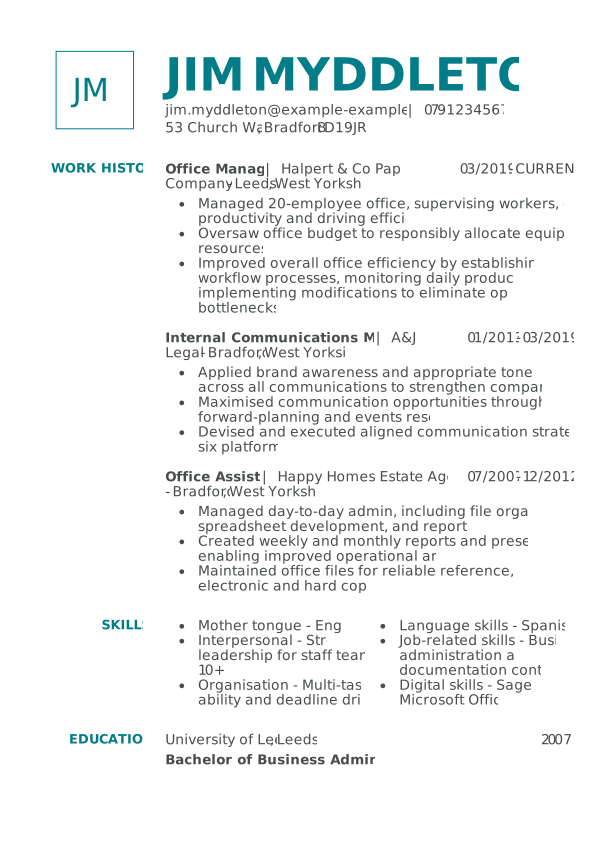
Europass CV text example
JIM MYDDLETON
jim.myddleton@example.co.uk | 07912345678
53 Church Way, Bradford BD19JR
WORK HISTORY
Office Manager | Halpert & Co Paper Company – Leeds, West Yorkshire 03/2019 – CURRENT
- Managed 20-employee office, supervising workers, enhancing productivity and driving efficiency.
- Oversaw office budget to responsibly allocate equipment and resources.
- Improved overall office efficiency by establishing smooth workflow processes, monitoring daily productivity and implementing modifications to eliminate operational bottlenecks.
Internal Communications Manager | A&J Legal – Bradford, West Yorksire 01/2013 – 03/2019
- Applied brand awareness and appropriate tone of voice across all communications to strengthen company image.
- Maximised communication opportunities through intensive forward-planning and events research.
- Devised and executed aligned communication strategy across six platforms.
Office Assistant | Happy Homes Estate Agents – Bradford, West Yorkshire 07/2007 – 12/2012
- Managed day-to-day admin, including file organisation, spreadsheet development, and report writing.
- Created weekly and monthly reports and presentations, enabling improved operational analysis.
- Maintained office files for reliable reference, including electronic and hard copies.
SKILLS
- Mother tongue – English
- Interpersonal – Strong leadership for staff teams of 10+
- Organisation – Multi-tasking ability and deadline-driven
- Language skills – Spanish C1
- Job-related skills – Business administration and documentation control
- Digital skills – Sage and Microsoft Office
EDUCATION
University of Leeds, Leeds
2007
Bachelor of Business Administration
Dos and don’ts for a European CV
Whether you use the official Europass or a modern European template, follow these universal rules:
Align your keywords and achievements with the specific job description and the target country’s expectations.
Use measurable results and active verbs. Employers want proof of impact, not just a list of duties.
Research whether your target country expects a photo or specific personal details.
Unless standard in that specific country, skip details like marital status.
Focus on the most relevant 10 to 15 years of your career. Quality over quantity.
When applying for jobs with Europass, you can share a link to your profile. Although it’s quick, it can appear unprofessional. It’s worth creating a CV tailored to the job.
Create your European CV
with our builder
If you are applying for a private-sector job in Europe and want to stand out, our CV builder offers the perfect balance.
With MyPerfectCV, you can
- Use a European-friendly structure that recruiters recognise
- Choose from over 20+ professional British CV templates
- Customise every section to easily fit your experience onto a single, high-impact page
- Download, update, and reuse your CV anytime you apply
See some of our templates:
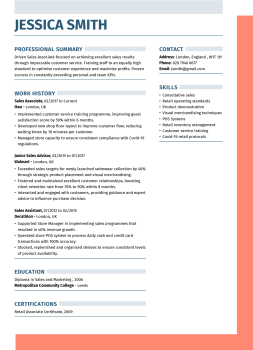
Student European CV
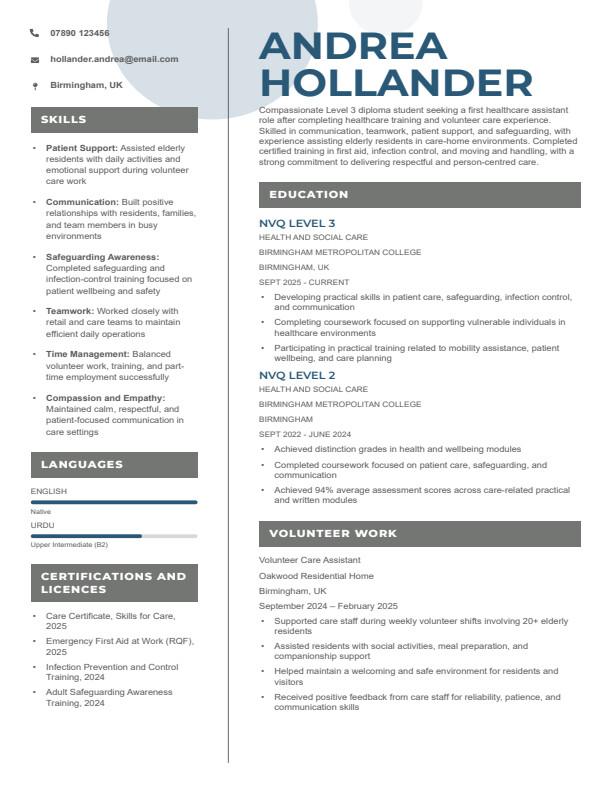
The European student CV format puts education first and emphasises the candidate’s academic background. It’s followed by plenty of transferable skills and duties from their work experience.
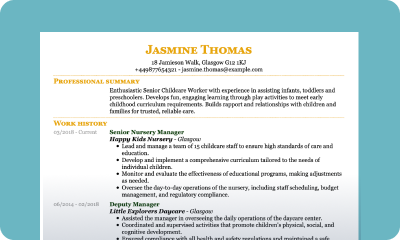
Professional Europass-style CV design
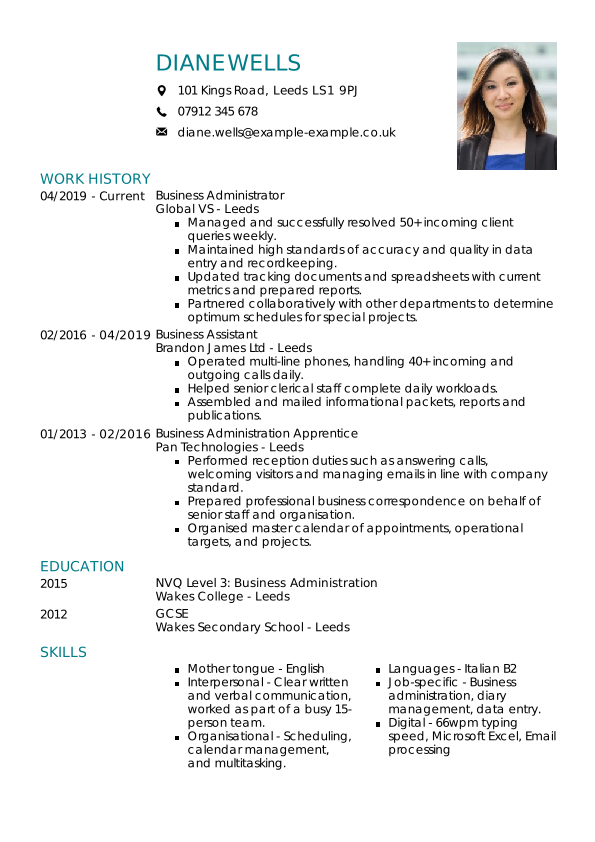
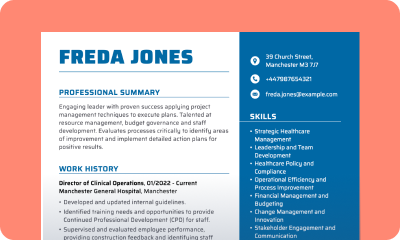
European CV example with experience
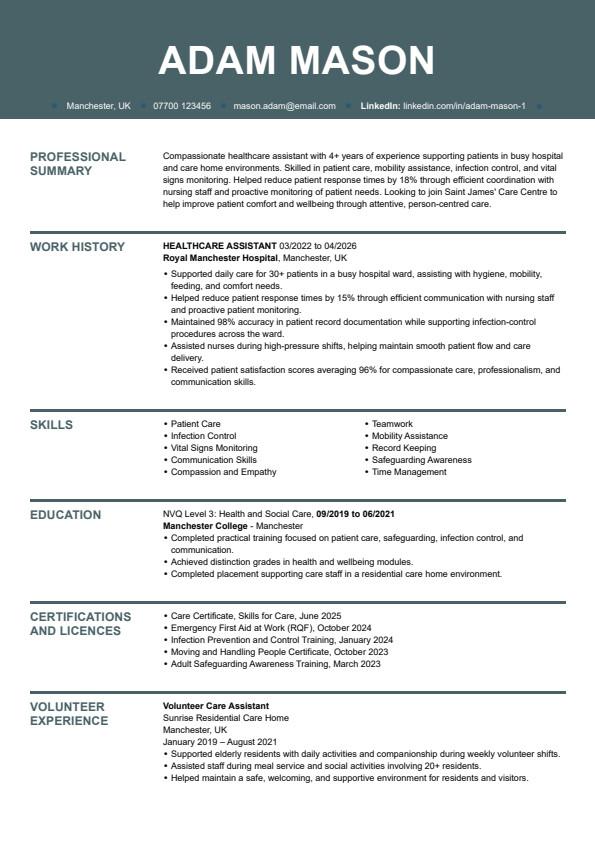
As an experienced candidate, use a European CV layout that’s clear and simple. This lets you fit in various skills, responsibilities, and qualifications without overwhelming recruiters. You can use fewer responsibilities to describe each role if you want to delve deeper into your work history.
How to write a European CV
A standard European CV should have a clear structure, relevant content, show cultural awareness, and be adapted to your target country, industry, and role.
Here’s how to write it step-by-step:
1. Start with personal information
Include your full name, phone number (with country code), email address, city, and country. You can also add your LinkedIn profile or additional links to professional websites.
2. Craft a strong professional profile
Write a personal statement mentioning your job title or specialisation, key skills, a standout accomplishment or measurable result, and how you can benefit this employer.
3. Highlight your work experience
List your work experience in reverse chronological order, starting with the most recent role and include:
- Job title – Use the official title, but adapt it slightly if needed for clarity across languages or markets (e.g., “Account Manager (B2B Sales)”).
- Company name & location – Include the city and country; international employers appreciate context.
- Dates of employment – Month and year (e.g., Jan 2020 – Jun 2023).
- Achievements & responsibilities – Start with achievements, then add key duties.
4. Present your education
For recent graduates, the CV education section often takes priority over work experience. For mid- and late-career professionals, it supports your expertise and establishes your technical or professional grounding.
Include your degree or qualification title, the name of the institution (and country), dates attended and any specialisations or key modules.
5. List valuable skills
For your skills section, make a short list of bullet points with 6–10 key skills that match the job description. Include both hard skills that show technical knowledge and soft skills that align with the organisation’s culture.
6. Add bonus sections
The right extra sections can add depth and credibility to your European CV. Keep them brief to add value without distracting from your main qualifications and experience.
You can include:
- Certifications – Highlight relevant professional credentials or industry-specific qualifications that add credibility to your expertise.
- Languages – Showcase your multilingual abilities, including proficiency levels using the CEFR scale for clarity.
- Volunteer experience – Demonstrate community engagement and transferable skills gained outside of paid employment.
- Publications – List articles, research papers, or books that establish your authority in your field.
- Awards and honours – Include professional or academic achievements that set you apart from other candidates.
- Conferences and workshops – Show your commitment to continuous learning by listing relevant events you’ve attended or spoken at.
- Projects – Detail notable professional or personal projects that demonstrate your skills in action.
- Professional memberships – Mention your involvement in industry associations or networks to highlight your professional engagement.
- Hobbies & interests – Add hobbies that are relevant to the role or that reveal valuable soft skills, such as leadership or creativity.
Frequently Asked Questions about Europass and European CVs
Who uses a Europass CV?
Europass CVs are used for a wide range of job roles, experience levels, and countries throughout Europe. They’re ideal for candidates applying in foreign countries such as Germany, Spain, Italy, and France, who might be unaware of the conventions for that particular region. Here’s a list of the full 30 countries that will accept a Europass format CV:
- Austria
- Belgium
- Bosnia and Herzegovina
- Bulgaria
- Croatia
- Cyprus
- Czechia
- Denmark
- Estonia
- Finland
- France
- Germany
- Greece
- Hungary
- Iceland
- Ireland
- Italy
- Latvia
- Lithuania
- Luxembourg
- Malta
- Montenegro
- Netherlands
- North Macedonia
- Norway
- Poland
- Portugal
- Romania
- Serbia
- Slovakia
- Slovenia
- Spain
- Sweden
- Switzerland
- Turkey
Is a Europass CV the best choice?
The main issue with Europass is that it’s overly rigid and formulaic. Its standard design and limited layout options make it difficult for applicants to stand out. The result is a CV that can look plain, text-heavy, and easy for recruiters to overlook.In addition, Europass offers little flexibility for perfecting your layout. You can’t adjust section spacing, line breaks, or font size — which often means your CV doesn’t fit neatly on one or two pages. In contrast, a specialist AI-powered CV builder gives you full control over the look and layout, so your CV feels refined, modern, and truly professional.
Is Europass free?
Yes – Europass is funded by the European Union, so it’s completely free to use. That means there’s no cost to build your profile, create a Europass CV, download as a PDF, and even edit your CV on Europass.
Should I translate my CV for different European countries?
Yes. If the job posting is in another language, your CV should be too. Employers value candidates who show cultural and linguistic awareness. However, don’t rely solely on machine translation. Have a native speaker or professional translator review it to avoid errors that could harm your credibility.
Should I use a Europass CV?
While the Europass CV is accepted in numerous countries, there are no places where it’s the only format accepted. As a result, it’s never a requirement when applying for a job – nor is it the best option. The Europass CV format is simply the most basic, free option that provides a basic template for a European CV.
Ultimately, it comes down to what you priorities. If you’re looking for something that’s more convenient than going it alone and solely concerned about costs, Europass is a good fit. If you want to create a CV that recruiters truly love, there are plenty of other CV templates to choose from.
Is the Europass CV still used in 2026?
Yes, the Europass CV is still active and accepted across the European Union. However, it’s no longer the preferred choice for many professionals, who now opt for more visually appealing CV formats that follow the same European standards.
What’s included in the Europass profile?
Your Europass profile contains your personal details, education, work experience, language skills, and digital skills. From there, you can generate your CV or share your profile link.
How do Applicant Tracking Systems (ATS) affect European CVs?
Many large employers use ATS software to filter applications before a human sees them. To get past these systems, keep your CV formatting simple. Use standard headings, avoid graphics in key sections, and include CV keywords from the job description naturally in your work history and skills sections.
Are cover letters still necessary in Europe?
In most countries, yes. While some employers make them optional, a tailored cover letter can greatly improve your chances by explaining why you’re a strong match for the role. In countries like Germany and France, cover letters are often expected.
Related Free CV Templates for all UK jobs
- CV template Word
- English CV Templates: Create a Professional CV for 2026
- South Africa CV format with examples
- Simple CV format, examples and CV tips
- Modern CV Template
- Cambridge
- Skills-based CV format
- Indian CV Format: Templates and Tips
- Google Docs CV Template: Create a Professional CV for 2026
- Academic CV Templates: Create a Professional CV for 2026
Create your perfect European CV in a few easy steps
Start with a professionally designed template that matches the European CV format, then add expert content written to get results. MyPerfectCV builder helps you fine-tune every section, from experience to skills, so your CV looks sharp and reads clearly. In just minutes, you’ll have a recruiter-ready European CV that’s ready to download, share, and make an impression.