How to write a CV summary that gets you hired in 2026
Stand out to recruiters instantly. Craft a powerful CV summary that showcases your impact and lands you more interviews today.

Our customers have been hired by : *Foot Note
A strong CV summary can help you stand out in seconds. It sits at the top of your CV and gives employers a quick look at who you are, what you can do, and why you’re a great fit for the job. A good summary is short, clear, and focused on your best skills and achievements.
In this guide, you’ll learn how to make a CV summary that gets attention, see real CV summary examples, and get simple steps you can follow to create your own.
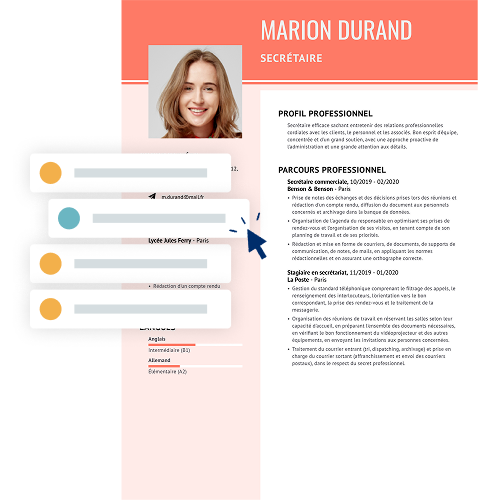
Smarter writing with built-in AI
Get instant, high-quality text suggestions tailored to your specific industry.
What is a summary on a CV?
A CV summary (also called a personal statement) is a concise paragraph at the top of your CV that gives employers a clear idea of who you are as a professional. It highlights your key strengths, experience, and achievements in just a few lines. Think of it as the headline of your personal brand. It helps recruiters decide if they want to read more about you.
A strong CV summary is sharp, relevant, and tailored to the job you’re applying for. It shows your value at a glance and helps you make a strong first impression.
Struggling to summarise your career? Don’t stare at a blank page. Let our AI CV Builder instantly generate a professional, targeted personal statement for you.
What to put in a CV summary
Your CV summary should only be about 3–4 sentences, so every word must earn its place. Don’t exceed 5 sentences, as it will make your summary for CV too long. Here’s what to include in your CV summary:
- Your professional identity: State your job title, field, or speciality.
- Your experience level: Add how many years of experience you have or the level you work.
- Your key strengths: Pick a few of your best CV skills or qualities that match the job you want. Focus on strengths you can back up in your work history.
- A standout achievement: Include 1–2 clear results or accomplishments to show the impact you’ve made. Numbers work well here because they make your value easy to understand.
- Your goals or value to the employer: End with a short line about what you aim to bring to the role or how you plan to support the company. This is a great way to end your CV summary, as it shows you personalised your application; ergo, you’re serious about the company.
Now, I’ll break down how to approach these points.
How to write a good CV summary
Writing a strong CV summary is simple when you break it into small steps. And that’s exactly what I’ll show you. Just follow my lead, and you’ll have a great summary for your CV in no time.
1. Start with an overview
Start the professional summary with a catchy power word for a CV. Avoid generic and overused phrases like “experienced,” “professional,” or “hard-working”. Next, state who you are. Use your job title, and consider mentioning what you specialise in. If you have a certain number of years of experience, add that here, too.
CV summary example – opening sentence:
“Results-driven Marketing Executive with 4 years of hands-on experience in digital campaigns and brand growth.”
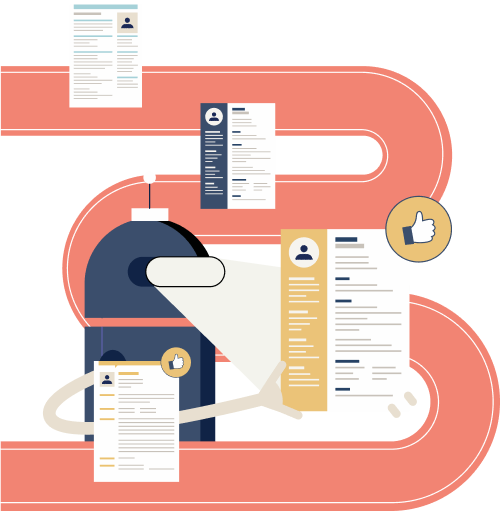
And here’s a tip. If your exact job title is synonymous with the one stated in the job posting, always use the version from the job description. Many employers use Applicant Tracking Systems (ATS)
ATS is software that scans CVs for specific keywords and job titles before a recruiter ever sees them. Using the right terminology helps your CV pass this initial screening and avoids automatic rejection.
2. Add your core strengths
After stating who you are, highlight a few strengths that match the job you’re applying for. These should be a few carefully selected skills the employer is looking for, not a random list of everything you can do. Read the job description carefully and pick the skills or qualities that appear often, or seem most important for the role.
Focus on strengths you can prove later in your CV, such as hard skills, industry knowledge, or strong soft skills like communication skills or leadership. Aim for two or three strengths that align well with the role. More than that can make your summary feel crowded.
CV summary example – skills showcase:
“Proficient in managing multi-channel campaigns, analysing performance data, and working closely with sales teams to support growth.”
3. Include 1–2 achievements
This is where you show the real impact you’ve made in past roles. Well-chosen achievements turn your skills into clear, measurable results, making your CV summary far more convincing.
Whenever possible, use numbers or metrics to show the scale of what you achieved. Numbers add credibility and also serve as natural magnets for the eyes of hiring managers.
Think about moments where you improved something, saved time, increased revenue, solved a problem, or supported a team. Even small wins can make a strong impression when they’re written with confidence. Add 1–2 accomplishments.
CV summary example – accomplishments:
“Improved customer retention by 18% through targeted email campaigns and boosted online conversion rates by 12% by refining the customer journey.”
4. State how you’ll benefit the company
End your CV summary by showing the employer what you can bring to their team. This final line ties everything together and makes your summary feel purposeful.
Instead of saying what you want, focus on the value you offer. Whether it’s improving processes, driving growth, supporting customers, or bringing expertise to a new project. A strong closing helps the reader see how you fit into their goals.
CV summary example – closing statement:
“Eager to support the team at Company XYZ by driving stronger engagement and delivering measurable results across all marketing channels.”
5. Keep it tailored and concise
Aim for 3–4 sentences, with 4 being the sweet spot. Recruiters scan CVs, so simple language works best. If your summary feels long or crowded, trim anything that repeats information from your work history or uses vague wording.
Here are a few ways to shorten a CV summary:
- Remove filler words like “highly,” “very,” or “extremely.”
- Cut any skills that don’t match the job description.
- Replace long phrases with shorter ones (e.g., “in order to” → “to”).
- Focus on your best achievements, but don’t explain them in detail.
In the end, the summary of your CV should look something like this:
CV summary example:
Results-driven Marketing Executive with 4 years of hands-on experience in digital campaigns and brand growth. Proficient in managing multi-channel campaigns, analysing performance data, and working closely with sales teams to support growth. Improved customer retention by 18% through targeted email campaigns and boosted online conversion rates by 12% by refining the customer journey. Eager to support the team at Company XYZ by driving stronger engagement and delivering measurable results across all marketing channels.
It’s a great summary, but even this one can be trimmed down. Below is the shortened version, which is almost 20 words shorter.
CV summary example – trimmed version:
Results-driven Marketing Executive with 4 years of experience in digital campaigns and brand growth. Expertise in managing multi-channel campaigns, analysing performance data, and working with sales teams. Improved customer retention by 18% and increased online conversion by 12% through targeted marketing efforts. Ready to support Company XYZ by driving stronger engagement and delivering measurable results.
Now, let’s explore some more CV summary samples:
Good CV summary examples
for the UK
It’s always easier to write something when you have a reference to look at. See these actionable CV summary examples for when you need a spark of inspiration for your own CV.
NLP specialist CV summary example
Technical NLP Specialist with 4 years of experience developing language models, text-classification systems, and conversational AI tools. Proficient in Python, spaCy, Transformers, and large-scale data processing. Improved model accuracy by 21% through better preprocessing and feature design. Ready to create NLP solutions that boost automation and user experience at Company XYZ.
Read more: NLP CV guide
Marketing director CV summary example
Strategic Marketing Director with 10+ years of experience leading brand growth, campaign strategy, and cross-functional teams. Expert in digital marketing, budgeting, and market analysis. Increased revenue by 32% through high-impact campaigns and smarter channel planning. Excited to guide Company XYZ’s marketing vision and deliver strong commercial results.
Read more: Marketing director CV guide
Paramedic CV summary example
Compassionate Paramedic with 6 years of frontline emergency care experience. Skilled in rapid assessment, life-support procedures, and safe patient transport. Improved response times by 18% by helping optimise route planning and team coordination. Dedicated to delivering high-quality care and supporting patient safety in all situations.
Read more: Paramedic CV guide
IT training consultant CV summary example
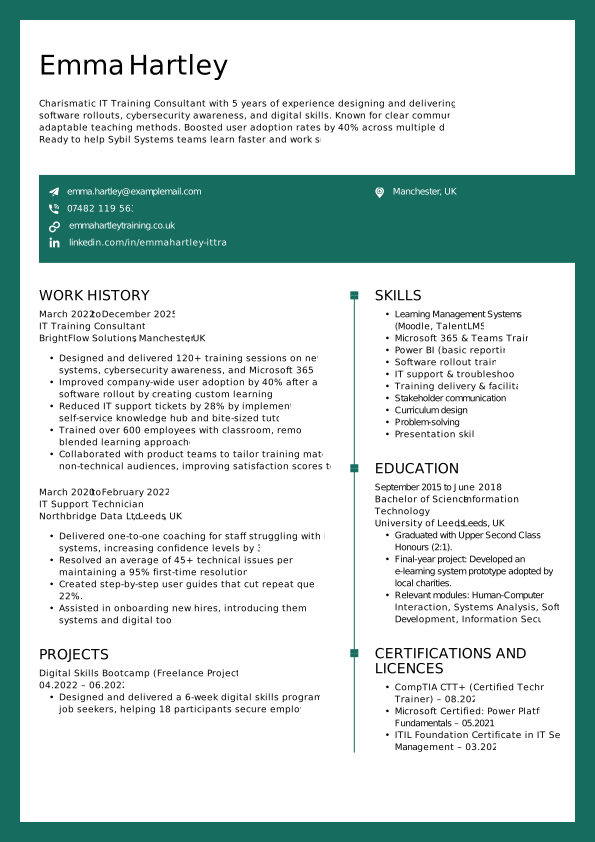
Charismatic IT Training Consultant with 5 years of experience designing and delivering training for software rollouts, cybersecurity awareness, and digital skills. Known for clear communication and adaptable teaching methods. Boosted user adoption rates by 40% across multiple departments. Ready to help Company XYZ’s teams learn faster and work smarter.
Read more: IT training consultant CV guide
Supply chain manager CV summary example
Results-focused Supply Chain Manager with 8 years of experience in logistics, procurement, and inventory planning. Expert in improving workflows, reducing costs, and managing supplier relationships. Cut lead times by 25% and lowered operating costs by 12% through smarter planning and negotiation. Looking to strengthen Company XYZ’s supply chain with efficient, data-driven processes.
Read more: Supply chain manager CV guide
Accountant CV summary example
Detail-oriented Accountant with 5 years of experience in financial reporting, budgeting, and month-end processes. Skilled in using Sage and Excel to manage accounts and improve accuracy. Reduced reporting errors by 22% and helped streamline reconciliation workflows. Ready to support Company XYZ’s finance team with reliable, data-driven insight.
Read more: Accountant CV guide
Finance administrator CV summary example
Organised Finance Administrator with 3 years of experience handling invoices, expenses, and daily finance queries. Proficient in maintaining accurate records, processing payments, and supporting deadlines. Improved invoice turnaround times by 30% through better tracking systems. Looking to bring strong attention to detail and solid admin support to Company XYZ’s finance team.
Read more: Finance administrator CV guide
Beauty therapist CV summary example
Friendly and skilled Beauty Therapist with 4 years of experience delivering personalised treatments across skincare, massage, and waxing services. Known for building strong client relationships and maintaining high hygiene standards. Increased repeat bookings by 35% through exceptional service and tailored care plans. Excited to bring expertise and warm client support to your salon.
Read more: Beauty therapist CV guide
Data analyst CV summary example
Perceptive Data Analyst with 3 years of experience turning complex data into clear insights. Proficient in SQL, Python, and Tableau with a strong focus on data quality and reporting. Improved forecasting accuracy by 28% through smarter models and cleaner datasets. Ready to help Company XYZ’s team make confident, data-driven decisions.
Read more: Data analyst CV guide
AI engineer CV summary example
Innovative AI Engineer with 4 years of experience building machine learning models and deploying AI solutions in production. Expertise in Python, TensorFlow, and cloud platforms. Boosted model performance by 19% by improving training pipelines and feature engineering. Looking to support Company XYZ with scalable, high-impact AI solutions.
Read more: AI engineer CV guide
Want a summary like this? Use our CV Builder to auto-fill your CV with recruiter-approved Marketing Director summaries.
CV summary templates you can copy and adapt
Here are two simple, fillable CV summary templates anyone can copy and complete. You can use these sample summaries and tailor them for your position.
Experience-focused CV summary template
[Job title] with [X years] of experience in [main area or industry]. Proficient in [key strength], [key strength], and [key strength]. Known for [achievement or impact], including [quantified result if possible]. Ready to bring [specific skill or value] to [company or type of role].
Skills + achievements focused CV summary template
Results-driven [job title] with strong expertise in [skill], [skill], and [skill]. [Describe achievement], resulting in [specific metric or outcome]. Looking to apply my experience in [main field or task] to support [company name] in [goal or business need].
Tired of filling in the blanks manually? Our AI CV Builder does this for you. Simply type in your job title, and our software will instantly generate a perfectly written, personalised summary that is guaranteed to pass ATS filters.”
Differences between a CV summary, personal profile and career objective
A CV summary and personal profile are the same thing. However, there is a significant difference between a CV summary and a career objective.
As I mentioned earlier, a CV summary focuses on your experience, key strengths, and achievements, making it ideal for people with a solid work history who want to show their value upfront.
A career objective, on the other hand, is focused less on your work experience and more on other qualifications. It’s also about where you want your career to go, making it perfect for students, graduates, and career changers.
See the examples below to understand the difference:
CV summary vs career objective example:
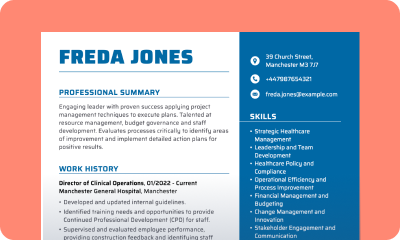
Professional summary
Junior Data Analyst with 2 years of experience supporting reporting, data cleaning, and dashboard creation. Proficient in SQL, Excel, and Tableau. Improved data accuracy and sped up weekly reports by 25%. Ready to bring strong analytical and problem-solving skills to your data team at Company ABC.
Career objective
Motivated recent Data Science graduate seeking a Junior Data Analyst role to build strong analytical skills and support data-driven decisions. Completed a data analytics certification and gained hands-on experience through personal projects in Excel and SQL. Eager to grow, learn, and contribute to meaningful analysis within your team at Company ABC.
Key takeaways
- A CV summary is your first impression. Keep it clear, confident, and focused on the value you bring.
- Include the essentials: your job title, experience level, core skills, and 1–2 achievements.
- Tailor to the job by using keywords and highlighting strengths that match the role.
- Keep it short: about 3–4 sentences, so recruiters can understand your value in seconds.
- Use strong, action-focused language that shows impact, not duties.
- Align your summary with the rest of your CV, always using real examples.
- A polished CV summary helps your application rise to the top of the pile.
FAQ: CV summary
Can a CV summary be written in the first person?
Yes, you can write a CV summary in the first person, but without using “I.” This is called the first-person implied style, and it’s the standard format for UK CV templates. For example, instead of writing “I have five years of experience,” you would write “Five years of experience.”
Is it OK to use bullet points in a CV summary?
Bullet points can work, but they’re not recommended for a CV summary. This section should be a short, well-paced paragraph. Bullet points are better suited for your skills or work experience. A compact 3–4 line summary is expected and easier for recruiters to skim.
What are common mistakes to avoid in a CV summary?
Common mistakes include writing a summary that is too long, too vague, or filled with clichéd buzzwords. Another big error is listing duties instead of achievements, which makes your CV summary sound generic. Always double-check your CV summary to spot and remove errors.
Can I reuse the same CV summary for every job application?
You shouldn’t reuse the same CV summary for every application. A good CV summary is tailored to the job, using relevant skills, keywords, and achievements that match the job description. Small adjustments, such as referencing the industry, key tools, or core responsibilities, make your CV summary more effective.
How do I write a CV summary for a career change?
When writing a summary for a career change CV, focus on transferable skills, relevant achievements, and your motivation to shift into the new field. Highlight the strengths that apply across industries and mention any training or certifications you’ve completed. Make it clear how your experience adds value in your new direction.
How do I write a CV summary with no experience?
If you have no experience, focus on your education, relevant skills, coursework, personal projects, volunteering, or part-time jobs. Highlight core strengths such as communication or problem-solving. Mention your career goals and motivation. Keep it positive and show that you’re ready to learn and contribute.
Mariusz Wawrzyniak
Senior Content Writer
Mariusz is a career expert at My Perfect CV who writes practical, research-based guides that help professionals from all industries craft impactful CVs, write compelling cover letters, and advance their careers.