
10 Human Skills Every UK Employer Still Needs in 2026
As AI and automation reshape the workplace, many professionals fear that machines will replace human roles entirely. But UK employers are sending a different message: human skills are not only still essential — they’re becoming more valuable than ever.


Our customers have been hired by : *Foot Note
Automation, AI, and why human skills are still needed
Automation and AI are becoming part of everyday working life in the UK. More businesses are adopting digital tools, letting software handle many routine tasks. But this shift hasn’t reduced the importance of human skills. If anything, employers say it has made human skills even more valuable.
Technology can speed up processes, but it can’t replace qualities such as communication, teamwork, adaptability, or good judgment. These strengths help businesses solve problems, support customers, and work effectively with new tools.
In 2026, UK employers are focusing less on qualifications alone and more on the human qualities that strengthen teams and keep organisations moving forward. This is why the most in-demand skills today are not technical—they’re human.
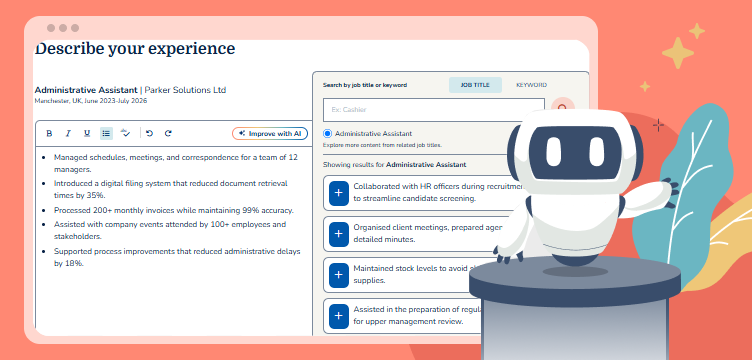
Smarter writing with built-in AI
Get instant, high-quality text suggestions tailored to your specific industry.
The 10 human skills employers want most
Across industries, businesses consistently highlight a core set of human skills that help people work effectively, adapt to new tools, and contribute positively to their teams. These skills appear repeatedly in employer surveys, recruitment data, and workforce reports.
- Communication
- Teamwork & collaboration
- Adaptability
- Work ethic & reliability
- Problem-solving & critical thinking
- Enthusiasm & willingness to learn
- Interpersonal skills & emotional intelligence
- Confidence
- Digital literacy
- AI literacy
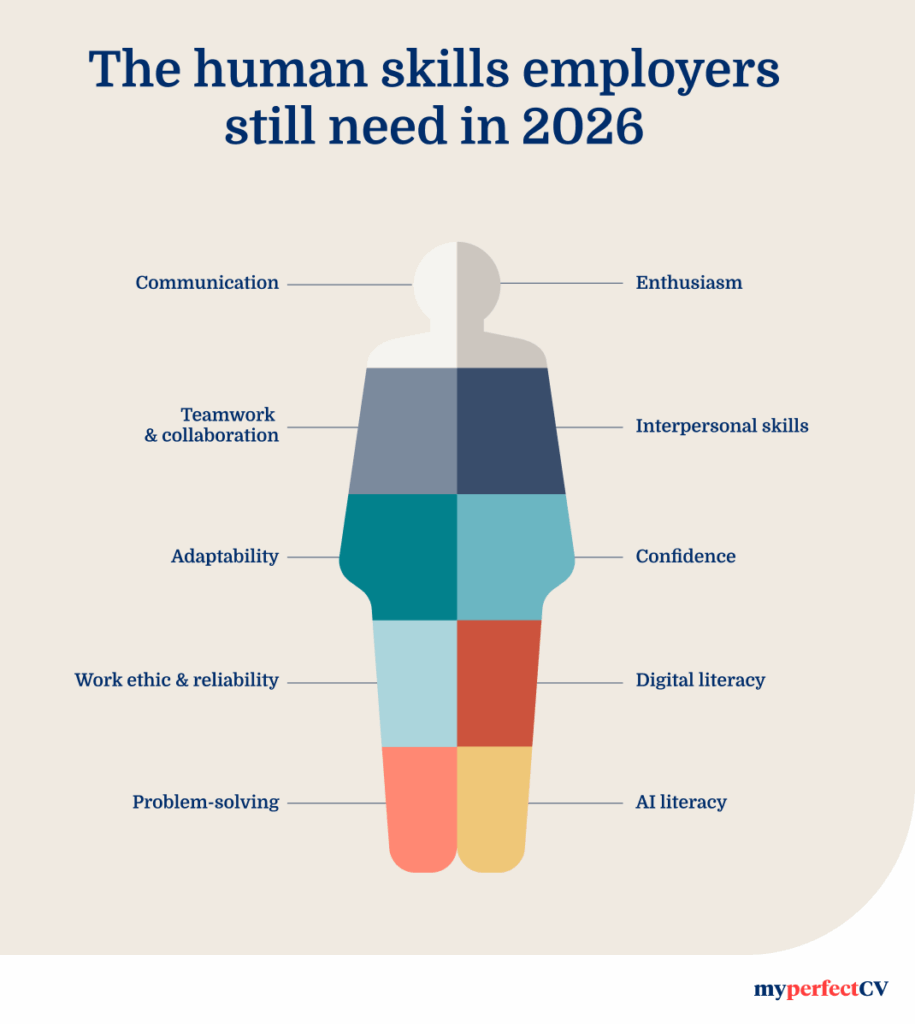
Below is a breakdown of the 10 human skills employers in the UK value most in 2026, supported by the latest national data and insights.
1. Communication
Communication is the ability to express ideas clearly, listen effectively, and interact professionally — whether face-to-face, in writing, or through digital tools. It’s a core skill that underpins teamwork, customer service, problem-solving, and day-to-day collaboration. As workplaces become more digital and distributed, the ability to communicate clearly is more important than ever.
What the research shows
Employer surveys consistently rank communication as one of the biggest skills gaps in the UK workforce. The Institute of Student Employers reports that many graduates lack strong communication and interpersonal skills. SME data from 2025 also highlight communication-related traits, such as good personality fit (22%) and teamwork (28%), both rated higher than qualifications or industry experience.
Why employers want it
Good communicators help teams work efficiently, reduce misunderstandings, and improve customer interactions. Clear communication also makes it easier to adopt new technologies and collaborate across departments — something AI cannot do on its own. It remains one of the most valuable and universal human skills in the modern workplace.
2. Teamwork & collaboration
Teamwork is the ability to work well with others, share ideas and contribute to group goals. As workplaces become more cross-functional and hybrid, effective collaboration helps teams stay aligned and productive.
What the research shows
UK SMEs consistently highlight teamwork as one of the top traits they look for when hiring. In 2025, 28% of employers said being a “team player” is one of the most attractive qualities on a CV, ranking above industry experience and academic qualifications.
Employers also report that new hires who work well with others boost productivity, improve morale, and help upskill the wider workforce — benefits they actively seek when expanding their teams.
Why employers want it
Strong collaboration helps organisations adapt quickly, share knowledge, and avoid bottlenecks. Teams function more efficiently when people can communicate openly, take responsibility, and support one another. In an era where AI assists with tasks but cannot replace human connection, teamwork remains a core driver of workplace success.
3. Adaptability
Adaptability is the ability to adjust quickly to new tools, tasks, priorities, or ways of working. With workplaces changing faster than ever — from new AI tools to shifting customer expectations — employees who can stay flexible and open to change are becoming essential.
What the research shows
LinkedIn’s 2025 workforce analysis identifies adaptability as one of the fastest-growing skill requirements, driven by the shift toward project-based, constantly evolving roles. UK SMEs also highlight adaptability as a valued trait when hiring, noting that flexible employees help teams respond more effectively to new challenges.
Why employers want it
Adaptable employees make transition periods smoother, learn new tools more easily and help organisations stay resilient. As technology evolves, people who can adjust quickly — rather than rely on rigid routines — bring stability and momentum to the workplace.
4. Work ethic & reliability
Work ethic is the willingness to take responsibility, meet deadlines, and maintain consistent standards. Reliability builds trust within teams and ensures work gets done without constant supervision — something employers value across industries.
What the research shows
A good work ethic is the top trait employers look for on a CV, with 36% of SMEs highlighting it as their most desirable characteristic when hiring. This places it above qualifications, industry experience and even technical skills.
Why employers want it
Employees with a strong work ethic make teams more dependable and reduce the need for oversight. As businesses adopt new tools and processes, reliable workers help keep operations stable and maintain quality during periods of change.
5. Problem-solving & critical thinking
Problem-solving is the ability to analyse issues, identify root causes, and find practical solutions. Critical thinking supports this by helping people evaluate information, question assumptions, and make sound decisions. These skills matter because workplaces rely on humans to handle unexpected challenges — something AI tools or automated systems cannot fully anticipate.
What the research shows
Basic problem-solving is one of the most common gaps in the UK workforce. The Essential Digital Skills Framework identifies “problem solving” as a missing capability for millions of workers, including tasks such as troubleshooting errors and using help tools effectively. This aligns with employer reports showing widespread skills gaps at the entry level and in everyday practical decision-making.
Why employers want it
Employees with strong problem-solving skills keep work moving when issues arise. They reduce downtime, make better use of digital tools and help teams respond quickly to challenges. In a workplace where technology changes rapidly, employers value people who can think independently and resolve problems without relying solely on automated systems.
6. Enthusiasm & willingness to learn
Enthusiasm is the motivation to take initiative, stay engaged, and show genuine interest in the role. Willingness to learn reflects a person’s ability to grow, embrace new tools and adapt their skill set over time. In a fast-changing workplace, these qualities help employees stay relevant and contribute more effectively.
What the research shows
The 2024 CBI Economics survey found that enthusiasm is the number one predictor of graduate success, with 68% of employers rating it as the most important attribute, ahead of subject relevance, qualifications, or university attended (only 8%). Employers view enthusiasm as a signal for adaptability, motivation, and long-term potential — qualities that outlast technical knowledge.
Why employers want it
In a rapidly changing technical environment, enthusiasm serves as a proxy for “learning agility”. Employers are calculating that technical skills have a short half-life and will need to be updated. In contrast, attitude and willingness to learn are enduring traits that determine long-term value. Workers who show enthusiasm are more proactive, easier to train, and more likely to pick up new skills as technology evolves.
7. Interpersonal skills & emotional intelligence
Interpersonal skills include the ability to build rapport, listen well, show empathy, and navigate social situations smoothly. Emotional intelligence (EQ) supports this by helping people understand their own emotions and the feelings of others. These abilities make workplace interactions more effective and strengthen relationships across teams, customers, and partners.
What the research shows
Many UK employers report that graduates and early-career workers lack strong interpersonal and communication skills, which they identify as among the most significant gaps in the workforce. This aligns with broader employer trends showing that personality fit (22%) and people-focused traits matter more to SMEs than qualifications or strict industry experience.
Why employers want it
Employees with strong interpersonal skills help create positive team environments, reduce conflict, and improve customer experience. As AI becomes more common in the workplace, the ability to connect with others, read situations, and communicate with empathy remains intensely human.
8. Confidence
Confidence is the ability to communicate clearly, share ideas, and make decisions without second-guessing yourself. It helps people present information professionally, speak up when needed, and take initiative. In any role, confidence supports better communication and stronger working relationships.
What the research shows
Confidence is one of the qualities UK SMEs look for most when hiring. In 2025, 24% of employers highlighted confidence as a key CV strength, placing it ahead of formal qualifications and technical experience. Employers note that confident employees tend to engage more, adapt faster, and contribute more proactively in team environments.
Why employers want it
People who are confident participate more effectively, represent the business well, and handle new tasks with less hesitation. As workplaces continue to change, employers value individuals who can communicate clearly, support customers, and approach challenges with assurance.
9. Digital literacy
Digital literacy refers to the ability to use everyday workplace technology confidently and effectively. This includes managing files, using email and collaboration tools, completing digital tasks and navigating online systems safely. These are now baseline skills for almost every role in the UK.
What the research shows
Despite the widespread use of smartphones and apps, a significant proportion of the UK workforce lacks essential workplace-level digital competence. According to FutureDotNow, 54% of UK workers cannot complete all 20 digital tasks in the Government’s Essential Digital Skills Framework, which covers communication, handling information, basic troubleshooting, and online safety.
Why employers want it
Businesses increasingly rely on digital tools for communication, reporting, scheduling, and customer service. Employees with strong digital literacy can learn new software more quickly, avoid errors, and work more efficiently with modern systems. Without these skills, workers struggle to benefit from automation tools, making digital literacy one of the most important human capabilities in today’s job market.
10. AI literacy
AI tools are quickly becoming a normal part of work. Whether it’s using ChatGPT to draft an email or letting Copilot tidy up a document, many people now lean on AI to save time and stay organised. This is where AI literacy comes in: knowing how to use these tools confidently and sensibly in your day-to-day job. But don’t worry — employers aren’t expecting you to build AI systems or write complex code. What they value is much simpler: knowing how to ask AI the right questions, understanding its limits, and using your own judgement to check the results.
What the research shows
LinkedIn’s 2025 skills data research identifies AI literacy as the number one in-demand skill across industries. Employers want people who can use AI tools to improve productivity, not people who build AI systems. This reflects a broader shift in the workplace, where digital and AI-enabled tools are becoming standard in daily tasks.
Why employers want it
AI-literate employees help organisations work faster and more efficiently. They can automate simple tasks, produce clearer information and use AI to support better decision-making. Employers value people who can work alongside AI without relying on it entirely — combining technology with human judgement, communication and problem-solving.
How to build these skills
Improving these skills doesn’t require formal training — small, consistent habits make a big difference. Here are simple ways anyone can start strengthening their human skills:
- Communicate more clearly by summarising key points in emails and checking understanding in conversations.
- Work with more people by joining cross-team projects or volunteering for collaborative tasks.
- Become more adaptable by saying yes to new tools or responsibilities, even when they feel unfamiliar.
- Strengthen problem-solving by breaking issues into smaller steps and trying your own solutions before asking for help.
- Show enthusiasm by asking questions, taking initiative, and showing genuine interest in new tasks.
- Build digital confidence with short online tutorials on tools you use every day.
- Practise AI literacy by experimenting with tools such as ChatGPT or Copilot for simple tasks such as drafting, summarising, or organising information.
Key takeaways
AI and automation are changing the way we work, but they haven’t replaced the value of human strengths. UK employers consistently highlight the same message: the people who succeed are those who bring adaptability, communication, enthusiasm and sound judgement to their roles.
Here’s what truly matters as we move into 2026:
- Human skills can outperform qualifications. Employers consistently prioritise communication, teamwork, enthusiasm, and work ethic over degrees or technical backgrounds.
- AI still depends on people. Even the best tools need someone who can ask good questions, check the output, and make sound decisions.
- Soft skills support digital change. Adaptable and proactive employees help teams transition to new tools and workflows more smoothly.
- Human skills grow with you. Unlike technical skills, which can change quickly, communication, adaptability, and problem-solving stay valuable throughout your entire career.
Whether you’re starting a new job, planning a career move, or growing in your current role, strengthening your skills will always help you stand out. In a workplace shaped by technology, it’s your human qualities that make the most significant difference.
Methodology
The insights in this article are based on a review of the latest UK labour market reports, employer surveys and skills research. We analysed data from government publications, SME Skills Horizon findings, the Institute of Student Employers, LinkedIn’s 2025 workforce analysis and the Essential Digital Skills Framework to identify the human capabilities most in demand.
Industry insights from organisations focused on digital and AI readiness were used to understand how automation is influencing skill requirements. The My Perfect CV editorial team reviewed all findings to ensure accuracy, clarity and alignment with current UK hiring trends.
This methodology ensures the conclusions reflect both employer expectations and the practical realities of today’s workforce.
Sources
- UK Government, Department for Education. (2025). SME skills horizon 2025. GOV.UK.
https://www.gov.uk/government/publications/sme-skills-horizon-2025 - LinkedIn Economic Graph. (2024). Skills on the rise: The fastest-growing skills companies need today. LinkedIn Talent Blog.
https://www.linkedin.com/business/talent/blog/learning-and-development/skills-on-the-rise - UK Government, Department for Education. (2018). Essential digital skills framework. GOV.UK.
https://assets.publishing.service.gov.uk/government/uploads/system/uploads/attachment_data/file/738922/Essential_digital_skills_framework.pdf - University Alliance. (2024). To what degree? Skills, graduate outcomes and the future workforce.
https://www.unialliance.ac.uk/2024/08/14/towhatdegree/ - FutureDotNow. (2024). FutureDotNow raises alarm over workforce readiness for AI.
https://futuredotnow.uk/futuredotnow-raises-alarm-over-workforce-readiness-for-ai/
Andrew Smith
Senior Content Writer
Meet Andrew Smith – an accomplished English copywriter with a strong background in SEO optimisation. Passionate about producing engaging content, Andrew has written across various fields, including health and fitness, security, travel, and tourism.



*The names and logos of the companies referred to above are all trademarks of their respective holders. Unless specifically stated otherwise, such references are not intended to imply any affiliation or association with myperfectCV.