
Hairdresser CV examples & templates for 2026
Launch your beauty career and land your next salon role. Build a professional hairdresser assistant CV that highlights your skills and secures more interviews today.

- Our customers have been hired by : *Foot Note
Whether starting as a junior stylist or progressing after an NVQ course, a well-structured hairdresser CV creates a strong first step in the industry. It highlights technical ability, client confidence and formal training in a simple, readable format. This guide walks through the essentials and includes examples that demonstrate what a strong, well-presented CV should look like.
In this guide, we’ll cover:
- How to write a strong hairdresser CV step by step
- The most effective CV format for hairdressers
- Editable hairdresser CV templates
- Hairdressing CV examples made by our certified CV writers.
Smarter writing with built-in AI
Get instant, high-quality text suggestions tailored to your specific industry.
SEARCH ALL CV EXAMPLES
Hairdressing CV example
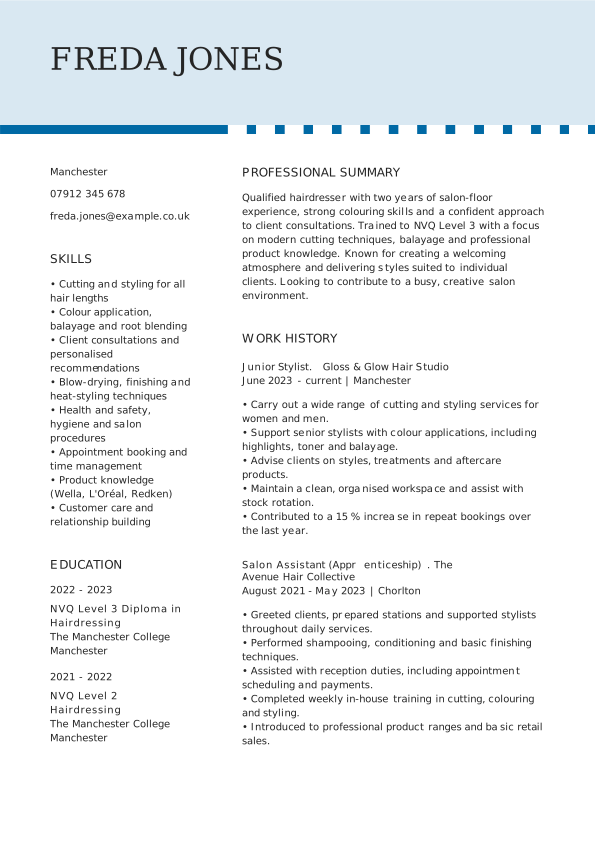
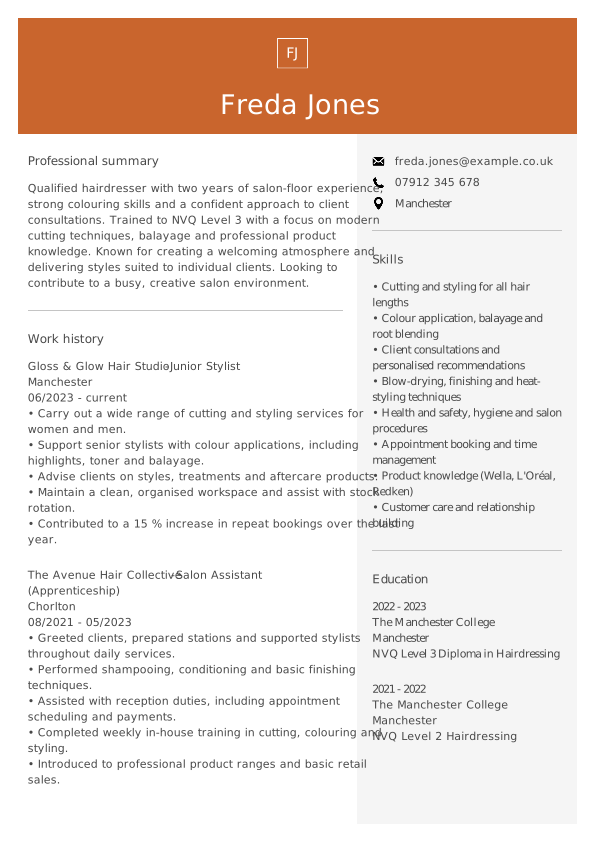
Freda Jones
07912 345 678
freda.jones@example.co.uk
Manchester
PROFESSIONAL SUMMARY
Qualified hairdresser with two years of salon-floor experience, strong colouring skills and a confident approach to client consultations. Trained to NVQ Level 3 with a focus on modern cutting techniques, balayage and professional product knowledge. Known for creating a welcoming atmosphere and delivering styles suited to individual clients. Looking to contribute to a busy, creative salon environment.
WORK HISTORY
Junior Stylist
Gloss & Glow Hair Studio, Manchester
June 2023 – Present
- Carry out a wide range of cutting and styling services for women and men.
- Support senior stylists with colour applications, including highlights, toner and balayage.
- Advise clients on styles, treatments and aftercare products.
- Maintain a clean, organised workspace and assist with stock rotation.
- Contributed to a 15% increase in repeat bookings over the last year.
Salon Assistant (Apprenticeship)
The Avenue Hair Collective, Chorlton
August 2021 – May 2023
- Greeted clients, prepared stations and supported stylists throughout daily services.
- Performed shampooing, conditioning and basic finishing techniques.
- Assisted with reception duties, including appointment scheduling and payments.
- Completed weekly in-house training in cutting, colouring and styling.
- Introduced to professional product ranges and basic retail sales.
SKILLS
- Cutting and styling for all hair lengths
- Colour application, balayage and root blending
- Client consultations and personalised recommendations
- Blow-drying, finishing and heat-styling techniques
- Health and safety, hygiene and salon procedures
- Appointment booking and time management
- Product knowledge (Wella, L’Oréal, Redken)
- Customer care and relationship building
EDUCATION
2022 – 2023
The Manchester College
Manchester
NVQ Level 3 Diploma in Hairdressing
2021 – 2021
The Manchester College
Manchester
NVQ Level 2 Hairdressing
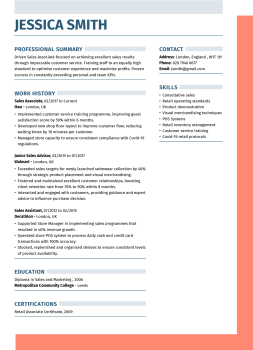
Hairdressing CV templates
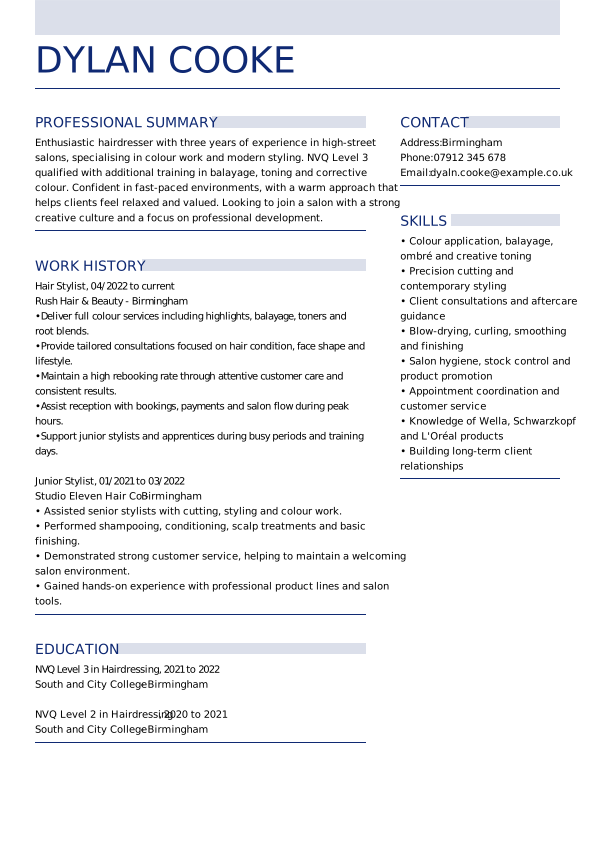
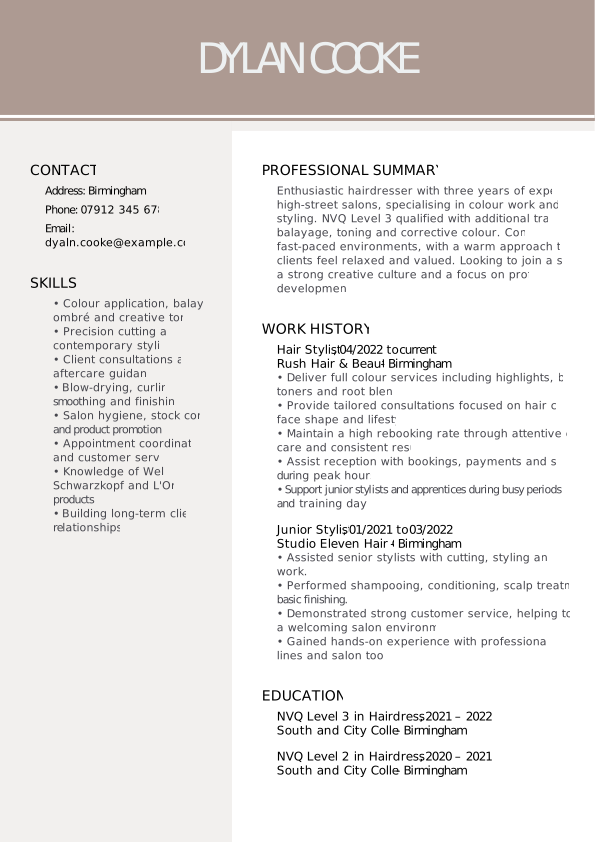
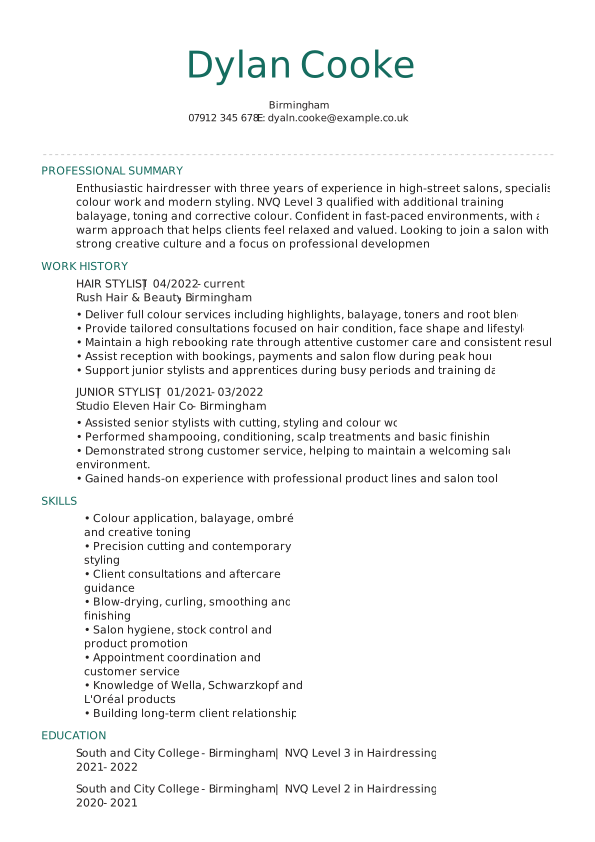
Our hairdressing CV templates make it easy to present salon experience, NVQ training and styling skills in a clean, professional layout. Each design is fully customisable, helping stylists show personality while keeping the structure clear and employer-friendly. Explore the hairdressing CV templates below to find a style that reflects your individual strengths.
Best format for a hairdressing CV
Depending on your background and level of work experience, choosing the correct CV format helps you present your key strengths most effectively.
New hair stylists often benefit from a layout that highlights their skills, while those with more salon experience usually need a structure that showcases their progression and hands-on practice. In hairdressing, the two most commonly used CV formats are the skills-based CV and the reverse-chronological CV.
Skills-based CV format
A skills-based CV highlights what you can do rather than where you’ve worked. It groups abilities under clear headings such as cutting, colouring, styling or client care, making it ideal for applicants with limited salon experience or those still developing through NVQs, college courses or apprenticeships.
Use this format in a hairdressing CV if you want to:
- Focus on practical skills gained through training rather than job titles
- Emphasise strengths developed during college assessments or short courses
- Apply for junior stylist, assistant or apprenticeship roles
- Present confidence in techniques despite having little to no salon experience
This format works especially well for beginners who are building their career foundation and want employers to see their potential and technical understanding straight away.
Reverse-chronological CV format
The reverse-chronological CV lists your most recent position or training first. It’s the format most salon managers expect, as it clearly shows progression, real client work and growing responsibility.
Use this format in a hairdressing CV if you want to:
- Highlight recent salon experience, even if part-time or junior level
- Show development from training into hands-on work
- Demonstrate reliability, steady growth and consistent client care
- Present a clear timeline of roles, responsibilities and achievements
This format is particularly effective if you already have a few years of relevant work experience.
How to write a hairdressing CV
A strong hairdressing CV follows the same full-form structure as most professional applications. The key sections to include are:
• CV header (name and contact details)
• CV summary (a short profile)
• Work experience
• Skills section
• Education and training
In the following sections, I’ll go through each part of a hairdressing CV step by step, explaining what to include and how to make every section stand out.
Step 1: Start with a contact section
Begin your hairdressing CV with clear contact details so salon managers can reach you easily. Keep this section simple, focusing only on what’s essential.
What to include:
- Full name: List your first and last name clearly.
- Location: Add your town or city. A complete street address isn’t needed.
- Phone number: Use a current mobile number for quick contact.
- Email address: Choose a professional address such as firstname.lastname@email.com.
- Optional links: Include a portfolio, Instagram page or online gallery if it showcases colour work, cutting, styling or training progress.
Example contact section
Fara Smith
Birmingham
07432 678 901
emma.taylor@email.com
Step 2: Write a hair and beauty CV profile
Your CV profile (also called a personal statement, or a CV summary) sits just under your contact section. It’s a short paragraph that introduces your strengths, training and career focus. For a hairdressing CV, this section should highlight qualities that matter in a salon environment: strong client care, technical skills, creativity, and a positive approach to learning.
What to include:
- Who you are: For example: “Friendly and dedicated trainee stylist with a passion for hair and beauty.”
- Key strengths: For example: “Skilled in consultations, basic cutting, colouring support and creating a welcoming experience for clients.”
- Goal or focus: For example: “Looking to grow as a stylist in a supportive salon while developing advanced colouring and cutting skills.”
Tip: Read the job description and use similar keywords in your profile, such as client care, colour support, teamwork, or customer experience, to show a strong match.
Example hairdressing CV summary
“Motivated and creative trainee stylist with solid NVQ training and a strong interest in colour and modern styling. Confident working with clients, supporting senior stylists and maintaining a professional salon environment. Keen to join a busy, friendly salon to continue developing cutting and colour techniques.”
Step 3: Showcase your hands-on experience
The work experience section should highlight how practical skills have been developed in real environments. This might include salon roles, apprenticeships, college placements or part-time work that involved customer interaction. Salon managers understand that many applicants are early in their careers, so what matters most is a good attitude, reliability and a willingness to learn.
For each experience entry, include:
- Job title
- Business name
- Dates of employment
- 4-6 bullet points explaining what was done and what was learned
Tip: Start bullet points with strong action verbs such as assisted, prepared, supported, styled, guided or maintained.
Example experience section
Junior Hair Stylist
Bella & Co Hair Studio, Nottingham
February 2024–June 2024
- Assisted stylists with shampooing, conditioning and basic finishing techniques
- Prepared stations, maintained salon cleanliness and supported daily operations
- Helped with colour preparation, foils and product mixing under supervision
- Developed confidence working with clients and providing a friendly, welcoming service
- Developed strong communication and customer service skills
Step 4: Spotlight the hairdressing skills that make clients come back
Hairdressing relies on more than technical ability — clients return because their stylist not only delivers great results but also creates a comfortable, friendly experience. This means a strong hair and beauty CV should highlight both hands-on skills (called hard skills) and the soft skills that build trust and loyalty.
How to write it:
- Add 6–8 key skills in a simple bullet-point list
- Keep each skill short and focused
- Include a balance of technical abilities and people skills
- Choose skills that match what salons look for: client care, teamwork, reliability and strong communication
Examples of skills to include
Technical skills
- Cutting and styling techniques
- Colour application, toning and balayage
- Blow-drying and finishing
- Consultation and fundamental hair analysis
- Knowledge of professional product ranges
- Hair treatments and conditioning services
- Foiling and highlighting techniques
- Use of professional tools and equipment
- Scalp treatments and basic scalp care
- Hygiene, sanitation, and health and safety procedures
Soft skills
- Friendly, client-focused communication skills
- Active listening and asking the right questions
- Time management in a busy salon
- Teamwork and supporting senior stylists
- Reliability
- Positive attitude
- Creativity
- Attention to details
- Adaptability
- Ability to handle feedback
Step 5: Highlight your hairdressing training, qualifications and salon certificates
Hairdressing is a practical, skills-led career, so employers don’t expect degrees or academic qualifications. Most applicants come through NVQs, college courses or apprenticeships, with additional short courses helping to show enthusiasm for learning. However, it’s still important to list these qualifications in the CV’s education section.
List qualifications in reverse order, starting with your most recent training. If you’re still studying towards an NVQ, include your expected completion date. Any extra certificates — such as colour courses, health and safety training or short workshops — are valuable additions and show commitment to developing technical skills.
What to include in a hairdressing CV:
- College, training provider or academy name
- Qualification type (NVQ Level 2 or 3, Diploma, Apprenticeship)
- Key modules or techniques covered
- Dates attended or year completed
- Any short courses or certificates
Example of an education section
The Manchester College
NVQ Level 3 Hairdressing — 2024
– Advanced cutting, colour correction and creative styling
Additional Training
L’Oréal Professionnel: Colour Keys — 2024
Step 6: Strengthen your hairdressing CV with bonus sections
Bonus sections help you stand out by showing more than just your core skills and experience. For hairdressers, these sections are especially valuable because the role is practical, creative, and client-facing. You can include sections like:
- Certifications and training: Include any professional qualifications beyond your core training. This could be NVQ levels, brand-led courses, colour certification, or specialist treatment training.
- Portfolio or work samples: Hairdressing is visual. If possible, link to an online portfolio or social media page that shows your work, such as cuts and transformations.
- Awards and competitions: List any salon awards, styling competitions, or internal recognition you’ve received.
- Language levels: In diverse salons, speaking more than one language can be a real advantage. Include languages and proficiency levels.
- Availability: Many salons value flexibility. You can note weekend availability, late shifts, or willingness to cover busy periods.
Dos and don’ts for a hairdresser CV
Hairdressing is a career built on constant learning. As you develop new techniques, complete courses or gain more salon experience, refresh your CV so it always reflects your current strengths.
Adapt your personal statement to reflect the type of salon and services offered. If the job advert mentions qualities like reliability, creativity or strong communication, use similar wording to show you’re a good fit.
If you specialise in certain services, such as colouring, styling, treatments, or bridal hair, make these easy to spot on your CV. This helps salon managers quickly see where you add the most value.
A one-page CV works well for applicants with limited experience, as it keeps the focus on key strengths and skills without overwhelming the reader. For those with more training or several salon roles, a two-page CV is perfectly acceptable. Avoid going beyond two pages.
A busy layout, heavy graphics or bold decorative fonts can distract from your skills and make it harder for salon managers to scan your CV quickly. A simple, well-organised layout is often more effective and looks more professional. Stick to a traditional structure with clean headings and consider adding just a hint of colour to give it a polished, modern touch.
Focus on recent and relevant hairdressing roles. Older, unrelated jobs can distract from your current skills and make your CV feel unfocused.
Frequently asked questions about hairdresser CVs
How can I prepare a CV for a hairdressing role?
Start by checking current salon vacancies or apprenticeship listings and read the job adverts carefully. Note the techniques, skills or qualities they mention — such as colouring support, teamwork, client care or the ability to learn quickly. Then tailor your CV to those requirements by highlighting relevant training, salon experience, or practical skills gained through NVQs, college courses, or short courses. If you have a portfolio or Instagram page showing your work, include it in your CV to strengthen your application.
Do I need salon experience to apply for a hairdressing job?
Not always. Many salons welcome trainees, apprentices or junior stylists who are still building their experience. NVQ courses, college training days and practical workshops are often enough to get started. What matters most is a positive attitude, good communication, reliability and a willingness to learn new techniques.
What qualifications do I need for a hairdressing role?
Most entry-level roles require an NVQ Level 2 in Hairdressing or a willingness to work towards it. Apprenticeships give applicants the chance to train while gaining experience in a salon. Level 3 qualifications and additional certificates such as balayage training, colour workshops or health and safety courses are helpful, but they are not essential for beginners.
Do I need a portfolio for a hairdressing job?
A portfolio is not essential for beginners, but it can be very helpful. Simple photos of college work, practice cuts, colour results or mannequin training show commitment and progress. Many salons appreciate seeing even basic examples of developing skills.
Related Beauty Therapy CV Examples

Create your hairdresser CV today
Start your hairdressing career with confidence and make a strong first impression. Build a professional CV that highlights technical skills, client care and enthusiasm for learning, even if salon experience is still developing. Use our expert guidance and customisable CV templates to create a polished, job-ready Hairdresser CV in minutes.
*The names and logos of the companies referred to above are all trademarks of their respective holders. Unless specifically stated otherwise, such references are not intended to imply any affiliation or association with myperfectCV.