
How to write a medical doctor CV + examples
Years of education, residency, and specialist training shaped your medical career. This article offers a structured medical CV example, expert writing advice, and the best doctor CV format to help you succeed in healthcare.

- Our customers have been hired by : *Foot Note
Medicine is a profession built on years of training, rotations, and continuous development. From medical school and residency to clinical appointments and research, every stage has grown your expertise, and your doctor CV should demonstrate it.
In this guide, you’ll learn how to create a compelling medical CV for doctors, explore a complete doctor CV example, and see how to organise your experience using a professional doctor CV template.
Smarter writing with built-in AI
Get instant, high-quality text suggestions tailored to your specific industry.
SEARCH ALL CV EXAMPLES
Medical doctor CV example

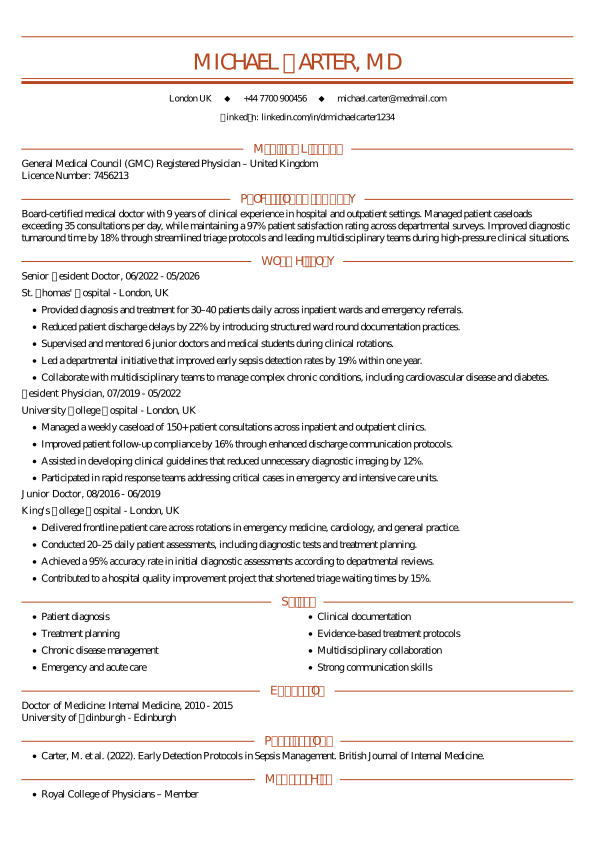
Michael Carter, MD
Location: London, UK
Phone: +44 7700 900456
Email: michael.carter@medmail.com
LinkedIn: linkedin.com/in/drmichaelcarter1234
Medical Licence
General Medical Council (GMC) Registered Physician – United Kingdom
Licence Number: 7456213
Professional summary
Board-certified medical doctor with 9 years of clinical experience in hospital and outpatient settings. Managed patient caseloads exceeding 35 consultations per day, while maintaining a 97% patient satisfaction rating across departmental surveys. Improved diagnostic turnaround time by 18% through streamlined triage protocols and leading multidisciplinary teams during high-pressure clinical situations.
Work experience
Senior Resident Doctor – Internal Medicine
St. Thomas’ Hospital, London
June 2022–May 2026
- Provided diagnosis and treatment for 30–40 patients daily across inpatient wards and emergency referrals.
- Reduced patient discharge delays by 22% by introducing structured ward round documentation practices.
- Supervised and mentored 6 junior doctors and medical students during clinical rotations.
- Led a departmental initiative that improved early sepsis detection rates by 19% within one year.
- Collaborated with multidisciplinary teams to manage complex chronic conditions, including cardiovascular disease and diabetes.
Resident Physician – Internal Medicine
University College Hospital, London
July 2019–May 2022
- Managed a weekly caseload of 150+ patient consultations across inpatient and outpatient clinics.
- Improved patient follow-up compliance by 16% through enhanced discharge communication protocols.
- Assisted in developing clinical guidelines that reduced unnecessary diagnostic imaging by 12%.
- Participated in rapid response teams addressing critical cases in emergency and intensive care units.
Junior Doctor – Foundation Programme
King’s College Hospital, London
August 2016–June 2019
- Delivered frontline patient care across rotations in emergency medicine, cardiology, and general practice.
- Conducted 20–25 daily patient assessments, including diagnostic tests and treatment planning.
- Achieved a 95% accuracy rate in initial diagnostic assessments according to departmental reviews.
- Contributed to a hospital quality improvement project that shortened triage waiting times by 15%.
Education
Doctor of Medicine (MD) in Internal Medicine
University of Edinburgh
Edinburgh, 2010–2015
Skills
- Patient diagnosis
- Treatment planning
- Chronic disease management
- Emergency and acute care
- Clinical documentation
- Evidence-based treatment protocols
- Multidisciplinary collaboration
- Strong communication skills
Publications
- Carter, M. et al. (2022). Early Detection Protocols in Sepsis Management. British Journal of Internal Medicine.
Professional Memberships
- Royal College of Physicians – Member
- British Medical Association – Member
Doctor CV templates
Structure is essential when writing a doctor CV. Healthcare recruiters and hospital hiring committees review hundreds of applications, so your medical CV needs to present your clinical experience in an easy-to-scan format.
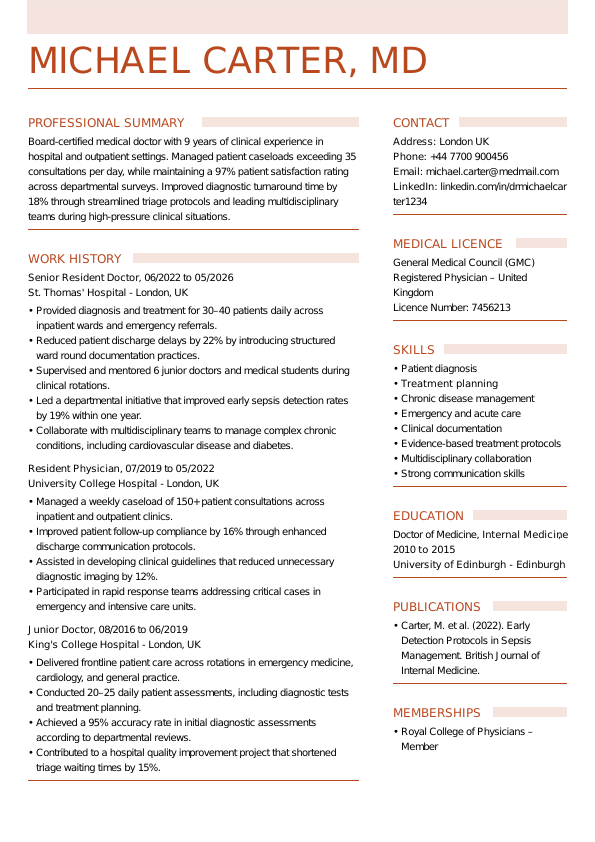
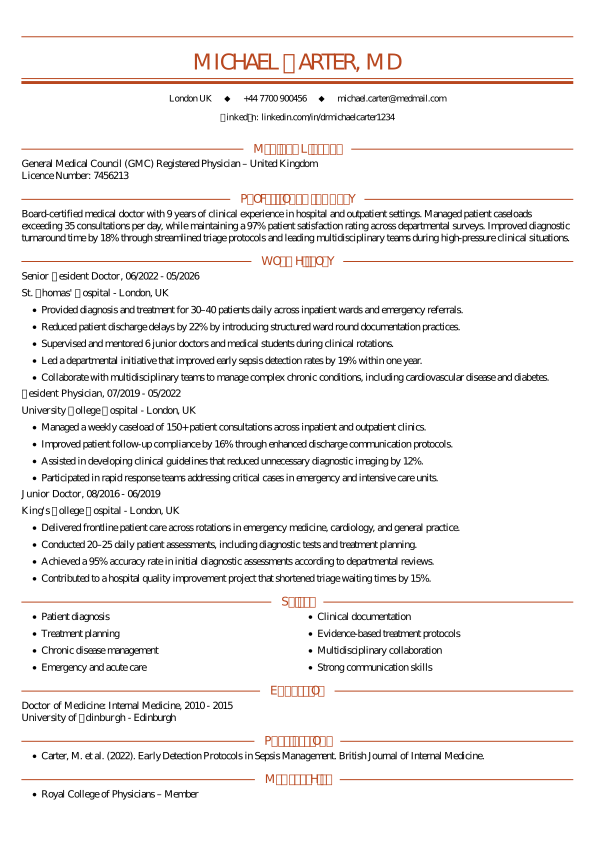
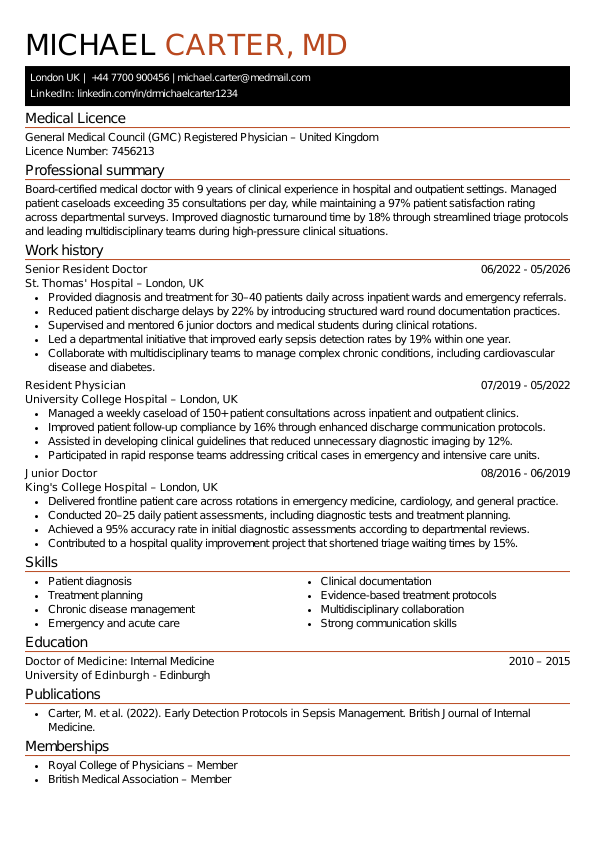
MyPerfectCV builder offers templates for physicians and other healthcare professionals that ensure your qualifications are in the right place. Using a CV builder will make your medical doctor CV easier to update as your career progresses. See some of our most popular doctor CV templates below:
Doctor CV formats
A professional doctor CV must follow a proper structure so hiring committees can quickly assess your expertise. In the UK, two CV formats are commonly used depending on the stage of your medical career and the type of role you are applying for.
The chronological CV format is the most widely used CV format for doctors. It lists your most recent clinical roles first and works well for doctors with a clear career progression. It is ideal for:
- Consultants and specialist doctors
- Experienced physicians with several hospital roles
- Candidates applying for senior clinical positions
The academic CV format is often used for academic medicine, research roles, or training positions. It places stronger emphasis on research, teaching, and professional development. It is commonly used for:
- Doctors applying for research or university posts
- Academic clinicians
- Early-career doctors with extensive training records
How to write a doctor CV for medical roles
When writing a CV for doctors, your goal is to demonstrate three key things:
- Clinical competence and medical knowledge
- Professional development and training pathway
- Ability to deliver high-quality patient care.
To achieve this, focus on the most relevant aspects of your medical career. In the following sections, you’ll learn how to write each part of a doctor CV.
Start with your personal information
The first section of your doctor CV should present your contact details. This information allows recruiters, hospitals, and medical boards to identify you quickly and contact you if your qualifications match the role.
Your personal information section should include:
- Full name – Include your professional title if applicable (e.g., Dr John Smith, MD).
- Phone number – Use a reliable number where you can be easily reached.
- Professional email address – Avoid informal addresses and use a professional format.
- Location – City and country are usually sufficient.
- LinkedIn or professional profile – Optional but useful if it highlights your clinical background or research work.
- Medical licence and registration number – Include the relevant licensing authority (for example, the General Medical Council in the UK).
Medical doctor CV example – personal information & licence
Michael Carter, MD
Location: London, UK
Phone: +44 7700 900456
Email: michael.carter@medmail.com
LinkedIn: linkedin.com/in/drmichaelcarter1234
Medical Licence
General Medical Council (GMC) Registered Physician – United Kingdom
Licence Number: 7456213
Lead with a strong personal profile
The professional CV summary introduces your doctor CV and gives recruiters a quick overview of your medical background. Like an abstract of a medical research paper, it should highlight the most relevant points from your doctor CV, such as the best skills and accomplishments.
A strong personal profile typically includes:
- Your medical specialisation or field of practice
- Years of clinical experience
- Type of healthcare settings where you have worked
- Key achievements, such as patient outcomes or operational efficiency.
Avoid generic descriptions such as “hard-working” or “dedicated”. Instead, use power words for a CV to make it sound impactful. Phrases like “board-certified”, “patient-focused”, or “proactive” are a much better fit.
Doctor CV summary example
Professional summary
Board-certified medical doctor with 9 years of clinical experience in hospital and outpatient settings. Managed patient caseloads exceeding 35 consultations per day, while maintaining a 97% patient satisfaction rating across departmental surveys. Improved diagnostic turnaround time by 18% through streamlined triage protocols and leading multidisciplinary teams during high-pressure clinical situations.
Present your clinical work experience
The clinical experience section is the core of your doctor CV. List your roles in reverse chronological order, starting with your most recent position. For each entry, include the hospital or clinic name, your job title, and the dates of employment.
More importantly, show how you applied your medical expertise in real clinical settings. Rather than simply listing routine duties, focus on quantified achievements.
Your work experience entries should typically include:
- Name of the place you worked at
- Your job title
- Starting and end dates
- 3–6 bullet points showcasing job accomplishments.
Use the following structure to create accomplishment statements:
- Start with a clinical action verb: diagnosed, managed, treated, supervised, implemented
- Describe the medical responsibility or task you performed
- Add measurable context, such as patient volume, percentage improvements, or departmental outcomes
- Show the clinical impact, such as improved patient care, efficiency, or diagnostic accuracy.
You can learn more about showing accomplishments by reading our article about the STAR CV method.
Work experience example on a doctor CV
Work experience
Senior Resident Doctor – Internal Medicine
St. Thomas’ Hospital, London
June 2022–May 2026
- Provided diagnosis and treatment for 30–40 patients daily across inpatient wards and emergency referrals.
- Reduced patient discharge delays by 22% by introducing structured ward round documentation practices.
- Supervised and mentored 6 junior doctors and medical students during clinical rotations.
- Led a departmental initiative that improved early sepsis detection rates by 19% within one year.
- Collaborate with multidisciplinary teams to manage complex chronic conditions, including cardiovascular disease and diabetes.
Resident Physician – Internal Medicine
University College Hospital, London
July 2019–May 2022
- Managed a weekly caseload of 150+ patient consultations across inpatient and outpatient clinics.
- Improved patient follow-up compliance by 16% through enhanced discharge communication protocols.
- Assisted in developing clinical guidelines that reduced unnecessary diagnostic imaging by 12%.
- Participated in rapid response teams addressing critical cases in emergency and intensive care units.
Highlight your medical and clinical skills
The skills section of your doctor CV helps recruiters identify your areas of expertise. A strong medical doctor CV should include both hard skills (clinical skills) and soft skills.
Hard skills are your clinical competencies; they demonstrate your medical knowledge and ability to diagnose and treat patients. On the other hand, soft skills are people skills that reflect how you work within healthcare teams and communicate with patients.
Some popular CV doctor skills include:
Hard skills:
- Patient diagnosis
- Clinical assessment
- Treatment planning
- Disease management
- Acute and emergency care
- Medical procedures relevant to your specialty
- Clinical documentation and medical reporting
- Interpretation of diagnostic tests
- Evidence-based treatment planning
- Preventive medicine
- Patient education
- Infection control and clinical safety
- Electronic medical records (EMR) systems
Soft skills:
- Communication skills
- Patient counselling
- Multidisciplinary collaboration
- Clinical decision-making
- Leadership and supervision of junior doctors
- Time management in high-pressure environments
- Ethical medical practice
- Conflict resolution with patients or families
- Teaching and mentoring medical trainees
- Attention to detail in clinical documentation
- Adaptability in fast-changing clinical situations
When possible, support these skills with evidence in your work experience section. Recruiters want to see not only what skills you possess but also how you have applied them in real medical environments.
List your education and medical training
The education section of your doctor CV is particularly important because it shows the foundation of your medical knowledge and professional training. Unlike many other professions, you can’t become a medical doctor without getting the appropriate degree.
List your qualifications in reverse chronological order. For each entry, include the qualification name, the institution, and the dates attended. Your education section may include:
- Medical degree (MBBS, MD, DO, or equivalent)
- Residency programmes
- Fellowships or specialist training
- Relevant postgraduate degrees, such as an MSc or a PhD in medical fields
Example structure of education on an MD CV
Education
Doctor of Medicine (MD) in Internal Medicine
University of Edinburgh
Edinburgh, 2010–2015
If you are early in your medical career, you can also include relevant coursework, honours, or clinical placements. More experienced doctors usually keep this section concise and allow their clinical experience to take centre stage.
Add bonus sections that strengthen your doctor CV
Once the main sections of your medical doctor CV are complete, you can include additional sections that highlight your broader contributions to medicine. These bonus sections help demonstrate academic involvement, professional engagement, and specialised expertise that may not fit into the core parts of a physician’s CV.
They include:
- Research and Publications: Include journal articles, clinical studies, or research projects you have contributed to. Academic work is highly valued in medical careers and shows engagement with evidence-based practice.
- Conference Presentations: List medical conferences where you have presented research, case studies, or clinical findings. This demonstrates thought leadership and involvement in the wider medical community.
- Professional Memberships: Mention memberships in recognised medical organisations or professional bodies, such as the Royal College of Physicians or speciality associations.
- Teaching and Mentoring: If you have supervised medical students, trained junior doctors, or participated in clinical teaching programmes, include these experiences to demonstrate leadership and knowledge sharing.
- Language Levels: Multilingual doctors can be particularly valuable in diverse healthcare settings. List languages using the CEFR proficiency scale to indicate your level.
- Volunteer Medical Work: Participation in humanitarian missions, community clinics, or medical outreach programmes shows commitment to patient care beyond standard hospital duties.
Bonus sections examples for a medical doctor CV
Publications
- Carter, M. et al. (2022). Early Detection Protocols in Sepsis Management. British Journal of Internal Medicine.
Professional Memberships
- Royal College of Physicians – Member
- British Medical Association – Member
Polish your doctor CV with effective formatting
Strong formatting ensures your medical CV example is easy to read for both recruiters and applicant tracking systems.
Follow these tips when preparing your CV for medical positions:
- CV font: Use professional fonts such as Arial, Calibri, Helvetica, or Times New Roman.
- Font size: Use 10–12 pt for body text and 13–16 pt for section headings.
- Margins: Keep margins between 1.5–2.5 cm to maintain readability.
- CV length: Medical CVs can be longer than standard CVs, typically ranging from 2 to 4 pages depending on experience and academic work.
- Section headings: Use clear headings so reviewers can quickly locate clinical experience, education, and publications.
- Bullet points: Use bullet points for responsibilities and achievements to improve readability.
- ATS readability: Avoid complex graphics, tables, or unusual formatting that may confuse applicant tracking systems.
- Consistent formatting: Use the same date style, heading structure, and bullet formatting throughout the document.
- File format: Save your CV as a PDF unless the employer specifically requests another format.
Dos and Don’ts for a doctor CV
Show the scale of your work, including patient caseloads, departments served, or improvements in treatment efficiency.
Accurate terminology demonstrates professional credibility and familiarity with clinical environments.
Present your development from medical school through residency, fellowships, and clinical roles.
Research, publications, and conference presentations strengthen a medical CV and reflect engagement with evidence-based medicine.
Emphasise experience and clinical skills that are most relevant to the position or medical specialty.
Words such as “hard-working” or “motivated” are less convincing than evidence of clinical outcomes and responsibilities.
Residency programmes, fellowships, and specialist training should always be clearly listed.
Focus on roles and achievements that contribute to your medical expertise.
Use bullet points to make your responsibilities and achievements easier to review.
Dates, titles, and formatting should follow a clear and consistent structure throughout the CV.
Related Healthcare CV Examples

Create your doctor CV today!
Writing a strong doctor CV can feel challenging, especially when you need to present years of training, clinical experience, and professional achievements clearly. With our CV examples, expert tips, and professional CV templates, you’ll have everything you need to showcase your medical expertise. Create your CV using MyPerfectCV builder and take the next step in your medical career today.
*The names and logos of the companies referred to above are all trademarks of their respective holders. Unless specifically stated otherwise, such references are not intended to imply any affiliation or association with myperfectCV.