
How to Write a Counsellor CV: Tips + Examples for 2026
Empower your clients and advance your career. Build a professional counsellor CV that showcases your empathy and expertise to secure your dream role today.

- Our customers have been hired by : *Foot Note
A counsellor’s CV must make it clear that you can bridge the gap between psychological theory and human empathy. To do it, you must prove that you have both the clinical knowledge and the interpersonal skills to build trust with clients and foster their growth.
In this article, I’ll walk you through how to create a counsellor CV that showcases your professional qualifications, compassionate approach, and measurable successes in supporting clients.
With expert tips, a full counsellor CV example, and templates, you’ll have everything you need to make your application shine.
Smarter writing with built-in AI
Get instant, high-quality text suggestions tailored to your specific industry.
SEARCH ALL CV EXAMPLES
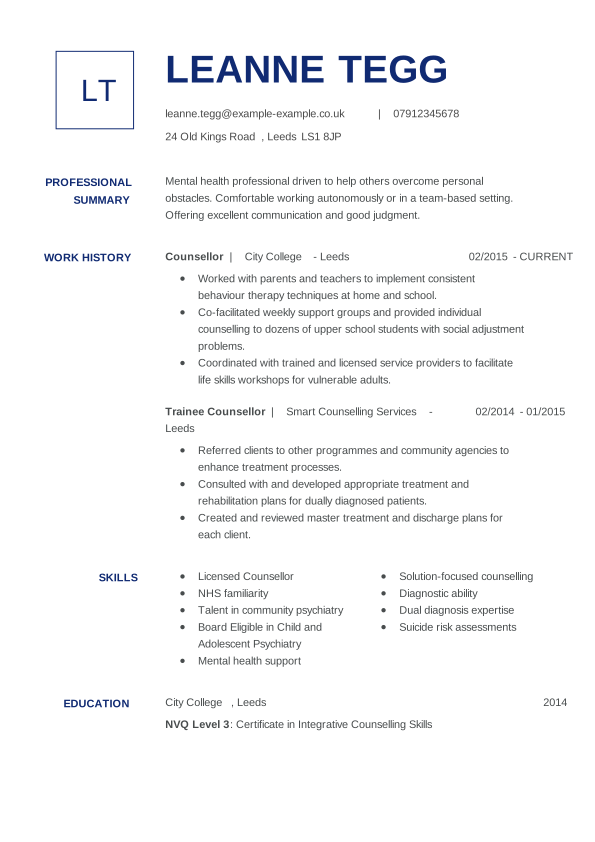
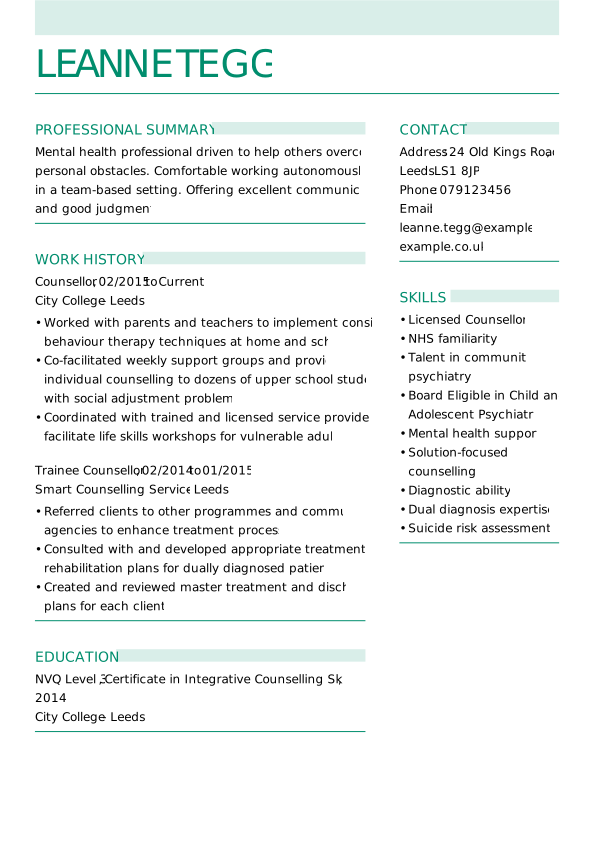
Counsellor CV example
Leanne Tegg
Counsellor
Leeds, UK
+44 7912 345 678
leanne.tegg.counsellor@mail.com
linkedin.com/in/leannetegg
Personal profile
Compassionate counsellor with 10+ years’ experience guiding individuals in educational and community mental health settings. Launched a group therapy initiative that reduced waitlist times by 30% and achieved 95% positive feedback from participants. Skilled at blending evidence-based practices with empathetic communication to build trust and foster resilience. Eager to apply dedication and innovative care strategies to support mental well-being at your organisation.
Work experience
Counsellor
City College, Leeds
Jan 2015–Present
- Collaborated with parents and teachers to implement consistent behaviour strategies at home and school, leading to noticeable improvements in student behaviour and parental engagement.
- Led weekly student support groups (up to 15 students per group) for those with social adjustment issues, helping participants develop coping skills and confidence in peer interactions.
- Provided one-on-one counselling to an average caseload of 20 students per term, achieving a 90% goal completion rate for individual therapy plans.
- Coordinated with external professionals to run life-skills workshops for vulnerable young adults, helping 50+ participants gain self-care and employment skills for independent living.
Trainee Counsellor
Smart Counselling Services, Leeds
Feb 2014–Jan 2015
- Referred clients to additional programmes and community agencies to complement in-house therapy and improve overall treatment outcomes.
- Assisted in developing tailored treatment and rehabilitation plans for 15+ clients with co-occurring mental health and substance abuse issues (dual diagnoses).
- Created and reviewed master treatment and discharge plans for each client, ensuring continuity of care and smooth transitions to follow-up support.
Education
BSc (Hons) Psychology
University of Manchester
2012
Level 4 Diploma in Therapeutic Counselling
City College Leeds
2014
Skills
- Cognitive Behavioural Therapy (CBT)
- Person-Centred & Integrative Counselling
- Group therapy facilitation
- Crisis intervention & risk assessment
- Case management & record-keeping
- Safeguarding protocols & confidentiality
- Empathy & active listening
- Strong communication and rapport-building
Publications
- “Bridging the Empathy Gap: Effective Youth Counselling Techniques” – Published in Counselling Today, Jul 2023.
- “Mindfulness Practices for Teen Anxiety” – Featured in Journal of Counselling Techniques, Feb 2022.
Certifications
- Registered Member (MBACP) – British Association for Counselling and Psychotherapy (since 2016)
- Certificate in Cognitive Behavioural Therapy – Achieved 2019
- Mental Health First Aid (MHFA) Certification – 2021
Counsellor CV templates
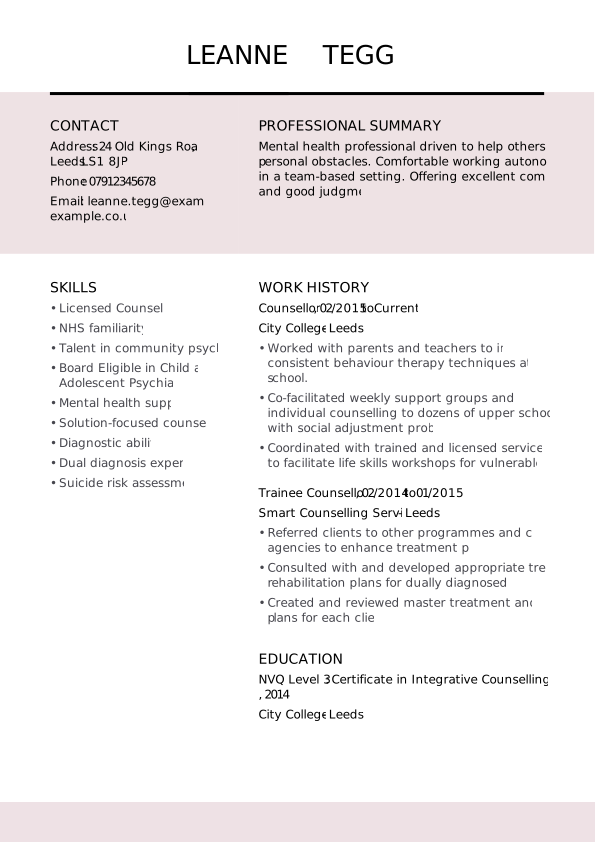
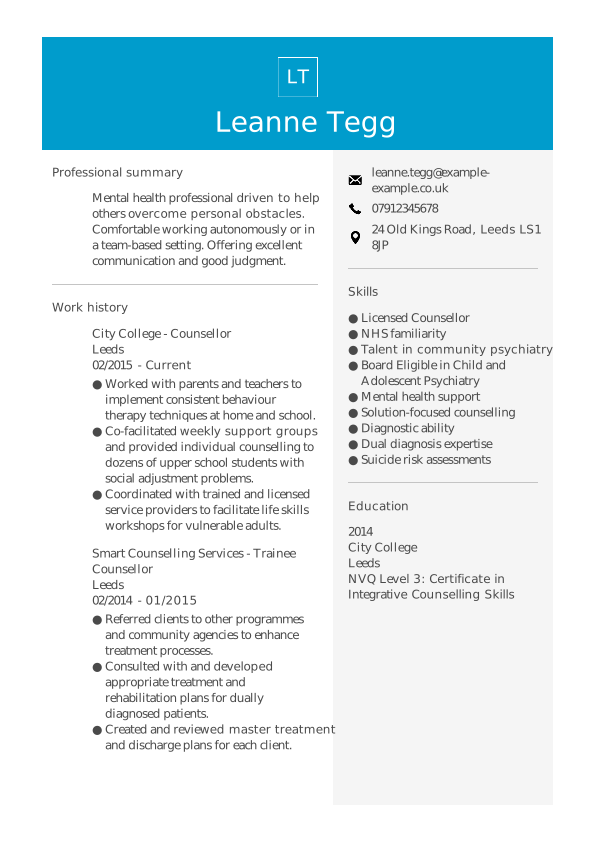
Creating a perfect counsellor CV starts with the correct layout. A proper template allows you to show your qualifications, experience, and caring approach without having to worry about the formatting. Our UK-specific counsellor CV templates help your CV pass ATS scans, stay readable, and look professional.
Choose a template matching the organisation’s tone. A clean design suits NHS or school roles, while a more modern layout fits charities or private practices. The goal is a clear, confident presentation so recruiters can quickly find your credentials and achievements.
Counsellor CV formats
The format of your CV can make a big difference. The chronological CV is the most common format and typically the best choice for a counsellor. It lists your roles in reverse order (most recent first), helping employers immediately see your recent, relevant experience.
Why is a chronological format right for the counsellor CV:
- It highlights recent experience and growth: It shows your career progression (e.g. moving from trainee to fully qualified counsellor) and the increasing responsibilities you’ve taken on.
- It is easy to follow: Recruiters can quickly scan your work history, knowing exactly where to find job titles, dates, and achievements under each role.
- It emphasises relevant roles: Your most recent (and likely most relevant) counselling position is front and centre, which is exactly what hiring managers want to see.
An alternative is the skills-based CV. It emphasises abilities over job history, which is helpful when switching careers or lacking relevant experience. Use cautiously, however, as it may raise questions about experience. For seasoned counsellors, the reverse-chronological format best showcases clinical expertise and growth.
How to write a counsellor CV
Time to start writing your CV for a counselling position. Let’s see how to prove you’re the best candidate by showing your relevant experience and specialised training. Here’s a step-by-step guide to crafting an excellent counsellor CV:
Start your counsellor CV with a straightforward header
The CV header is simple but crucial. That’s why it must be impeccable. Remember that a single typo here can make it impossible for the recruiter to contact you.
Include:
- Full name and professional title: e.g. Leanne Tegg – Counsellor. Using your job title in the header immediately signals your profession.
- Phone number: Use a number you check often and format it for easy reading (e.g. +44 7912 345 678).
- Professional email address: Use a concise, professional email (firstname.lastname@email.com). Avoid unprofessional addresses.
- Location: Just your town/city and country (e.g. Leeds, UK). A full street address isn’t necessary.
- LinkedIn URL: If you have a LinkedIn profile with additional details or recommendations, include the link (ensure your profile is up to date).
Counsellor CV example: header
Leanne Tegg
CounsellorLeeds, UK
+44 7912 345 678
leanne.tegg.counsellor@mail.com
LinkedIn: linkedin.com/in/leannetegg
Create an engaging personal profile for your counselling CV
The personal statement is a concise, impactful introduction at the top of your CV. It should explicitly specify the changes you have implemented as a counsellor. Show your greatest achievements and personalise it to the job offer–the recruiter will read on.
Here’s how to create a counsellor CV profile:
- Start by stating who you are–job title and years of experience.
- Emphasise areas of expertise, such as trauma counselling, youth mental health, substance abuse recovery, or the types of environments you’ve worked in.
- Prove your impact with numbers or concrete outcomes. That way, you’ll easily grab attention and show you’re results-oriented.
- Conclude with how you’ll help the employer going forward. This aligns your goals with the employer’s needs.
Counsellor CV personal profile example
Compassionate counsellor with 9+ years’ experience in educational and community settings. Guided over 100 clients to overcome challenges, including launching a wellness workshop series that improved client well-being survey results by 25%. Skilled in CBT, group therapy, and one-on-one support, with a warm, client-centred approach. Currently looking to apply my expertise to [Target Organisation], helping your clients build resilience and healthier lives.
Describe your experience on a counsellor CV
The experience section is the core of your CV. It demonstrates how you’ve applied your skills to make a difference in previous roles.
A compelling work history not only details what you did but also highlights how well you performed. Emphasise achievements and impacts – these are the indicators that hiring managers value most.
For each position, use a clear layout and tailor the details to the job you’re applying for. Include:
- Job title, employer, and location: e.g. Counsellor – City College, Leeds. This should be on one line, along with the dates you worked there (month and year). If the role is current, write something like “2018–Present.”
- Dates of employment: List both the start and end date (month/year). Consistent formatting here (like Jan 2020 – Sep 2025) makes it easy to follow your timeline.
- 3–6 bullet points of achievements and responsibilities: In each bullet, start with a strong action verb (“Led…,” “Implemented…,” “Increased…”) and then describe your accomplishment or duty. Wherever possible, quantify the result or provide a concrete outcome.
- Study the job description and mirror its priorities. Highlight relevant experience with specific client groups or methods.
- Keep bullets focused and avoid repetition; use one to demonstrate expertise in an area (e.g., cognitive therapy) and another for a different strength (e.g., crisis management). This shows a broad range of capabilities.
Also, don’t feel obliged to list every job you’ve ever had. It’s usually better to omit very old or irrelevant roles (for example, a past career in retail) and concentrate on what makes you a strong counsellor. You can always address career changes or gaps in your cover letter if necessary.
Sample work experience entry for a counselling CV
Counsellor
City College, Leeds
Jan 2015–Present
- Collaborated with parents and teachers to implement consistent behaviour strategies at home and school, leading to noticeable improvements in student behaviour and parental engagement.
- Led weekly student support groups (up to 15 students per group) for those with social adjustment issues, helping participants develop coping skills and confidence in peer interactions.
- Provided one-on-one counselling to an average caseload of 20 students per term, achieving a 90% goal completion rate for individual therapy plans.
- Coordinated with external professionals to run life-skills workshops for vulnerable young adults, helping 50+ participants gain self-care and employment skills for independent living.
Follow this with your earlier roles, such as any trainee placements or other counselling positions, in the same format.
Showcase education on your CV for a counsellor
Your education should clearly demonstrate the foundation of knowledge you bring to your practice, especially if you’re writing a trainee counsellor CV. List your most relevant and highest qualifications first. For many, this could be a diploma or degree in counselling or psychology. In the UK, counsellors often hold qualifications such as a Level 4 Diploma in Therapeutic Counselling, a bachelor’s or master’s degree in a related field, or other recognised training.
Include the following details for each entry of your CV education section:
- Degree or Certification Name and Level: e.g. BA (Hons) Counselling, MSc Psychology, or Level 3 Certificate in Counselling Skills. If your course had a specific focus or accreditation (such as BACP accreditation), you can note that in parentheses.
- Institution and location: e.g. University of Manchester, Manchester. This helps establish the credibility (especially if it’s a well-known institution).
- Dates or Year of completion: You can list the years (e.g. 2019–2021) or simply the graduation year (e.g. Completed 2021). Consistency is key; use the same format for all entries.
If you are a newly qualified counsellor or switching careers, you might include more details under your education, such as relevant modules, academic achievements, research, or projects. For example, mention a dissertation title like “Research Project: Impact of Cognitive Behavioural Therapy on Adolescent Anxiety” if it is directly relevant to the role. However, if you have extensive work experience, you can keep the education section concise.
Counsellor CV education example
BSc (Hons) Psychology
University of Manchester
2012
Level 4 Diploma in Therapeutic Counselling
City College Leeds
2014
If you have further certifications or short courses (such as a Certificate in Cognitive Behavioural Therapy or a Mental Health First Aid course), consider listing them in a separate Certifications section instead of under formal Education.
Highlight the right counsellor CV skills
Employers want someone who not only understands therapeutic techniques and ethics but also can connect with people. That’s why your CV skills section must balance technical and soft skills.
When selecting skills to include, tailor them to match the job description. Aim for about 6–10 key skills in total, because you don’t need to list everything you know, just focus on the areas where you excel that are relevant to the role. It’s often helpful to combine both hard and soft skills. Remember, the skills section usually appears as a bullet-point list that highlights your core competencies at a glance.
Hard skills for a counsellor: (technical knowledge and abilities)
- Therapeutic approaches: e.g. Cognitive Behavioural Therapy (CBT), Dialectical Behaviour Therapy (DBT), Gestalt therapy, Solution-Focused Brief Therapy. List any modalities you’re trained in.
- Clinical assessment: e.g. Mental health assessments, risk assessments, suicide risk evaluation. These show your ability to evaluate client needs and safety.
- Treatment planning: e.g. creating treatment plans, case documentation, and maintaining client records. Demonstrates organisational skill and professionalism.
- Safeguarding knowledge: Understanding of safeguarding procedures, confidentiality laws (like GDPR in the healthcare context), and ethical frameworks (BACP Code of Ethics). This is crucial in health and social care settings.
- Group facilitation: e.g. Leading group therapy sessions or workshops. Not every counsellor does group work, but if you do, it’s a valuable skill to highlight.
- Crisis intervention techniques: Ability to handle emergency situations (for example, how to respond if a client is in crisis or at risk).
Soft skills for a counsellor: (personal and interpersonal attributes)
- Empathy and active listening: Perhaps the most important qualities are showing genuine care and understanding.
- Strong communication: The ability to explain concepts, ask appropriate questions, and converse in a clear, non-judgmental way. This also includes written communication for keeping accurate notes or writing reports.
- Patience and emotional resilience: Counsellors often deal with heavy emotional content, and progress can be slow. Patience and the ability to cope with stress and not burn out are key.
- Problem-solving skills and adaptability: Each client is unique. Being able to think on your feet, tailor your approach to the individual, and solve challenges (like finding the right method for a resistant client) is valuable.
- Cultural sensitivity: The capacity to work effectively with clients from diverse backgrounds, respecting differences in culture, religion, gender, etc.
- Team collaboration: If you work as part of a wider team (for instance, in a clinic with psychiatrists, or in a school with teachers), teamwork skills are essential. You might need to coordinate care or refer clients, so being cooperative and professional with colleagues is a must.
When listing skills, you can simply separate them with commas or list each on its own line (bulleted). For example: Active Listening, CBT, Group Therapy, Risk Assessment, Empathy, or Report Writing. This section should be easy to scan. Avoid listing every skill you can think of. Focus on the skills that make you a strong match for the specific counselling job.
Include extra sections in your counsellor CV
Your CV is ready, and any extra sections are optional. However, they can give you an advantage by showcasing additional achievements and interests. Plus, you can easily show your passion, commitment to ongoing learning and professional involvement. This might separate you from other candidates and make your CV more memorable.
Here are some additional CV sections you might include:
- Awards and recognition: Any formal recognition validates your accomplishments to an employer. For example, you might have received an “Employee of the Year” award, a scholarship, or been honoured by a community organisation.
- Certifications: If you have certifications beyond your basic qualifications, list them. For example, being a Certified Addiction Counsellor, having a CBT certification, or completing a Mental Health First Aid course are all worth mentioning. These show you’ve sought extra training.
- Languages: Speaking multiple languages is a big plus in counselling. Offering services in languages like Polish, Urdu, or British Sign Language broadens your client base and is worth mentioning.
- Professional memberships: Membership or accreditation with bodies like the British Association for Counselling and Psychotherapy (BACP), UK Council for Psychotherapy (UKCP), or National Counselling Society (NCS) is highly valued. It tells employers you adhere to professional standards and are committed to ethics and development. Example: “Registered Member (MBACP) of BACP.”
- Publications and presentations: If you’ve written articles, contributed to a mental health blog, or presented at workshops/conferences, include these. Sharing knowledge positions you as an expert and shows engagement with the broader field.
- Volunteer work and projects: Experience such as volunteering at a crisis hotline, running a support group in your community, or any pro bono counselling can be included here. It showcases passion and initiative. For example, “Volunteer Grief Counsellor at local hospice, 2022”.
Sample bonus sections on a counsellor’s CV
Publications
- “Bridging the Empathy Gap: Effective Youth Counselling Techniques” – Published in Counselling Today, Jul 2023.
- “Mindfulness Practices for Teen Anxiety” – Featured in Journal of Counselling Techniques, Feb 2022.
Certifications
- Registered Member (MBACP) – British Association for Counselling and Psychotherapy (since 2016)
- Certificate in Cognitive Behavioural Therapy – Achieved 2019
- Mental Health First Aid (MHFA) Certification – 2021
You can format bonus sections either like Work Experience or Education entries, or simply list them as shown. Prioritise the most relevant ones to the job you’re applying for.
Format your counsellor CV correctly
Sloppy or confusing formatting can give the impression of disorganisation. And that’s not a good look for a counselling professional.
Here are some formatting tips to ensure your CV looks clean and professional:
- Stick to simple, legible fonts such as Arial, Calibri, or Times New Roman. These fonts are easy on the eyes and ATS-friendly. Avoid cursive or “fun” fonts in a professional CV.
- Set the main body font size to 10–11 pt. Use slightly larger (12–14 pt) or bold text for section headings. Make your name at the top the largest to ensure it stands out.
- Use 1.15 or 1.2 line spacing for readability. Add a blank line between sections and between jobs to clearly separate them.
- Keep margins roughly between 1.5 cm and 2.5 cm. Standard margins ensure the page isn’t too cluttered and that there’s some white space around the print area.
- Ensure each section heading is formatted consistently (e.g., all caps or bold, with a specific font size). Consistency in date formats and spelling also reflects attention to detail.
- Add bullet points for lists (work duties, skills) to make the information bite-sized. Avoid long paragraphs, because recruiters prefer quick, scannable snippets.
- Aim for two pages. This is the standard length for a CV in the UK unless you’re very senior with decades of experience. It’s usually enough to cover your key points without overwhelming the reader.
- Save and send your CV as a PDF. This preserves your formatting across devices. However, if a recruiter asks explicitly for a Word document or an ATS system requires a .doc upload, follow those instructions.
- Name your CV correctly. Having your full name, your job title, and your CV will always do the trick.
By carefully formatting your CV, you ensure nothing distracts from your content. The goal is for a recruiter to be able to pick up your CV and immediately locate the information they’re seeking, whether it’s your degree or your experience in a specific type of counselling, without any distractions or hassle.
Top dos and don’ts for a counsellor CV
Finally, here are some key dos and don’ts to keep in mind as you polish up your counsellor CV:
Tailor your CV to each counselling role, highlighting relevant experience and keywords.
Include quantifiable achievements, such as client numbers or outcomes, to stand out.
Balance qualifications with soft skills like empathy and communication.
Keep your CV concise, focusing on key experience over less relevant details, and aim for two pages.
Proofread carefully to ensure professionalism and error-free presentation, reflecting attention to detail important in counselling.
Don’t just list job duties. Instead of generic statements like “Provided counselling to clients, ” add impact with outcomes, e.g., “Provided counselling to 20+ clients weekly, helping them develop coping strategies that reduced anxiety symptoms.” Focus on results and achievements.
Don’t use jargon. Mention key techniques (CBT, DBT) but explain acronyms for clarity, as HR and school staff may not be familiar.
Don’t neglect your interpersonal skills, such as empathy, listening, and communication. Mention them to show your human side.
Don’t include irrelevant details such as age, marital status, photos, or unrelated jobs, which may bias or clutter your CV.
Don’t use bright colours, fancy fonts, or graphics and opt for a clean, simple layout, as complex designs can distract and conflict with ATS. Focus on professionalism and clarity rather than aesthetics.
By following these guidelines and tailoring your CV for each opportunity, you’ll be well on your way to landing that coveted counsellor position. An excellent counsellor CV will reassure employers that you have the right mix of expertise, experience, and empathy to make a positive difference in the lives of their clients. Good luck with your application!
Your counsellor CV questions answered
What should a counselling CV include?
Your counselling CV needs to show a variety of qualities to prove you exceed the job requirements. For a counselling position, these will usually include experience working in mental health, a Level 4 or degree level qualification in counselling or psychology, and registration with BACP, NCS or UKCP. However, this will vary between positions – always consult the job description before starting on your CV.
Can I use a template for my counsellor CV?
Absolutely. Using a professionally designed counsellor CV template ensures your layout is clear and easy to read. Choose one that suits the tone of your application—traditional for clinical settings, or modern for private practice.
What is the job role of a counsellor?
Counsellors help clients to understand their emotions and experiences, find new ways of looking at their life, and develop new strategies to take on life’s challenges. Here are some of the core responsibilities of the role:
- Building a strong rapport with clients
- Listening to clients’ experiences
- Talking with clients to help them better understand their situation and emotions
- Giving clients an alternative outlook on their challenges
- Discussing possible solutions
- Supporting clients to make their own decisions
- Referring clients to other services, where needed
- Holding group therapy sessions
How do you write counselling experience?
In a counselling CV, you should write out your counselling experience using the reverse-chronological format. Start with your most recent position and work backwards. You’ll need to include…
- The name of the company you worked for – or simply write “self-employed” for your own practice
- The location of the role
- The start and end date of your position there
- Add in a bullet point list of some of the duties you fulfilled in each counselling role – such as record keeping or providing CBT to clients
What is the most important counselling skill?
There are many important skills that counsellors should possess – from empathy to emotional resilience. One of the most important of these abilities is your “listening skills”. Whilst this might seem overly simplistic, active listening is integral to the counselling role. Active listening involves other skills such as:
- Developing a non-judgmental attitude
- Attention to detail
- Patience
- Compassion
- Self-reflection
- Understanding of a wide range of issues, including equality and diversity
Related Social Services CV Examples
- Disability Support Worker CV Example
- Raise your hand with our best volunteer CV example
- Top Caregiver CV Example, Template & Guide
- Home care assistant CV templates
- Social Worker CV Examples
- Show you care about your career with our carer CV example
- Lifeguard CV examples
- Get ahead with our security guard CV example
- Change your life with our care worker CV example
- Open the door to possibilities with our door supervisor CV example

Stand out to employers with a counselling CV
Create an impressive counsellor CV using our online builder. Start with our professional CV templates, with plenty of options suitable for counsellors. These can then be filled in with our pre-written content – unique to your experience and specialisms. If you’ve got writer’s block, there are also plenty of successful CV examples to help you decide what to include.
*The names and logos of the companies referred to above are all trademarks of their respective holders. Unless specifically stated otherwise, such references are not intended to imply any affiliation or association with myperfectCV.