
Home Care Assistant CV: Examples & Guide
Transform lives through compassionate care. Build a professional home care assistant CV that showcases your dedicated support and lands you more interviews today.

- Our customers have been hired by : *Foot Note
Does your home care assistant CV strike balance between mandatory caretaker qualifications and personal attributes that make you the right match for this role? Employers in this field expect you to be resilient, attentive, and willing to go the extra mile for your clients.
Read on to discover practical tips, examples, and straightforward advice to guide you through creating a CV for care assistants that truly reflects your value as a caregiver.
Smarter writing with built-in AI
Get instant, high-quality text suggestions tailored to your specific industry.
SEARCH ALL CV EXAMPLES
Home care assistant CV example
Sarah O’Neil
Home Care Assistant
Birmingham, UK
07712 345 678
sarah.oneil@example.com
linkedin.com/in/sarahoneil
Personal Profile
Dedicated and compassionate Home Care Assistant with over 7 years of experience providing high-quality in-home support to elderly and disabled clients. Skilled in assisting with personal care, meal preparation, and mobility support while building trusting relationships with clients and their families. Recognised for strong attention to safety, empathy, and reliability in all aspects of care. Committed to improving clients’ daily well-being and independence, and now seeking to bring my caregiving expertise to support clients at KindCare Home Services.
Work Experience
Senior Home Care Assistant
Caring Hands Home Care, Birmingham
June 2019–Present
- Provide daily personal care (bathing, dressing, toileting) to 5 regular clients, ensuring each individual’s comfort and maintaining their dignity.
- Coordinate with nurses and family members to follow tailored care plans, leading to improved client well-being and fewer hospital visits.
- Train and mentor new care assistants in proper hygiene practices and safety procedures, boosting team competency and confidence.
- Manage scheduling for client visits and adapt quickly to last-minute changes, maintaining a 100% on-time attendance record over the past year.
- Monitor and document clients’ conditions, promptly reporting changes to healthcare professionals to enable early intervention when needed.
Home Care Assistant
Sunrise Care Agency, Birmingham
August 2015–June 2019
- Assisted an average of 8 clients per week with personal care, meal preparation, and medication reminders, consistently earning positive feedback from clients and their families.
- Maintained detailed daily logs and communicated with supervising nurses to ensure continuity and high-quality of care.
- Built strong rapport with clients through companionship and engaging activities, contributing to a 95% client satisfaction rating at the agency.
- Implemented gentle exercise routines for immobile clients, helping improve their mobility and overall mood over time.
- Collaborated with occupational therapists to adjust home environments for safety, significantly reducing the incidence of falls among clients.
Education
Level 3 Diploma in Health and Social Care
Birmingham College
September 2013–June 2015
Skills
- Personal care & hygiene: Assisting clients with bathing, dressing, grooming, and maintaining daily cleanliness with respect and dignity.
- Mobility support: Helping clients move safely using proper transfer techniques (e.g. hoists, wheelchairs) and supporting prescribed physical exercises.
- Meal preparation: Planning and preparing nutritious meals according to dietary requirements and personal preferences.
- Household tasks: Managing light housekeeping duties and errands to maintain a safe, comfortable home environment.
- Medication assistance: Providing timely medication reminders and ensuring proper documentation according to care plans.
- Companionship & communication: Offering emotional support, active listening, and friendly interaction to reduce client isolation and build trust.
- Observation & reporting: Monitoring changes in clients’ health or behaviour and reporting promptly to families or healthcare professionals.
- Time management & reliability: Juggling multiple client schedules, consistently arriving on time, and providing dependable, trustworthy care.
Certifications
- Care Certificate, completed 2015
- First Aid & CPR Certified, last renewed 2023
- Manual Handling & Safeguarding Training, 2022
Languages
- English – Native
- Polish – Fluent
Home care assistant CV templates
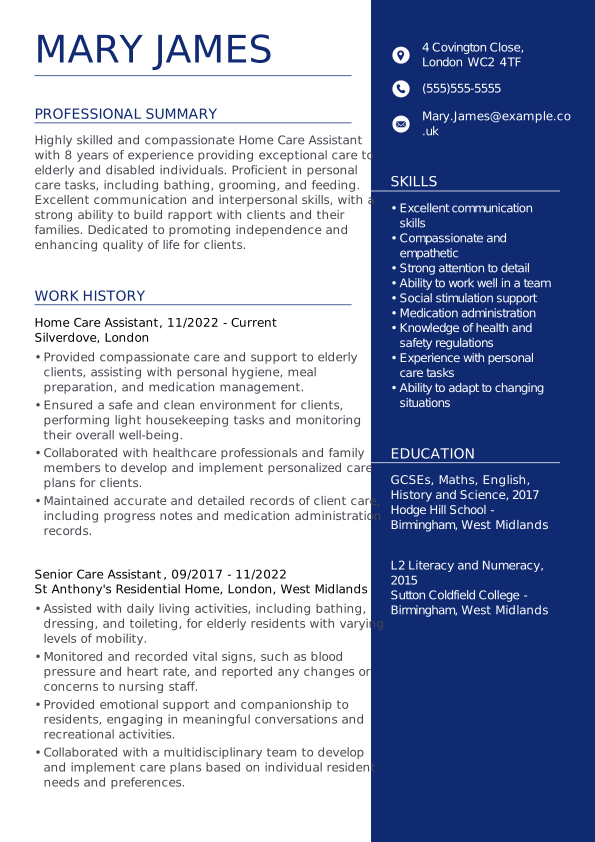
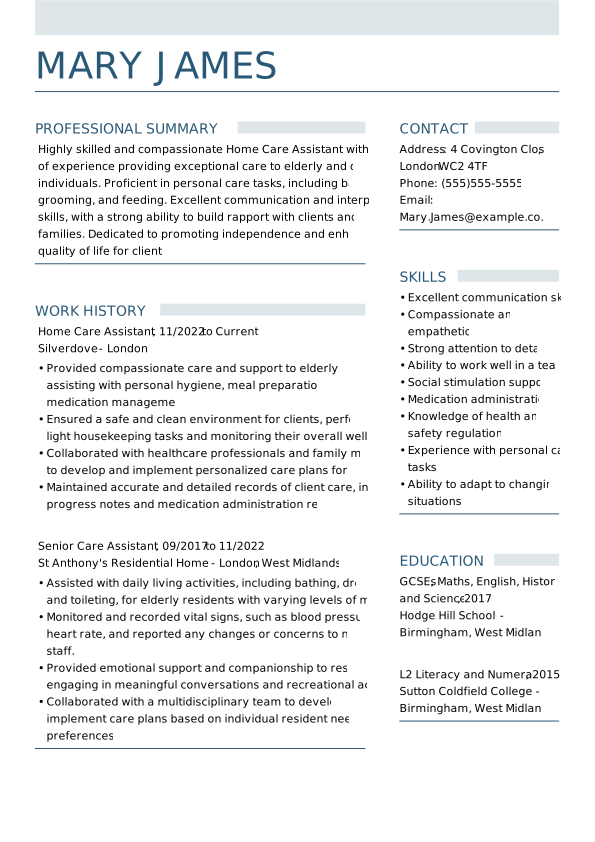
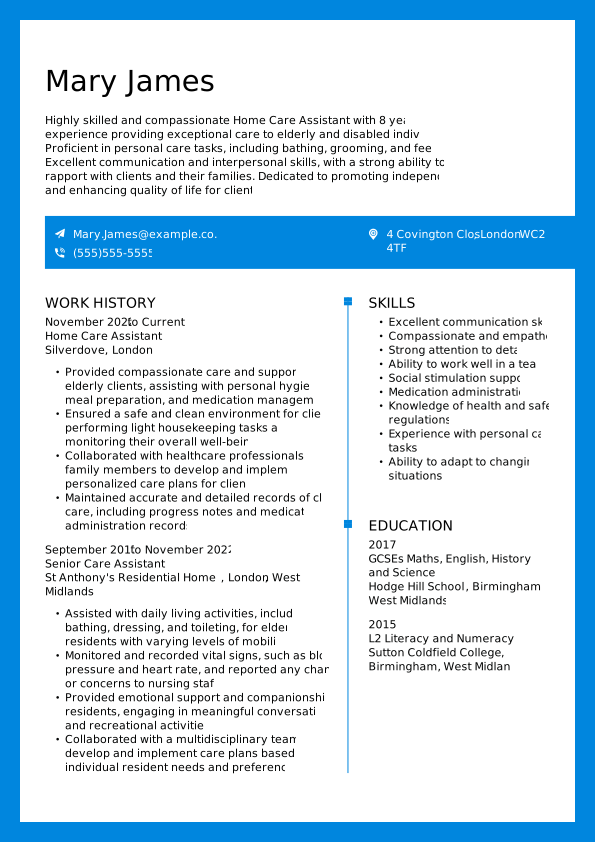
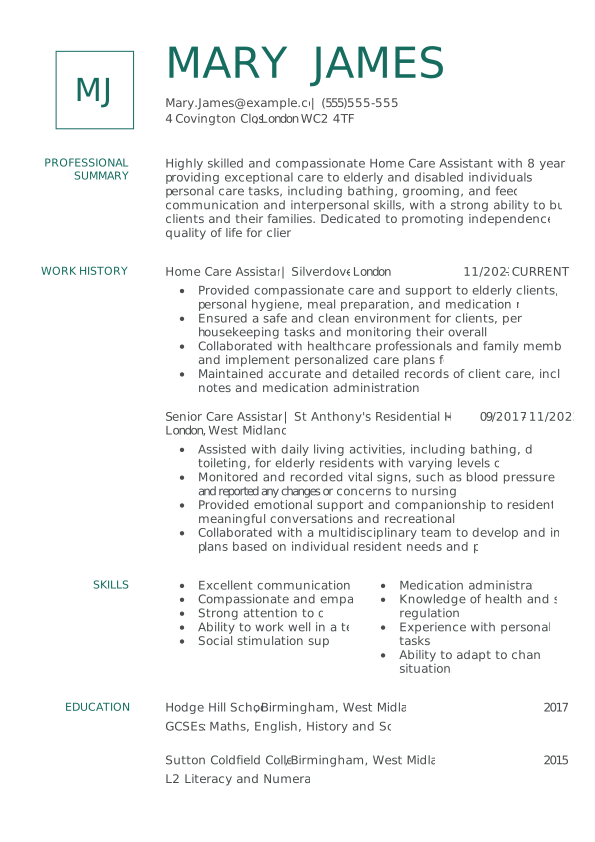
Writing a perfect home care assistant CV starts with choosing the correct layout. A well-structured CV template will make it easier to list your experience, present skills, and demonstrate qualifications to potential employers.
MyPerfectCV builder offers UK-specific home care assistant CV templates that look professional while effectively highlighting your caregiving background.
When selecting your CV template:
- Opt for a minimalist design
- Avoid overly creative or cluttered layouts
- Ensure that section headings (like Work Experience, Skills, etc.) stand out.
The goal is a CV that is easy to navigate and presents your information in an organised, reader-friendly way.
Home care assistant CV formats
Your CV format influences how easily your potential employer can find the information they need to make their decision.
There are two main formats you can choose from:
- The reverse-chronological CV format presents your most recent experience first. It is ideal if you have a strong record in care roles, as it emphasises your growth and the consistent accumulation of experience.
- The skills-based CV format, or functional CV, is useful if you’re new to caregiving or have gaps in work history. It emphasises skills and qualifications over a linear job history.
How to write a home care assistant CV
Let’s break down each component of your CV. By following these steps, you can create a comprehensive home care assistant CV that demonstrates your suitability for the role.
1. Start with the header for your CV
Begin your CV with a header that includes your contact information and professional title. It sounds straightforward, but it’s crucial to get this part right so employers can easily reach you. Make sure this section is up-to-date and free of errors.
Include the following details at the top of your CV:
- Full name: Use the name you go by professionally.
- Professional title: For example, Home Care Assistant, Care Assistant, Support Worker: whichever title is most relevant to the job posting.
- Location: Only list your town/city and country. You don’t need to give your full address.
- Phone number: Provide a number where you can reliably take calls or receive messages. Use a mobile number you check regularly, and format it for readability.
- Email address: Use a professional-looking email.
- LinkedIn profile: If you have an up-to-date LinkedIn or an online profile relevant to care work, include the URL. This can display additional recommendations or background, if you ensure it is professional.
Double-check that all your contact details are accurate. You might use a slightly larger or bold font for your name at the top to make it stand out.
Home care assistant CV example: header
Sarah O’Neil
Home Care Assistant
Birmingham, UK
07712 345 678
sarah.oneil@example.com
linkedin.com/in/sarahoneil
2. Write a compelling personal profile
Next, open your CV with a brief personal statement. This short paragraph at the top of your CV introduces who you are and what makes you a great home care assistant. It should grab the hiring manager’s attention and encourage them to keep reading.
Here’s how to do it right:
- State your job title and years of experience.
- Highlight your key strengths or specialities in caregiving.
- Mention major skills like personal care, mobility assistance, dementia care, or any special training.
- Show an impressive achievement or distinctive quality. Perhaps you improved a client’s quality of life, were commended by your employer, or maintained a high client satisfaction rate.
- Indicate your value and goal. Explain what you’re looking for or how you want to help the employer.
- Keep your personal profile to about 3–4 sentences or 50–60 words.
- Make sure your tone is confident and positive. Avoid clichés and generic statements; be specific to your own experience and skills.
Home care assistant CV personal profile example:
Dedicated and compassionate Home Care Assistant with over 7 years of experience providing high-quality in-home support to elderly and disabled clients. Skilled in assisting with personal care, meal preparation, and mobility support while building trusting relationships with clients and their families. Recognised for strong attention to safety, empathy, and reliability in all aspects of care. Committed to improving clients’ daily well-being and independence, and now seeking to bring my caregiving expertise to support clients at KindCare Home Services.
3. Show your work experience effectively on your home care assistant CV
Your work experience section is where you provide evidence of your skills in action. Employers in the care sector will look here to see what kind of environments you’ve worked in and the responsibilities you’ve handled. Focus on achievements to make your experience stand out.
Here’s how to do it right:
- Be specific with job details: Include your job title, the organisation name (or family, if it was private care), the location, and the dates of employment.
- Highlight achievements, not just duties: It makes a far bigger impression on your potential employer.
- Quantify your impact: Whenever possible, use numbers or concrete examples.
- Use bullet points: That will make your CV more readable.
- Cover a range of skills: Different bullet points should showcase different aspects of your expertise.
- Start bullet points with action verbs: Use strong verbs such as assisted, managed, coordinated, improved, ensured, etc.
- Prioritise relevant experience: Include your most recent and relevant roles in detail.
Home Care Assistant CV work experience example:
Senior Home Care Assistant
Caring Hands Home Care, Birmingham
June 2019–Present
- Provide daily personal care (bathing, dressing, toileting) to 5 regular clients, ensuring each individual’s comfort and maintaining their dignity.
- Coordinate with nurses and family members to follow tailored care plans, leading to improved client well-being and fewer hospital visits.
- Train and mentor new care assistants in proper hygiene practices and safety procedures, boosting team competency and confidence.
- Manage scheduling for client visits and adapt quickly to last-minute changes, maintaining a 100% on-time attendance record over the past year.
- Monitor and document clients’ conditions, promptly reporting changes to healthcare professionals to enable early intervention when needed.
4. Emphasise your education and training on a home care assistant CV
Many home care assistants enter the field with secondary education and then gain vocational certifications or on-the-job training. Include the details of your education section succinctly.
For most home care positions, a solid secondary education like GCSEs is a good foundation. More importantly, vocational qualifications in care can set you apart. Be sure to mention any certifications or courses in health and social care you’ve completed.
Here’s what to include for each entry:
- Qualification name and level: For example, Level 2 Certificate in Health and Social Care, NVQ Level 3 Diploma in Adult Care, or any nursing assistant courses.
- Institution and location: The college, training provider, or school where you obtained the qualification, plus the city (e.g. Birmingham College).
- Dates: When you completed the course or the years you attended (e.g. 2018–2019).
- Grade or result (optional): If you achieved a notable result (like a Distinction or Merit), you can include it, though it’s not mandatory for vocational courses.
If you have higher qualifications such as a foundation degree or university study in a related field, include those too.
Example of an education section for a home care assistant CV
Level 3 Diploma in Health and Social Care
Birmingham College
September 2013–June 2015)
5. Spotlight your home care skills
Every strong home care assistant CV includes a dedicated skills section. This is where you highlight the abilities that make you an effective caregiver. A strong skills section combines hard skills and soft skills.
Aim to list around 6–8 of your top skills, focusing on those mentioned in the job description or essential to care roles. When choosing which skills to list, consider the daily demands of a home care assistant and the qualities a great carer possesses.
Below are some examples of both hard and soft skills relevant to home care, along with why they matter:
Hard skills
- Personal care assistance: Expertise in helping clients with bathing, dressing, toileting, and grooming, while respecting their comfort and privacy.
- Mobility support & safe transfers: Knowledge of how to safely move or reposition clients (using hoists, wheelchairs, gait belts, etc.) to prevent injuries to both the client and yourself.
- Medication management: Ability to assist with medication schedules, giving timely reminders or administering medication if trained, and keeping accurate records.
- First Aid and CPR: Having up-to-date First Aid and CPR training to respond appropriately to any medical emergencies or sudden client health issues.
- Meal preparation & nutrition: Skill in preparing healthy meals and snacks that meet any dietary restrictions or nutritional needs of clients.
- Household management: Competence in performing light housekeeping, laundry, and errands, ensuring a clean and safe home environment for the client.
Soft skills:
- Empathy and compassion: A genuine caring nature and the ability to emotionally support clients, making them feel understood and valued.
- Communication skills: Excellent listening and speaking skills, which help in understanding client needs, explaining care steps, and conversing with clients and their families. Clear written communication is also important for care notes.
- Patience and resilience: The ability to remain calm and patient, even in challenging situations or when progress is slow. Home care can be demanding, so resilience against stress is key.
- Attention to detail: Noticing small changes in a client’s condition or environment (like a change in mood or a new bruise) and addressing them. Also, carefully following care plans and medication instructions without error.
- Time management: Managing your schedule efficiently, especially if caring for multiple clients in a day. This includes punctuality and the ability to prioritise tasks during each visit.
- Trustworthiness and reliability: Being someone that clients and families can depend on. This means maintaining confidentiality, arriving consistently on time, and following through on tasks so clients feel safe in your care.
Make sure the skills you include align with the job posting. Many employers will scan for specific keywords, so if the job requires “knowledge of hoist equipment” or “full driving licence,” and you have these, put them on your CV.
6. Include additional sections to strengthen your CV
To truly stand out, consider adding a couple of extra sections to showcase your commitment, credentials, or interests related to care work. These bonus sections can provide a fuller picture of you as a candidate and highlight things that don’t fit elsewhere in your CV.
Here are a few you might include:
- Certifications and training: List any additional certificates or courses you’ve completed, such as First Aid/CPR certification, Manual Handling training, Dementia care workshops, or the Care Certificate.
- Awards: If you’ve received any awards or even informal recognition from an employer, mention it.
- Memberships: For instance, membership in a caregiver association or a healthcare workers’ union might be worth noting, as it shows professional engagement.
- Volunteering: It shows passion and initiative beyond paid jobs.
- Languages: This can be a significant asset in home care if clients come from diverse backgrounds.
- Hobbies and interests: Keep this section brief and only include items that reinforce your image as a responsible, caring individual.
Sample additional sections on a home care assistant CV:
Certifications
- Care Certificate, completed 2015
- First Aid & CPR Certified, lLast renewed 2023
- Manual Handling & Safeguarding Training, 2022
Languages
- English – Native
- Polish – Fluent
7. Format your home care assistant CV correctly
Formatting is more than just aesthetics. It ensures your CV is easy to read and looks professional at first glance. Just as a tidy home environment sets a positive tone for your client, a tidy CV layout makes a great impression on a hiring manager.
Here are some formatting tips specifically for a UK home care assistant CV:
- CV length: Keep it to no more than two pages of A4.
- Font and text size: Use a standard font like Arial, Calibri, or Verdana, with body text at 10–12pt for readability. Section headings (Experience, Education) can be larger (14–16pt) or bold.
- Margins and white space: Use standard margins (about 2 cm on each side). Include enough spacing between sections and bullet points so the page isn’t cramped.
- Headings and consistency: Label each CV section with a heading, e.g., Personal Profile, Work Experience, Education, Skills.
- Bullet points: Use bullet points for listing responsibilities, skills, or qualifications.
- Saving your CV: Save the final document as a PDF.
- Name the file professionally, e.g., SarahONeil_CareAssistant_CV.pdf, for easy identification.
- No photos or graphics: In the UK, avoid including a photo or fancy graphics on your CV.
Top dos and don’ts for a home care assistant CV
To wrap up, here are some final dos and don’ts to keep in mind when polishing your home care assistant CV:
Read the job description carefully and tailor your profile, experience, and skills to match the employer’s needs.
Use your CV to show qualities like empathy, patience, and trustworthiness with examples.
For example, say “Improved client mobility by assisting with daily exercises,” instead of “Helped clients exercise.”
Ensure there are no spelling or grammar mistakes.
Avoid a laundry list of duties; instead, add context or outcomes.
Marital status, age, photograph, or nationality (unless required for right-to-work) do not need to be on a CV.
Graphics, multiple colours, or complex tables can confuse ATS software and distract from your content.
If you’ve taken care of a relative or done volunteer care work, consider including it if you need to fill gaps or show your commitment to caregiving.
With a stand-out CV in hand, you’re one step closer to helping others in their homes with the support and care they deserve! Good luck!
Your home care assistant CV questions answered
What should I include in a home care assistant CV?
Your CV should include your contact details, a personal statement, work experience, skills (both hard and soft), education, and any relevant certifications (like first aid or manual handling). Optional sections could include volunteering, languages, or interests.
How do I write a CV with no experience in care?
If you’re new to the care sector, use a skills-based CV. Focus on transferable skills like empathy, time management, or communication. Mention volunteering, training courses, or informal care you’ve provided to family or neighbours.
Should I include a cover letter with my job application?
Yes, a cover letter is a great opportunity to explain why you’re passionate about care work and how your background makes you a strong fit for the role. Tailor it to the employer and job description for the best results.
What qualifications do I need to be a care assistant?
For many entry-level home care assistant roles, you won’t need any formal training or qualifications before applying. This is because lots of companies offer on-the-job training to get you up to speed. That said, applicants who have a relevant university or college qualification – such as health and social care – may be at an advantage. Additional qualifications, for example a first aid certificate or valid DBS check can also be incredibly valuable.
What is the typical home care assistance salary band?
According to PayScale, the average home care assistant in the UK earns £8.96 an hour. This works out to around £16,000-23,000 a year, depending on the number of hours you work each week. Other factors that can influence your salary include your location, the type of care you’re providing, and whether you’re seeking an entry-level or more senior role.
How long should a home care assistant CV be?
Ideally, your CV should be no more than two pages long. Keep your content clear and relevant to the job you’re applying for.
What are the duties of a home care worker?
On a day-to-day basis, the duties of a home care worker will include travelling between clients’ homes to provide personal care. (Most roles will specify that applicants must have a valid UK driving licence). In the home, a care worker will help clients take any necessary medication, as well as preparing meals, running errands, assisting with exercise or personal care, and tidying up.
Related Social Services CV Examples
- Top Caregiver CV Example, Template & Guide
- Social Worker CV Examples
- Show you care about your career with our carer CV example
- Lifeguard CV examples
- Get ahead with our security guard CV example
- Raise your hand with our best volunteer CV example
- Change your life with our care worker CV example
- Open the door to possibilities with our door supervisor CV example
- Show your passion with our care assistant CV example
- Counsellor CV Example

Assist your application with our proven CV builder
To take the next step in your home care assistant career, you’ll need a professional CV that does your skills justice. By using our tried & tested CV builder, you can easily build your home care assistant CV today. Discover our top CV writing tips, templates, examples and tailorable content now!
*The names and logos of the companies referred to above are all trademarks of their respective holders. Unless specifically stated otherwise, such references are not intended to imply any affiliation or association with myperfectCV.