How to layout a CV? Best CV layout UK examples
A strong CV layout helps recruiters understand your experience at a glance. Learn how to structure a CV layout in the UK that meets recruiter expectations and improves readability.


Our customers have been hired by : *Foot Note
A good CV layout helps your experience speak for itself. Before a recruiter reads a single bullet point, the appearance of your CV shapes their first impression. If your layout is clear and easy to scan, your skills and achievements are more likely to be noticed.
In this guide, you’ll learn how to create a CV layout that works for both recruiters and applicant tracking systems. I’ll cover how to organise sections, discuss the many types of CV layouts, and teach you how to avoid layout mistakes that can hold your application back.
Smarter writing with built-in AI
Get instant, high-quality text suggestions tailored to your specific industry.
What is a CV layout?
A CV layout organises and presents your qualifications on the page. It covers the structure of sections, their order, and the visual rules such as spacing, alignment, and headings.
The terms CV layout and CV format are often used interchangeably, but they describe different things. A CV layout refers to how your CV looks and is organised on the page, while a CV format describes the structure of your experience, such as chronological, skills-based, or combination CVs.
A good CV layout helps recruiters quickly find:
- Who you are
- How to contact you
- What role you’re applying for
- Your most relevant experience and skills
It also plays a role in how well your CV performs in applicant tracking systems (ATS). Clear CV layouts with standard section headings are easier for software to read and forward to human reviewers. With over 250 applications per job opening, and only 25% of them making it to a human recruiter, a proper CV layout in the UK is absolutely crucial.
From an employer’s perspective, CV layout matters because it:
- Speeds up decision-making: Recruiters can assess your profile in seconds if your CV is easy to scan.
- Reduces reading effort: Clean spacing, headings, and bullet points make information easier to absorb.
- Creates a positive first impression: A tidy layout suggests professionalism and strong organisational skills.
- Improves ATS performance: Many employers use applicant tracking systems. Simple, structured layouts are more likely to be read correctly.
- Shows respect for the reader’s time: A clear CV layout signals that you understand how recruitment works.
How to create a good CV layout for the UK market
There’s no single “perfect” CV layout for everyone. The right choice depends on your experience and career path. While there are some universal rules for creating a readable CV layout, some, like the order of your CV sections, will depend on your choice.
1. Pick a suitable format
Yes, a CV format is different from a CV layout, but they are connected. First, decide on which format will best support the layout of your CV. You have two most common choices to pick from.
The chronological CV is the most common and widely recognised format. It focuses on your work history, listed in reverse order, starting with your most recent role. It features contact details and a personal profile at the top, followed by work experience listed from newest to oldest. Skills and education are placed after experience.
A chronological CV layout is best for:
- Candidates with a steady work history
- Professionals with relevant experience in the field
- Jobseekers with few or no employment gaps
On the other hand, a skills-based CV shifts the focus away from job titles and dates, placing more emphasis on your core job skills. When opting for this CV layout, group key skills into categories near the top and support each skill with short examples or achievements. Trim your work history and place it later in the CV.
Use the skill-based CV layout when:
- You’re changing careers
- Have limited work experience or employment gaps you want to downplay
- Your skills are more relevant than your job titles
2. Arrange your sections based on experience
The next step in preparing a good UK CV layout is placing sections correctly throughout your CV.
If you choose to follow the chronological CV layout, set up your CV structure in the following way:
- Contact details
- Personal profile
- Work experience
- Skills
- Education section
- Optional sections (certifications, memberships, projects, etc.)
When writing a CV in the skills-based layout, rearrange the sections into the following order:
- Contact details
- Personal profile
- Core competencies (key skills section)
- Work experience
- Relevant projects or achievements
- Education
- Other bonus sections
3. Get the stylistic details right
Once your CV sections are in the right order, the way you format the page plays a major role in how your CV layout looks. Fonts, spacing, margins, and consistency all affect readability and first impressions, so it’s important to get these details right.
Here are the rules for your CV layout:
- CV fonts: Arial, Calibri, Helvetica, or Times New Roman are easy to read and widely accepted by employers. Body text should usually sit between 10.5 and 12 points, while section headings can be slightly larger to help guide the reader. Stick to a single font throughout your CV to maintain consistency
- Margins: Margins help control how balanced and readable your CV looks. Setting margins of around 1.5 to 2 centimetres on all sides creates enough white space without wasting room. Consistent margins throughout the document prevent the layout of your CV from looking uneven.
- Spacing: Spacing plays a key role in how easily your CV layout can be scanned. Leaving clear space between sections helps separate information and makes the document feel organised. Consistent line spacing, usually between 1.0 and 1.15, keeps the text readable.
- Alignment and consistency: A professional CV layout relies on consistency. All text should be aligned to the left to create a clean reading line, and date formats should remain the same throughout the document. Section headings should follow the same style and placement from top to bottom.
- CV length: Your CV layout should support the appropriate length for your experience level. A one-page CV works best for early-career candidates, while two-page CVs are best for professionals with several years of relevant experience.
- File format: PDFs are generally safe if they’re text-based and not scanned images, but Word documents are still the most universally ATS-friendly option. If an employer specifies a preferred file type, it’s always best to follow their instructions.
Common CV layout templates
Different CV layout styles suit different roles and situations. Choosing the right one helps your CV meet expectations and feel appropriate for the job you’re applying for. Below are five common UK CV layouts and when each works best.
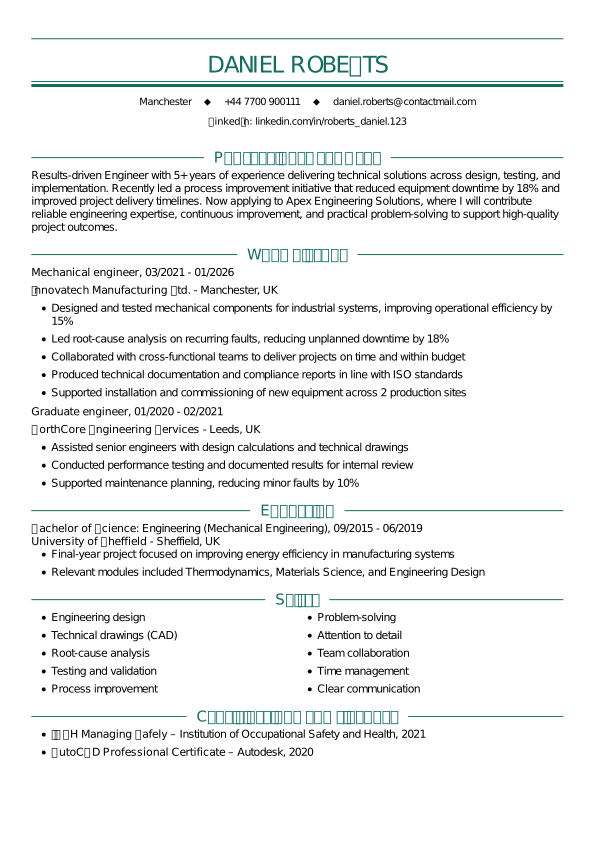
1. British CV layout
The British CV layout is the most widely accepted format in the UK. This layout typically uses a clean, single-column structure with clear section headings and bullet points. Personal details are kept minimal, and content is written in a factual, achievement-focused way. British CV layouts work well for most industries, especially corporate, public sector, and professional roles where readability and ATS compatibility matter most.
2. Modern CV layout
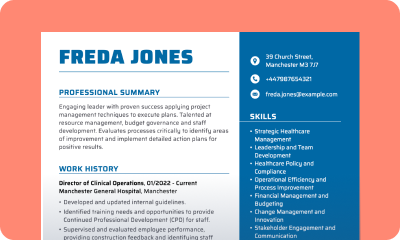
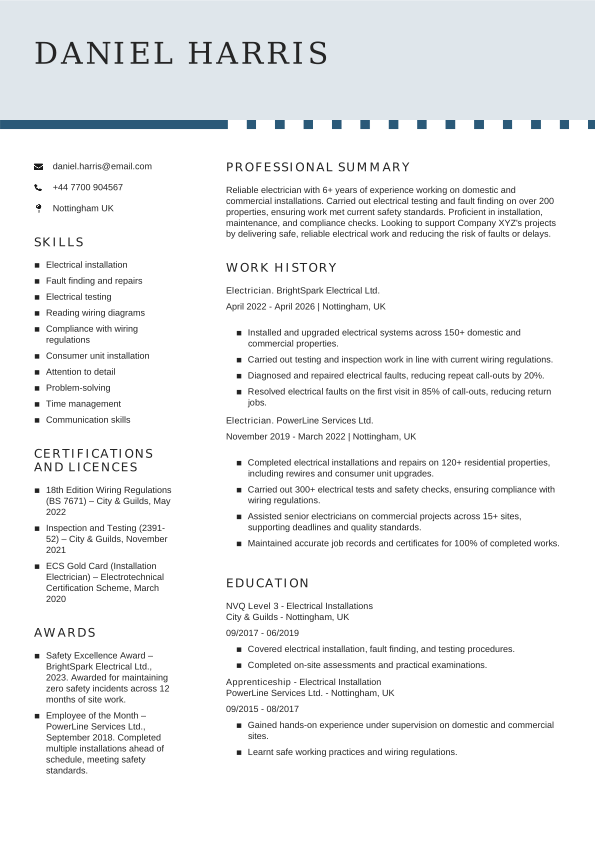
Modern CV layouts keep a professional structure while adding subtle design touches. These might include slightly bolder headings, light use of colour, a second column, or clearer visual separation between sections. Modern layouts suit industries like marketing, tech, and business services, where employers expect a professional but up-to-date look.
3. Creative CV layout
Creative CV layouts place more emphasis on visual presentation. They may use colour, icons, or unconventional section placement to reflect creativity and personality. These layouts are best suited to creative industries such as design, media, or advertising, where visual communication is part of the role. However, they should be used carefully. Over-designing a UK CV layout can hurt readability and ATS performance.
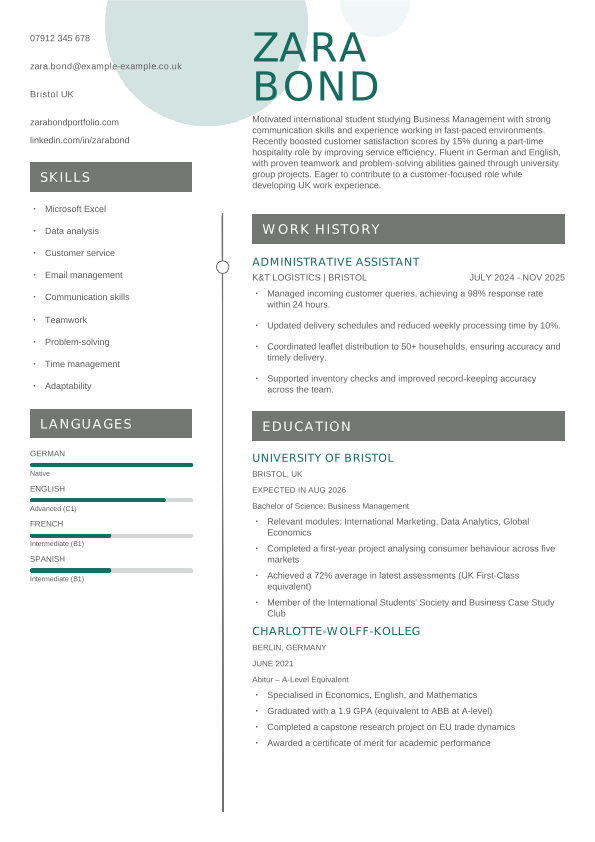
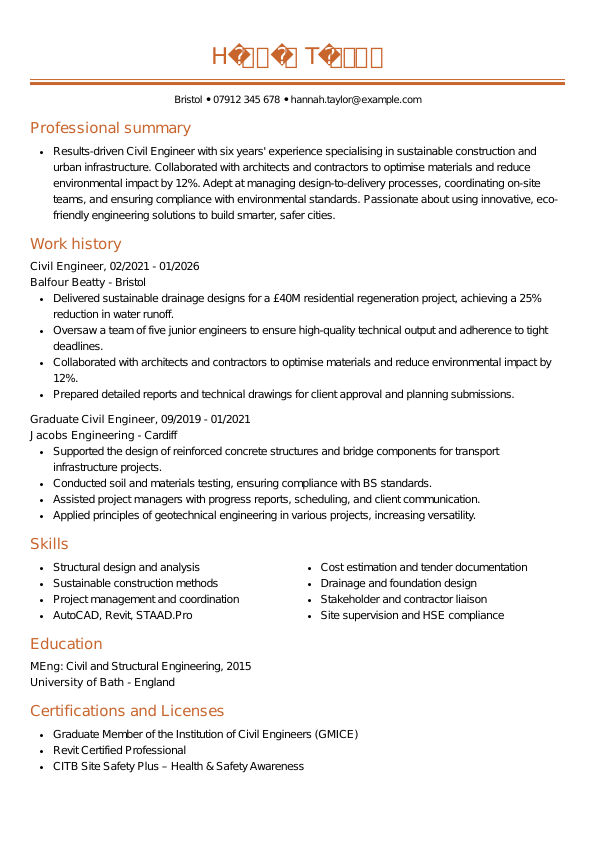
4. Simple CV layout
A simple CV layout strips everything back to the essentials. It uses minimal formatting, standard fonts, and clear spacing to make content easy to read. This layout is ideal if you want your experience and skills to speak for themselves without distraction. Basic CV layouts are especially effective for ATS-heavy recruitment processes.
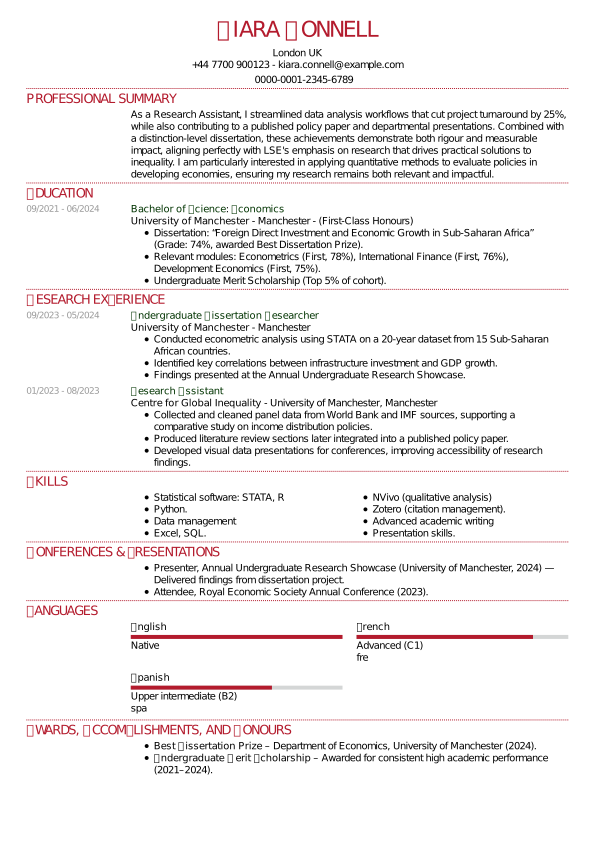
5. Academic CV layout
Academic CV layouts are designed for research, teaching, and higher education roles. They are usually longer than standard CVs and focus on detailed information rather than brevity. Sections such as publications, research projects, teaching experience, conferences, and grants take priority. This CV layout idea is formal, text-heavy, and structured, with less emphasis on design and more on content depth.
If you’re looking for free CV templates to write your first CV with, have a look at our Word CV layouts. We also have Google Docs-friendly CV layouts to pick from.
Key takeaways
- A strong CV layout improves readability and helps recruiters quickly find your most important information.
- The best CV layout in the UK depends on your experience level and your career situation, not just the role or company you’re applying to.
- Clear section order and consistent formatting make your CV easier to scan and assess.
- Simple, ATS-friendly layouts outperform highly designed CVs in most hiring processes.
- Fonts, spacing, margins, and alignment all play a role in creating a professional impression.
- Choosing the right layout style ensures your CV matches industry expectations and recruiter preferences.
Choose a CV layout that works for you
The right CV layout can make your skills and experience easier to spot. With MyPerfectCV builder, you can choose from professionally structured layouts designed for readability and ATS compatibility. Each UK CV layout is built to highlight what matters most and help your CV make a strong first impression.
Mariusz Wawrzyniak
Senior Content Writer
Mariusz is a career expert at My Perfect CV who writes practical, research-based guides that help professionals from all industries craft impactful CVs, write compelling cover letters, and advance their careers.