
Arabic teacher CV examples
Inspire students and land your next teaching role. Build a professional Arabic teacher CV that showcases your language expertise and classroom skills today.

- Our customers have been hired by : *Foot Note
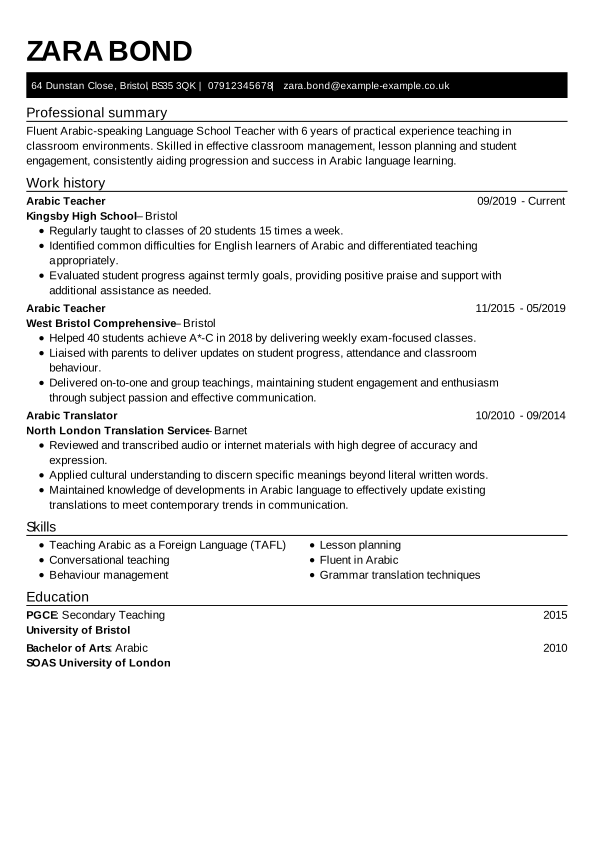
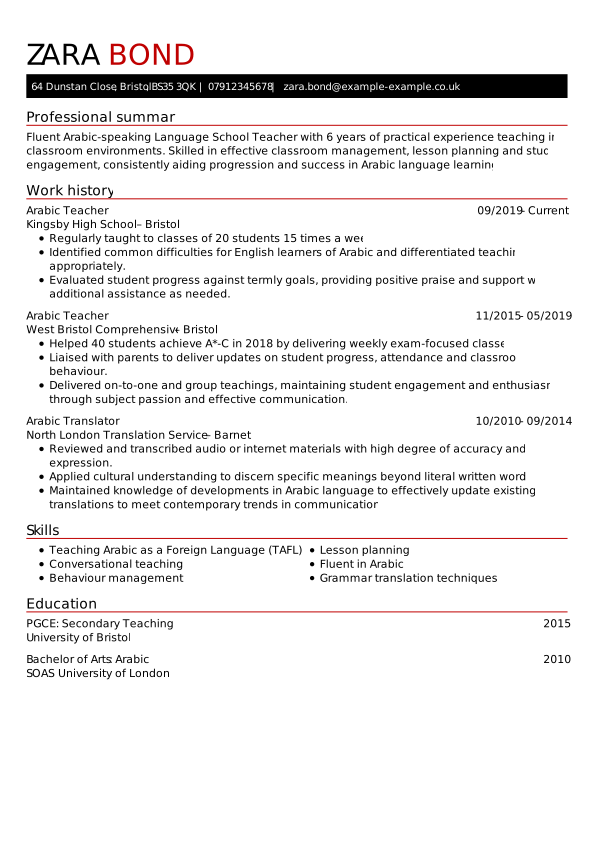
A well-written Arabic teacher CV highlights fluency, teaching experience, and a genuine passion for language and culture. Whether teaching in schools, universities, or private settings, it should demonstrate the ability to inspire and communicate clearly across all levels of learners.
This guide includes expert examples, editable templates, and step-by-step advice to help create a CV that stands out with confidence and precision.
In this guide:
- Arabic teacher CV examples
- Editable Arabic teacher CV templates
- Step-by-step writing advice
- Best format for Arabic teaching CVs
- FAQs about Arabic teacher roles
Smarter writing with built-in AI
Get instant, high-quality text suggestions tailored to your specific industry.
SEARCH ALL CV EXAMPLES
Arabic teacher CV templates
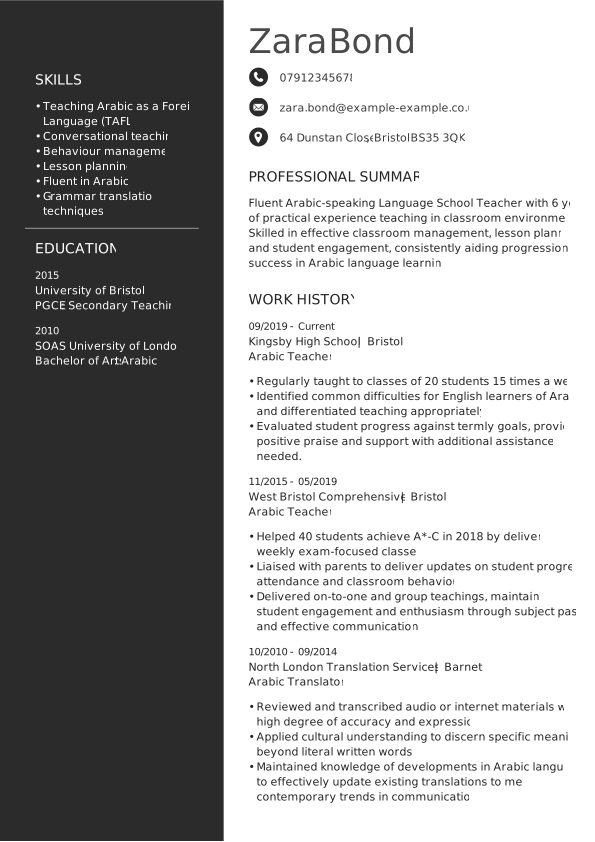
Our Arabic teacher CV templates make it simple to build a clear, confident application. Every design is easy to edit and perfect for highlighting language fluency, classroom skills, and cultural expertise.
How to write an Arabic teacher CV (step by step)
1) Add your contact details
This section sits at the very top of the page and gives employers the essential information they need to reach you.
Include:
- Full name
- Location (city only is fine)
- Email address
- Phone number
A clean, simple layout helps present a professional first impression. Optional extras like LinkedIn or a teaching portfolio can be added if they genuinely strengthen your application.
Tip: Save your file with a clear name such as Firstname-Lastname-Arabic-Teacher-CV.pdf.
2) Write a focused personal statement
A personal statement (also called a CV profile or CV summary) is a short paragraph placed directly under your contact details.
It introduces who you are, what you offer, and why you’re a good fit in 3–4 sentences.
Why it matters:
- Employers often read this first, so it sets the tone for the entire CV.
- It helps you present your teaching style, language expertise and achievements quickly.
- It shows confidence, clarity and professionalism — qualities we emphasise in strong CV writing.
Example:
Qualified Arabic teacher experienced in teaching MSA and Levantine dialects across GCSE and adult programmes. Skilled at building speaking confidence through interactive lessons and targeted feedback. TAFL certified, with a strong track record of improving exam results and learner engagement.
3) Present your work experience
The work experience section appears directly below the personal statement (unless you’re newly qualified — then education may come first). List roles in reverse-chronological order.
Why it matters:
- It shows your career progression clearly.
- It demonstrates your real-world teaching impact, not just responsibilities.
- It helps employers see exactly what you can bring to their classroom.
Aim for 3–5 bullet points per role, each showing an outcome.
Example bullets:
- Improved GCSE Arabic pass rate from 78% to 92% by redesigning the curriculum and speaking assessments.
- Delivered MSA and dialect courses to adult learners, achieving 4.8/5 average session rating.
- Implemented digital quizzes that reduced marking time by 25%.
- Coordinated cultural events that boosted language club participation by 40%.
Metrics make achievements more persuasive — a key quality in strong, high-impact CVs.
4) Highlight key skills
Skills should appear after your work experience as a short, focused list. Aim for 6–10 skills to keep the CV targeted and easy to scan.
Why skills matter:
- Employers skim this section to check you meet their essential requirements.
- It helps your CV perform better with Applicant Tracking Systems (ATS).
- It makes strengths like pronunciation support, curriculum planning and classroom management instantly visible.
Include a mix of teaching, linguistic and interpersonal skills:
Examples:
- Modern Standard Arabic (MSA)
- Levantine / Egyptian / Gulf dialects
- Lesson planning and differentiation
- Assessment for learning
- Safeguarding awareness
- Classroom management
- TAFL methodology
- Intercultural communication
- SEN support strategies
5) Add education and qualifications
This section confirms your training and teaching credentials.
If you’re early in your career, move it above your work experience.
Include:
- Degrees (e.g. BA Arabic, MA TESOL, PGCE MFL)
- Teaching qualifications (QTS, TAFL, CELTA)
- Relevant short courses (Phonics, differentiation, digital tools, safeguarding)
Why it matters:
- Language teaching roles often require specific qualifications.
- It shows professional commitment and continuous learning — a cornerstone of quality CVs.
6) Optional sections
Great for adding extra value without overcrowding the page:
- Achievements (e.g. curriculum projects, exam improvements)
- Certifications (DBS, safeguarding)
- Professional memberships
- Languages (list dialects and proficiency levels)
- Volunteer work (cultural clubs, tutoring)
Tip: Keep your CV 1-2 pages maximum!
Top tips for your Arabic teacher CV
Learn the language spoken by recruiters with these five simple tips to improve your CV for Arabic teacher roles…
Focus on the job description
If recruitment is a language, the job description is the dictionary. Within the Arabic teacher job description, you’ll find everything recruiters are looking for, including essential skills, experience, and qualifications. You can use all of this to build a CV that ticks every one of their boxes – as long as it actually applies to you, of course. Don’t go lying about “5 years experience”, for example, just because recruiters are looking for it!
Use a professional design
As a language, Arabic is renowned for its beauty and eloquence. It has at least 11 words about love! Your CV’s appearance should match that beauty, to some degree, with a professional design. Recruiters will be influenced by documents that are messy, busy, or simply dull. Instead, use clear sections with bold headings and professional colours to get the right balance between smart, interesting, and easy to read. Or use a pre-made CV template to make things easier.
Include Arabic teacher certification
It’s all well and good saying you’re fluent in Arabic and experienced in teaching it, but recruiters want to see some evidence. The best way of doing that is with Arabic teacher certification. Aside from qualified teacher status (QTS), which is required for schools, there are a range of courses online offering training and certification for Arabic teachers. If you already have certification, include it within your qualifications section. If not, it’s highly advisable to take a course.
Write in plain English
As a teacher of languages, you might be tempted to use the most impressive, complex lingo on your CV for Arabic teacher positions. However, recruiters are more interested in the things you’re talking about – rather than how you talk about them. It’s best to avoid jargon and use plain English wherever possible. Bullet points are also a useful way to stay concise when listing your skills and previous or existing duties.
Add a cover letter
The point above may be disappointing to some applicants, who could talk for hours about how they fit the Arabic teacher job description and their passion for teaching. Thankfully, all is not lost. A cover letter for Arabic teacher jobs is a great way to highlight your suitability for the role and discuss a bit more about your personal and professional background.
Arabic teacher skills to include in your CV
Arabic teacher certification is just one part of the puzzle for recruiters. You’ll also need a key skills section that shows what you’re capable of:
Essential skills for Arabic teachers
- Classroom management
- One-to-one teaching
- Lesson planning
- Creating learning materials
- Student examination
- Curriculum knowledge
Transferable skills that add to your CV
- Time management
- Well organised
- Patient
- Confident speaker
- Friendly and approachable
- Computer literate
Top FAQs about your CV for Arabic teacher applications
What are the duties of an Arabic teacher?
The Arabic teacher job description typically includes:
- Planning lessons and coordinating courses
- Delivering class or group lessons
- One-to-one tuition or assistance
- Assessing students for written and spoken fluency
- Monitoring and reporting on student progress
- Organising relevant extra-curricular activities
Who do Arabic teachers work for?
Arabic teachers may be hired by schools for specific educational courses or by private companies to deliver Arabic classes on their behalf. Alternatively, they can work for individual clients on a one-to-one basis, to teach them Arabic from scratch or supplement their work at school.
How to write a CV for an Arabic teacher
Your CV for Arabic teacher vacancies should include four main sections:
- Personal statement or professional summary comprising 3-4 sentences to open your CV
- Work history starting with your most recent role and listing the main responsibilities at each job
- Key skills with a list of 6-10 hard and soft skills
- Qualifications such as your degree in Arabic or teaching, and any Arabic teacher certification
How to become an Arabic teacher
Once you’ve mastered the language itself, you’ll need to gain some form of Arabic teacher certification. This can come through a degree with Qualified Teacher Status QTS. However, if you’re teaching independently or through a private agency rather than a school, you can also gain certification through a dedicated course for teaching Arabic.
How much does an Arabic teacher get paid?
The salary for Arabic teachers at schools in the UK is usually between £23,000 to £30,000, in line with the national pay scale for teachers. That’s higher in London, and may also increase at private schools. If you’re teaching on a one-to-one basis, it’s up to you how much you charge, usually on an hourly basis.
Related Teaching CV: Examples, Templates, and Samples for 2026

Say “marhaba” to your next Arabic teacher job
It’s never been easier to write a great CV for Arabic teacher jobs, thanks to myPerfectCV. As well as top-rate CV examples, we provide ready-to-use CV templates and customisable content within our innovative online builder. So, you can build a CV in a matter of minutes, then wait for recruiters to come calling!
*The names and logos of the companies referred to above are all trademarks of their respective holders. Unless specifically stated otherwise, such references are not intended to imply any affiliation or association with myperfectCV.