Automotive Engineering CV Examples (2026)
Showcase your technical expertise and problem-solving skills. Build a professional automotive engineer CV that highlights your achievements and lands you more interviews today.

- Our customers have been hired by : *Foot Note
Giving your automotive engineer CV a focused refresh can make a real difference when applying for new jobs. Keep reading for:
- Automotive engineer CV examples & templates.
- How to write an effective CV for automotive engineering roles.
- Key dos and don’ts for automotive engineer CVs.
Smarter writing with built-in AI
Get instant, high-quality text suggestions tailored to your specific industry.
SEARCH ALL CV EXAMPLES
Automotive engineer CV sample
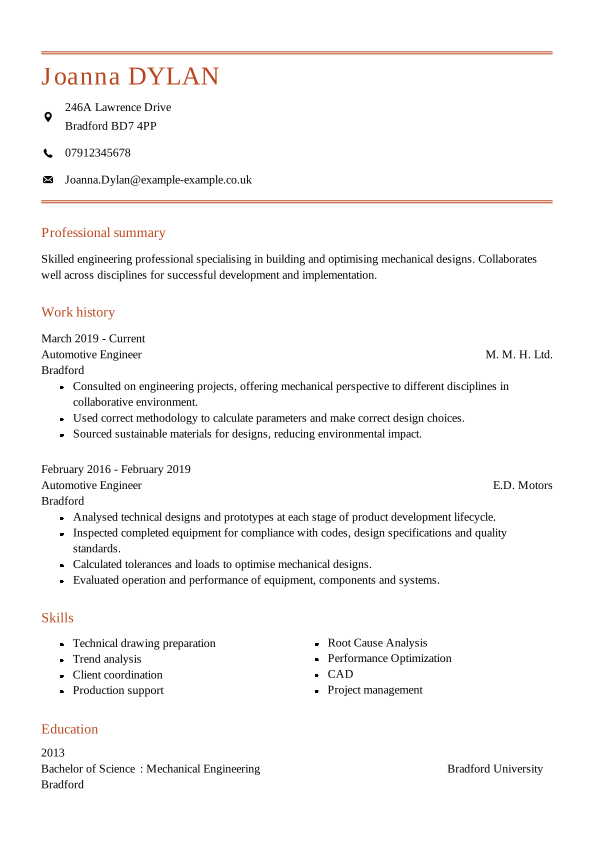
Joanna Dylan
246A Lawrence Drive, Bradford BD7 4PP
07912345678
Joanna.Dylan@example-example.co.uk
Professional summary
Skilled engineering professional specialising in building and optimising mechanical designs. Collaborates well across disciplines for successful development and implementation.
Work history
March 2019 – Current
M. M. H. Ltd. – Bradford
Automotive Engineer
- Consulted on engineering projects, offering mechanical perspective to different disciplines in a collaborative environment.
- Used correct methodology to calculate parameters and make correct design choices.
- Sourced sustainable materials for designs, reducing environmental impact.
February 2016 – February 2019
E.D. Motors – Bradford
Automotive Engineer
- Analysed technical designs and prototypes at each stage of product development lifecycle.
- Inspected completed equipment for compliance with codes, design specifications and quality standards.
- Calculated tolerances and loads to optimise mechanical designs.
- Evaluated operation and performance of equipment, components and systems.
Skills
- Technical drawing preparation
- Trend analysis
- Client coordination
- Production support
- Root Cause Analysis
- Performance Optimization
- CAD
- Project management
Education
Bradford University Bradford – 2013
Bachelor of Science Mechanical Engineering
Automotive engineer CV templates
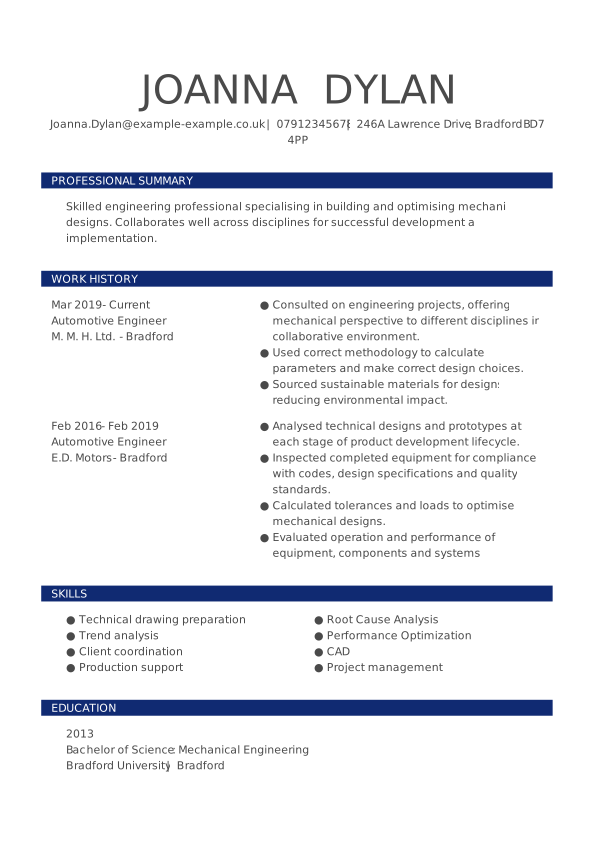
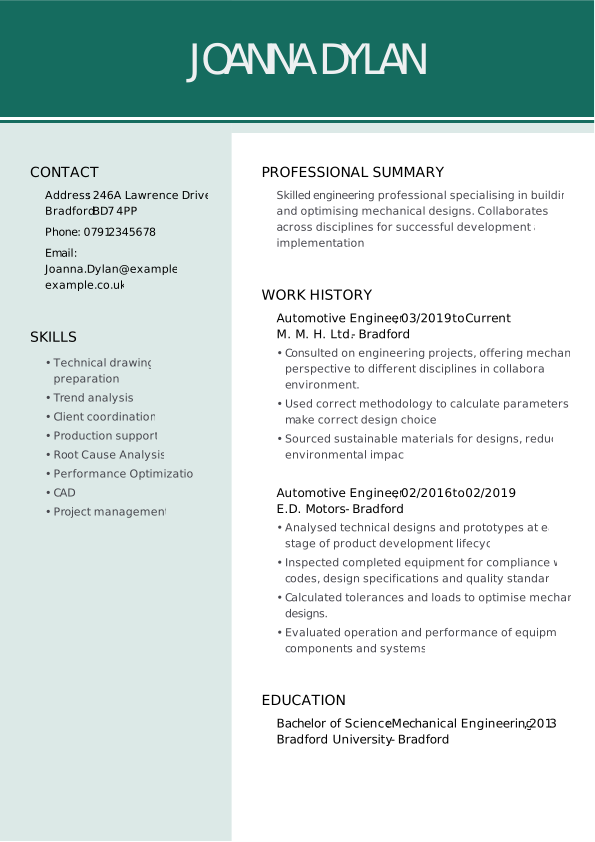
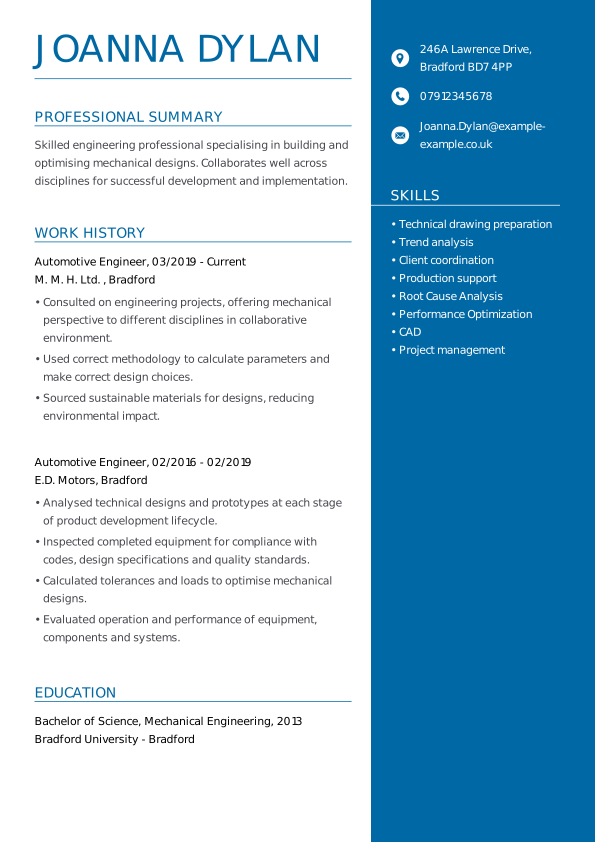
A clear CV structure helps automotive engineers present their experience in a way employers can quickly understand. Our CV templates offer a professional layout that makes it easier to organise roles, responsibilities, and achievements without overcrowding the page.
Using a well-formatted template helps keep your CV aligned with what engineering recruiters expect.
Best format for an automotive engineer CV
Choosing the best CV format is essential when applying for automotive engineering roles. Employers want to quickly understand technical experience, hands-on work, and how skills have developed over time. A clear, well-structured CV makes it easier to assess suitability for engineering positions across design, manufacturing, testing, and maintenance.
The two most effective formats for an automotive engineer’s CV are the reverse-chronological and skills-based formats.
Reverse-chronological CV format
A reverse-chronological CV lists experience from the most recent role to the earliest. This is the format most engineering recruiters expect and works particularly well for automotive engineers who have completed apprenticeships, placements, or graduate roles, as these can be clearly shown on a career timeline.
This format is ideal if you want to:
- Highlight hands-on engineering experience and progression
- Demonstrate consistent employment and increasing responsibility
It’s especially suitable for automotive engineers with practical experience in workshops, manufacturing environments, testing facilities, or engineering teams.
Skills-based CV format
A skills-based CV emphasises technical and transferable skills rather than job titles. This format can work well for candidates with less direct industry experience or those moving into automotive engineering from a related discipline.
Skills are grouped under clear headings, allowing employers to see capabilities without relying solely on work history.
This format is useful if you want to:
- Highlight core engineering skills and technical knowledge
- Include experience from education, projects, or related engineering fields
- Apply for entry-level automotive engineering roles
It’s often used by recent graduates, career changers, or candidates whose experience is spread across different roles or projects.
Automotive engineer CV formatting tips
- Keep it to 2 pages: Focus on the most relevant engineering experience
- Use clear section headings: Profile, skills, experience, and education should be easy to scan
- Prioritise readability: Simple layouts work best for technical CVs
Writing a CV for an automotive engineer role
An automotive engineer CV should follow a standard UK CV layout which includes:
- Contact details at the top of the page
- A concise personal profile outlining engineering specialisms and experience
- Work experience showing roles, apprenticeships, placements, or projects in engineering environments
- A skills section highlighting technical skills, software, and problem-solving ability
- Education and qualifications, including degrees, apprenticeships, or certifications
- Optional additional information, such as professional memberships, licences, or specialist training
This approach helps employers quickly assess technical suitability and understand how experience aligns with automotive engineering roles.
Step 1: Clearly present your contact information
Start your automotive engineer CV with clear contact details so recruiters can reach you easily. This section should appear at the top of the CV and be straightforward, well-spaced, and easy to scan.
Include:
- Full name – first and last name only
- Location – town or city (full address not required)
- Phone number – a reliable mobile number
- Email address – professional and appropriate for job applications
Example contact section
Alex Carter
Coventry
07721 684 390
alex.carter@email.com
Step 2: Write your professional summary
The professional summary sits directly below the contact details. It’s a short paragraph that introduces your engineering background, highlights key technical strengths, and explains the type of role you’re targeting. Think of it as a snapshot that helps recruiters quickly understand your specialism and value as an engineer.
Include the following points:
- Who you are – for example, “Automotive engineer with experience in vehicle systems and manufacturing environments.”
- Key strengths – such as mechanical design, diagnostics, testing, CAD software, or process improvement.
- Role focus – for example, “Seeking an automotive engineering role within design, testing, or production.”
Tip: Tailor your CV profile to each role by reviewing the job description and reflecting relevant keywords, such as CAD, vehicle testing, manufacturing processes, quality control, or systems engineering.
Example professional summary
“Detail-oriented automotive engineer with experience supporting vehicle design and manufacturing projects. Skilled in mechanical systems, diagnostics, and interpreting technical drawings, with a strong focus on quality and efficiency. Seeking an automotive engineering role where technical knowledge and hands-on experience can contribute to product development.”
Step 3: Detail your engineering experience
The work experience section is one of the most important parts of an automotive engineer’s CV. It shows how you’ve applied engineering knowledge in real-world settings and contributed to projects, processes, or products.
List your experience in reverse chronological order, starting with your most recent role, placement, or apprenticeship.
For each position, include:
- Job title
- Employer name
- Dates of employment
- Key responsibilities and achievements
Focus on experience that demonstrates technical capability, problem-solving, and hands-on involvement. This may include design work, testing, diagnostics, manufacturing support, quality control, or systems development.
If you have limited professional experience:
Include apprenticeships, industrial placements, graduate roles, academic projects, or relevant part-time work. These still demonstrate technical understanding, practical skills, and familiarity with engineering environments.
Example work experience section
Automotive Engineer
Velocity Automotive Solutions, Coventry
June 2021 – Present
- Supported vehicle component design and testing across multiple development projects
- Conducted diagnostics and performance testing to identify faults and improve reliability
- Interpreted technical drawings and specifications to assist manufacturing teams
- Collaborated with senior engineers to improve processes and meet quality standards
Step 4: Add your automotive engineer CV skills
The skills section gives employers a quick overview of your technical strengths and how you operate as an engineer. This section should balance core engineering skills with practical workplace abilities that support day-to-day engineering work.
Aim to include 10–12 skills, listed in short bullet points so they’re easy to scan. Prioritise skills that align with the job description and reflect your automotive engineering expertise.
Key automotive engineer skills to include:
Technical and engineering skills
- Mechanical systems and components
- Vehicle diagnostics and testing
- CAD software (e.g. SolidWorks, AutoCAD, CATIA)
- Interpreting technical drawings and specifications
- Manufacturing processes
- Quality control and fault analysis
Professional and problem-solving skills
- Analytical thinking
- Attention to detail
- Problem-solving
- Team collaboration
- Time management
- Health and safety awareness
Step 5: Include your education and qualifications
The education section helps employers understand your technical foundation and formal training. For automotive engineers, this section is especially important, as many roles require a recognised qualification, apprenticeship, or engineering-related degree.
List your education in reverse chronological order, starting with the most recent qualification.
Include:
- University, college, or training provider name
- Qualification title (degree, apprenticeship, diploma, or certificate)
- Dates completed
- Relevant modules or specialisms (optional)
If you completed an apprenticeship, include it here alongside or instead of a degree, as employers value hands-on engineering training. You can also list short courses, certifications, or safety training if they’re relevant to the role.
Example education section
Coventry University
BEng (Hons) Automotive Engineering
September 2017 – June 2021
Jaguar Land Rover Apprenticeship Programme
September 2015 – August 2017
Do’s and don’ts for an automotive engineer CV
Automotive engineering covers many areas, from design and testing to manufacturing and quality. Adjust your CV to reflect the role you’re applying for by prioritising relevant skills, tools, and experience from the job description.
Mention relevant CAD software, diagnostic tools, testing methods, or manufacturing systems where applicable. This helps recruiters quickly assess technical fit and improves visibility when CVs are screened.
Engineering CVs should be clear and easy to scan. Dense blocks of text, inconsistent formatting, or cluttered layouts can make it harder for recruiters to quickly assess your suitability.
Avoid listing unrelated responsibilities or outdated skills that don’t support the role. Focus on automotive engineering experience and transferable technical skills from the last 10–15 years, unless earlier roles are directly relevant. Keeping your CV concise helps recruiters quickly assess suitability.
Automotive engineer CV FAQs
Should apprenticeships be listed as work experience or education?
Apprenticeships can be listed under work experience or education, depending on how hands-on they were. If the role involved practical engineering work, listing it as experience often works best.
Do I need to tailor my automotive engineer CV for each job application?
Yes. Adjust skills, terminology, and examples to match each job description. Tailoring your CV improves relevance and increases the chances of passing applicant tracking systems (ATS).
Is a one-page CV acceptable for automotive engineers?
A one-page CV can work for graduates or entry-level roles. More experienced engineers may need up to two pages to cover relevant experience.
Do automotive engineers need to include soft skills on their CV?
Yes. While technical ability is essential, employers also value problem-solving, teamwork, communication, and time management. These skills help show how you operate within engineering teams.
Related Engineering CV Examples
- Software engineer CV, examples, and templates
- Machine learning engineer
- Marine Engineer CV Example
- Aircraft maintenance engineer CV examples
- Top Construction Engineer CV Examples And Tips
- AI Engineer CV Example, Template & Guide
- Engineering project manager CV examples
- Hydraulic Engineer CV Example
- Telecommunication Engineer CV Example
- AI specialist

Create a professional automotive engineer CV
Use our automotive engineer CV examples, templates, and easy-to-use CV builder to present technical experience clearly and confidently. With the right structure and guidance, you can create a CV that highlights engineering skills and hands-on experience — helping you stand out.