
Phlebotomist Resume Examples
Showcase your clinical precision and patient care. Build a professional phlebotomist CV that highlights your expertise and lands you more interviews today.

- Our customers have been hired by : *Foot Note
Whether you’re creating an entry-level phlebotomist CV or building on your clinical experience, a well-structured CV is essential for making a strong first impression. It should present your technical accuracy, patient-care skills and understanding of safety procedures in a clear, professional format that hiring managers can scan quickly.
This guide walks through the essentials and includes examples that show what a strong, well-presented phlebotomist resume should look like.
We’ll cover:
- How to write a strong phlebotomist resume step by step
- The most effective CV format for phlebotomists
- Editable phlebotomist resume templates
- Phlebotomist CV examples created by our certified CV writers
Smarter writing with built-in AI
Get instant, high-quality text suggestions tailored to your specific industry.
SEARCH ALL CV EXAMPLES
Phlebotomist CV sample

Dylan Cooke
London
07912 345 678
dyaln.cooke@example.co.uk
PROFESSIONAL SUMMARY
Detail-oriented and patient-focused phlebotomist with two years of experience in high-volume clinical settings. Skilled in safe blood collection, sample processing and maintaining excellent patient care standards. Seeking to contribute accuracy, efficiency and compassion to a healthcare team while supporting fast, reliable laboratory workflows.
WORK HISTORY
June 2023 – current
Kingston Community Health Clinic – London
Phlebotomist
- Perform an average of 45+ venepunctures per day.
- Follow strict infection-control procedures and ensure full compliance with NHS phlebotomy guidelines.
- Prepare, label and process blood samples for biochemical, haematology and microbiology testing.
- Support anxious or vulnerable patients by explaining procedures clearly and maintaining a calm, reassuring approach.
- Use electronic patient record systems to update sample logs, appointments and incident reports.
- Monitor phlebotomy equipment stock levels and support ordering to maintain service continuity.
January 2022 – May 2023
St. Martin’s Medical Centre – Croydon
Phlebotomy Assistant
- Collected blood samples for routine and urgent testing under the supervision of senior phlebotomists.
- Conducted patient ID checks and maintained accurate documentation to reduce sample errors.
- Prepared collection rooms, maintained cleanliness and disposed of clinical waste safely.
- Assisted with specimen transport and coordination with the on-site laboratory.
SKILLS
- Venepuncture and capillary sampling
- Patient care and communication
- Sample preparation and labelling
- Infection prevention and control
- Knowledge of NHS protocols
- Working with electronic health record systems
- Time management in high-volume environments
- Handling difficult or needle-phobic patients
- Specimen storage and transport procedures
EDUCATION
2023
City & Guilds London
Level 3 Diploma in Phlebotomy Practice
2022
Resuscitation Council London
Basic Life Support (BLS) Certification
Phlebotomist CV templates
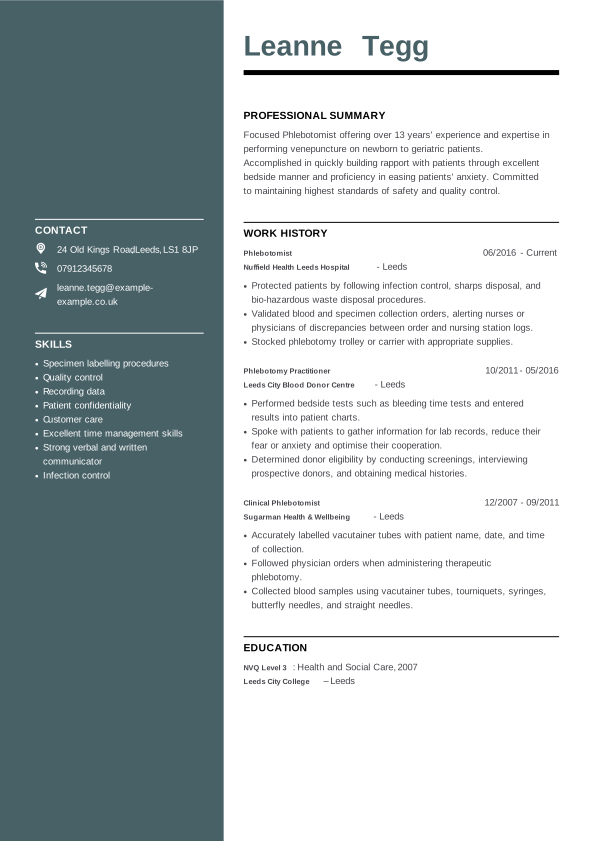
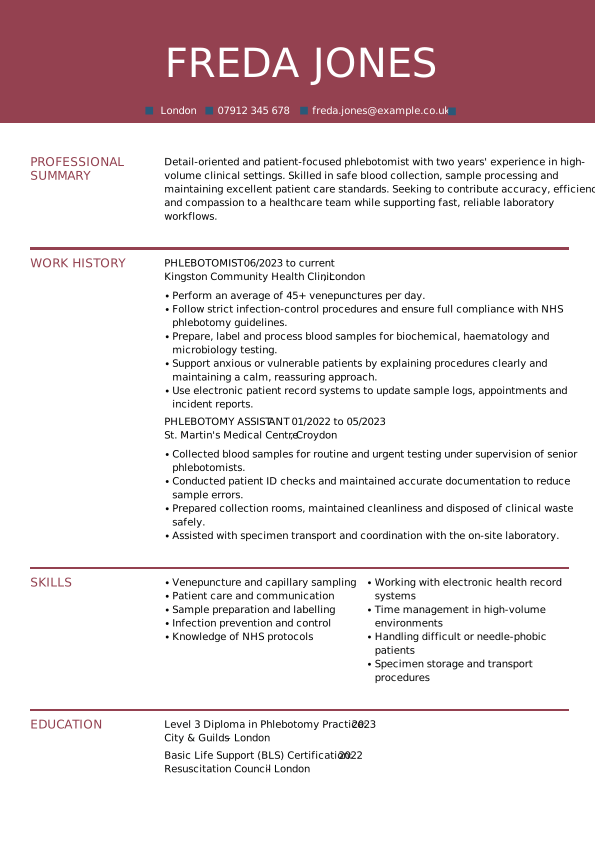
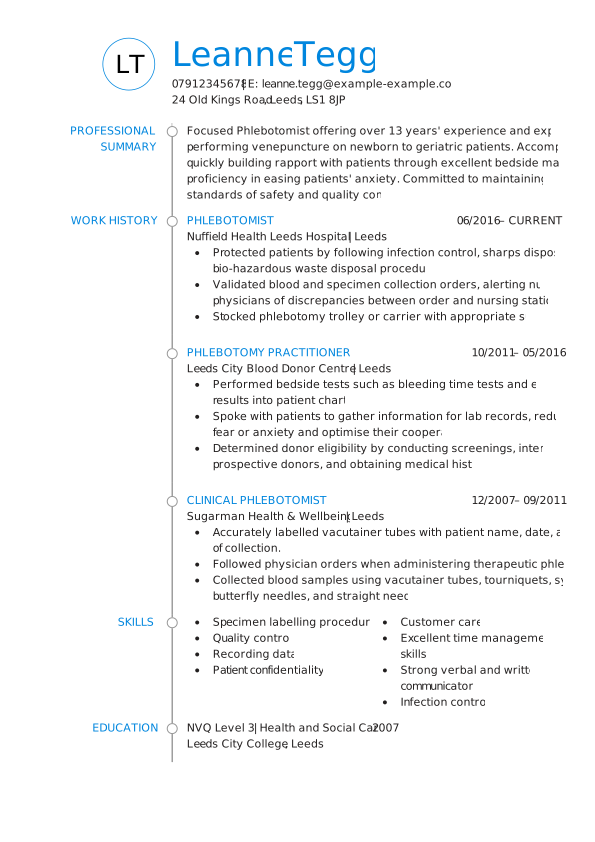
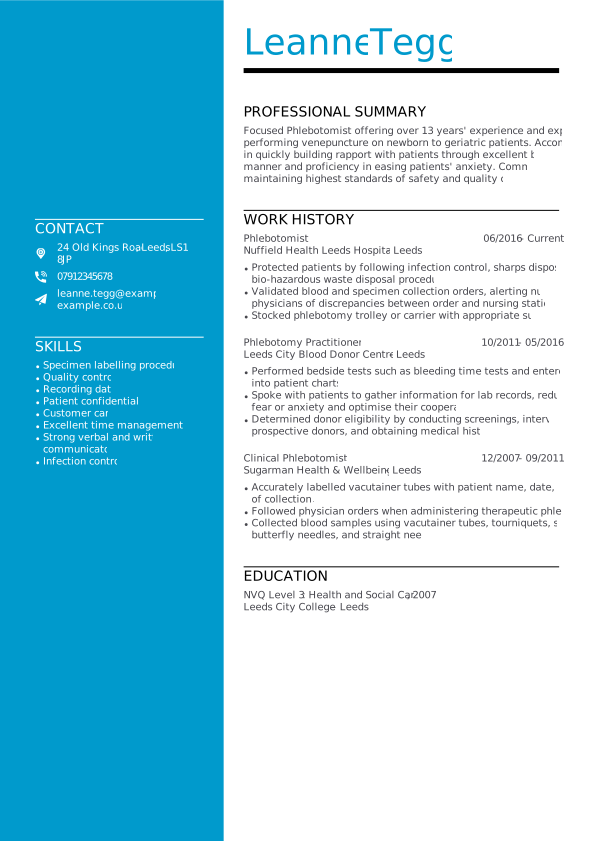
Our phlebotomist CV templates make it easy to present clinical experience, phlebotomy training and key patient-care skills in a clean, professional layout. Each design is fully customisable, allowing you to show your strengths clearly while keeping the structure employer-friendly and straightforward.
Best format for a phlebotomist CV
Choosing the correct resume format helps you present your clinical strengths clearly, whether you’re writing an entry-level phlebotomy resume or building on existing healthcare experience. In phlebotomy, the two most commonly used resume formats are the skills-based and reverse-chronological formats.
Skills-based resume format
A skills-based CV focuses on what you can do rather than where you’ve worked. It groups your abilities under clear headings such as venepuncture, infection control, patient communication or sample handling. This format is ideal for candidates with limited clinical experience, or for those completing phlebotomy training, NVQ-style courses, or healthcare apprenticeships.
Use this format in a phlebotomist resume if you want to:
- Highlight practical skills gained during training rather than job titles
- Emphasise strengths developed during placements, simulations or supervised practice
- Apply for entry-level or trainee phlebotomist roles
- Show confidence in core techniques despite having limited professional experience
Reverse-chronological resume format
The reverse-chronological resume lists your most recent clinical experience or training first. It’s the format most healthcare recruiters expect because it clearly shows progression, hands-on work and growing responsibility in patient-centred environments.
Use this format in a phlebotomist resume if you want to:
- Highlight recent phlebotomy or healthcare experience
- Show development from training into supervised or independent clinical practice
- Present a clear timeline of roles, duties and measurable achievements
This format is particularly effective if you already have relevant experience and want employers to see your progression, accuracy and capability at a glance.
How to write a phlebotomist resume
A strong phlebotomist resume follows the same full-form CV structure as most professional healthcare applications. The key sections to include are:
- Resume header (name and contact details)
- Professional summary (a short profile)
- Work experience
- Skills section
- Education and training
In the following sections, we’ll go through each part of a phlebotomist resume step by step, explaining what to include and how to make every section stand out.
Step 1: Start with a contact section
Begin your phlebotomist resume with clear contact details so hiring managers can reach you easily. Keep this section straightforward and focused on essential information.
What to include:
- Full name: List your first and last name clearly.
- Location: Add your town or city. A full street address isn’t necessary.
- Phone number: Use a current mobile number that you can answer promptly.
- Email address: Choose a professional address such as firstname.lastname@email.com.
Example contact section
Dylan Smith
Birmingham
07432 678 901
dylan.smith@example.com
Step 2: Write your phlebotomist resume objective
Your resume objective (also known as a personal statement) sits at the top of your resume, just under your contact details. It’s a short paragraph that gives employers a quick overview of your strengths, training and clinical approach. For a phlebotomist resume, this should highlight patient care, precision, technical ability and confidence with core procedures.
What to include:
Who you are: “Patient-focused trainee phlebotomist with strong clinical training and excellent attention to detail.”
Key strengths and achievements: “Skilled in venepuncture, infection control, sample preparation and supporting anxious patients during collection.”
Professional qualities: “Known for accuracy, calm communication and maintaining high standards in patient identification and safety.”
Tip: Use keywords from the job description, such as venepuncture, specimen handling, infection control, clinical documentation or patient support, to show immediate relevance.
Example phlebotomist resume summary
“Reliable and detail-oriented phlebotomist with hands-on experience in venepuncture, specimen preparation and infection control. Demonstrates strong patient communication, accuracy in labelling and documentation, and the ability to maintain a calm, professional environment in busy clinical settings.”
Step 3: Write a phlebotomist job description that highlights duties and responsibilities
The work experience section should show how you’ve applied phlebotomy skills in real settings and how confidently you can work with patients. This may come from trainee shifts, supervised practice, NHS placements, laboratory support roles or broader healthcare experience where you handled patient interaction and clinical procedures.
Because many phlebotomists begin their careers through training programmes or short placements, employers focus on how well you follow protocols, communicate with patients and maintain accuracy under supervision.
For each phlebotomist job description, include:
- Job title
- Healthcare organisation or clinic
- Dates of employment
- 4–6 bullet points that show what you did, how you worked and what skills you strengthened
Tip:
Start bullet points with power words like collected, processed, verified, maintained, reassured or followed to highlight responsibility and precision.
Example phlebotomist job description
Trainee Phlebotomist
Riverside Health Clinic, Birmingham
February 2024 – June 2024
- Collected routine blood samples under supervision, ensuring correct patient identification and labelling.
- Prepared equipment, maintained a clean work area and followed infection-control procedures.
- Supported nervous or first-time patients by explaining the procedure and offering reassurance.
- Logged samples accurately in the clinic system and coordinated timely delivery to the laboratory.
- Monitored stock levels and assisted with organising supplies for daily phlebotomy sessions.
Step 4: Add your phlebotomist resume skills
Phlebotomy depends on more than technical ability. Patients feel safer and more at ease when the person taking their blood is calm, confident and reassuring. A strong phlebotomist resume should highlight both your clinical skills and the people skills that support patient care and safe practice.
How to write it:
- Add 6–8 key skills in a clear bullet-point list
- Keep each skill short and specific
- Include a balance of technical skills and soft skills
- Choose skills that match what healthcare employers look for: accuracy, patient support, infection control and strong communication
Examples of phlebotomist resume skills to include
Technical skills
- Venepuncture and capillary blood collection
- Specimen labelling and documentation
- Infection prevention and control
- Understanding of NHS phlebotomy protocols
- Sample preparation, storage and transport
- Use of electronic patient record systems
Soft skills
- Calm, reassuring patient communication
- Supporting anxious or needle-phobic patients
- Accuracy and attention to detail
- Time management in high-volume clinics
- Professionalism and reliability
- Teamwork within clinical or laboratory settings
Step 5: List your education and phlebotomy training
The education and training section shows employers that you’ve completed the qualifications needed for safe and accurate blood collection. This can include formal phlebotomy courses, healthcare certifications, college programmes or any additional training that strengthens your clinical knowledge. Even if you’re applying for an entry-level role, this section helps demonstrate your understanding of essential procedures and best practices.
How to write it:
- List your highest or most relevant qualification first
- Include phlebotomy-specific training, even if it was short or part of a wider healthcare course
- Add the institution name and completion year
- Include certifications that support clinical practice, such as infection control or Basic Life Support
Examples of education and training to include
Level 3 Diploma in Phlebotomy Practice
City & Guilds, 2023
Basic Life Support (BLS) Certification
Resuscitation Council UK, Valid until 2026
Infection Prevention and Control Training
NHS eLearning, 2024
Dos and don’ts for a phlebotomist resume
Phlebotomy is a role where technique and confidence improve over time. When you complete new training, learn additional procedures or gain experience in different healthcare settings, refresh your resume so it reflects your most up-to-date abilities.
Adapt your personal statement to match the type of employer — whether it’s an NHS clinic, private practice or laboratory. If the job description highlights accuracy, patient care or infection-control knowledge, use similar language to show you’re aligned with their expectations.
A one-page resume works well for trainees or those with limited experience, keeping the focus on core skills and training. If you have several clinical roles or broader healthcare experience, a two-page resume is a good length.
Busy graphics, unusual fonts or complicated formatting can distract from your clinical skills and make your resume harder to scan. Healthcare recruiters prefer clean, structured layouts that emphasise clarity and accuracy. A simple, organised design with subtle formatting is more effective and looks more professional.
Frequently asked questions
What are the main phlebotomist duties and responsibilities?
Common phlebotomist responsibilities include venepuncture and capillary collection, sample preparation, following NHS protocols, maintaining a sterile environment, updating patient records, checking equipment and supporting patients throughout the procedure. Highlight the duties most relevant to the job advert.
What is a good phlebotomist job description for a resume?
A clear phlebotomist job description for your resume might include duties such as collecting blood samples, verifying patient identification, labelling specimens, following infection-control procedures, supporting anxious patients and maintaining accurate documentation. Keep these points concise and tailored to the role you’re applying for.
How do I use keywords in a phlebotomist resume?
Use keywords that match the job description, such as venepuncture, specimen handling, infection-control procedures, patient care and clinical documentation. Including these terms naturally throughout your resume helps both ATS systems and hiring managers recognise your suitability.
Do I need certification to become a phlebotomist?
Most employers require formal phlebotomy training, such as an accredited phlebotomy course or Level 3 qualification, along with infection-control knowledge and Basic Life Support training. Listing these clearly on your resume helps demonstrate readiness to work safely.
What is the phlebotomist salary in the UK?
In the UK, most phlebotomists earn between £20,000 and £25,000 a year when starting out, typically aligned with NHS Band 2 or Band 3 roles. With experience, additional training or work in high-volume clinical settings, salaries can rise to around £26,000–£30,000. Senior, supervisory or specialised phlebotomy positions may pay more depending on location and employer.
Related Healthcare CV Examples
- Pharmacy assistant CV example
- Create a spotless application with our dentist CV example
- Nurse practitioner CV examples
- Podiatry Assistant CV Example
- Mental Health Nursing Assistant CV Example
- Physiotherapist Assistant CV Example
- Veterinary nurse CV examples
- How to write a nurse CV (examples & templates)
- Dental Nurse CV Examples

Create a professional phlebotomist resume
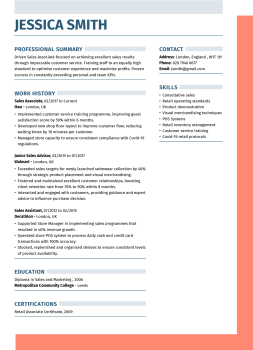
Show your strengths clearly with a resume that’s designed to impress healthcare employers. Use our customisable templates and expert-backed examples to present your experience with accuracy and confidence.
*The names and logos of the companies referred to above are all trademarks of their respective holders. Unless specifically stated otherwise, such references are not intended to imply any affiliation or association with myperfectCV.