Best Finance CV Examples, UK Templates & Writing Guide
Deliver measurable results and advance your career. Build a professional finance CV that highlights your insights and secures more interviews today.

- Our customers have been hired by : * Foot Note
In this guide, you’ll learn how to structure a high-impact finance CV, avoid common mistakes, and highlight achievements that matter in banking, accounting, investment, fintech, and corporate finance. You’ll also find finance CV templates and real CV examples for finance jobs to help you present your skills with clarity and confidence so that you can stand out in a competitive market.
SEARCH ALL CV EXAMPLES
Finance CV examples
With these professionally designed finance CV examples, the financial industry is at your fingertips. Use them to structure your achievements, highlight your technical skills, and present your financial expertise. For the strongest application, pair your finance CV with a tailored finance cover letter that reinforces your key strengths and industry experience.
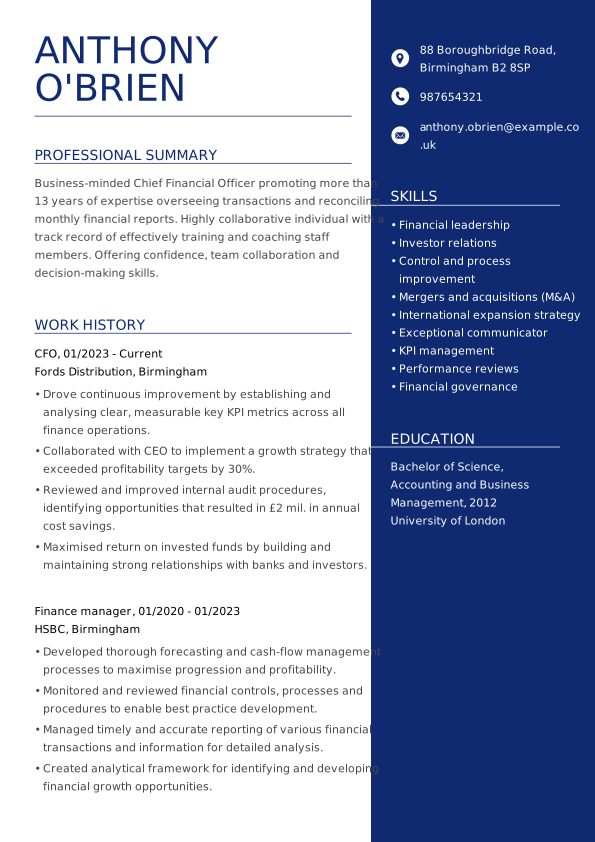
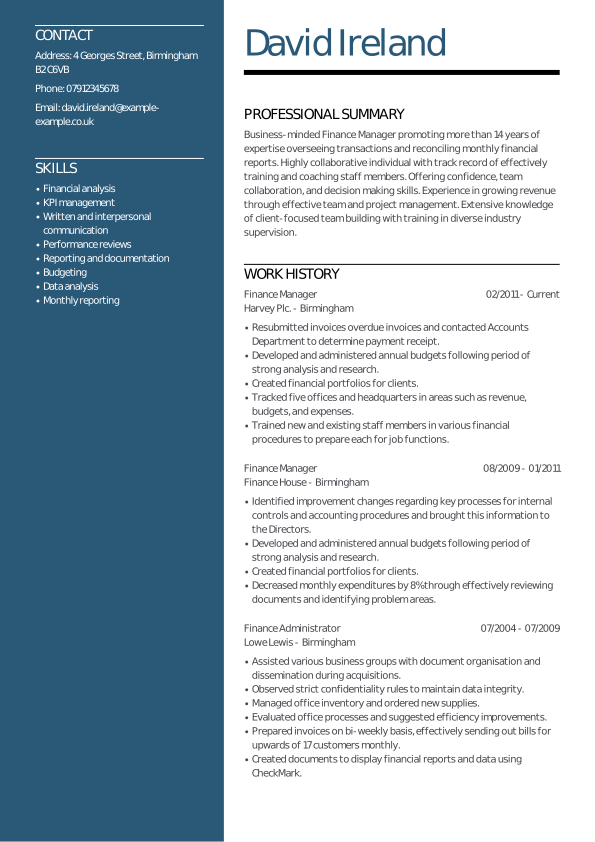
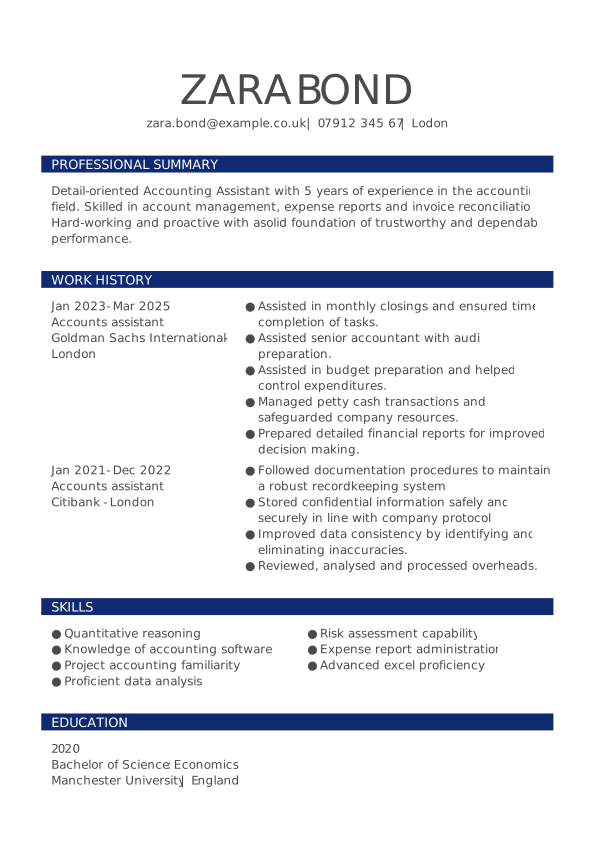
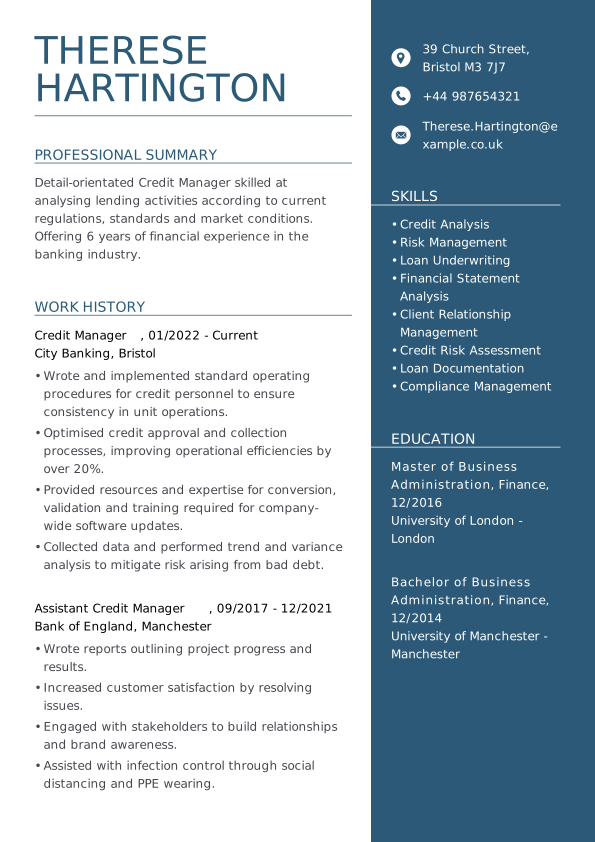
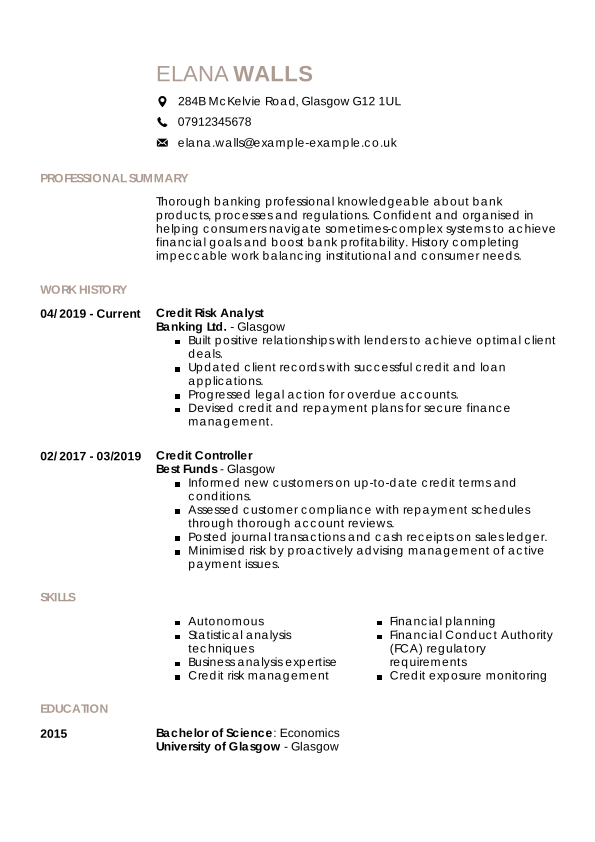
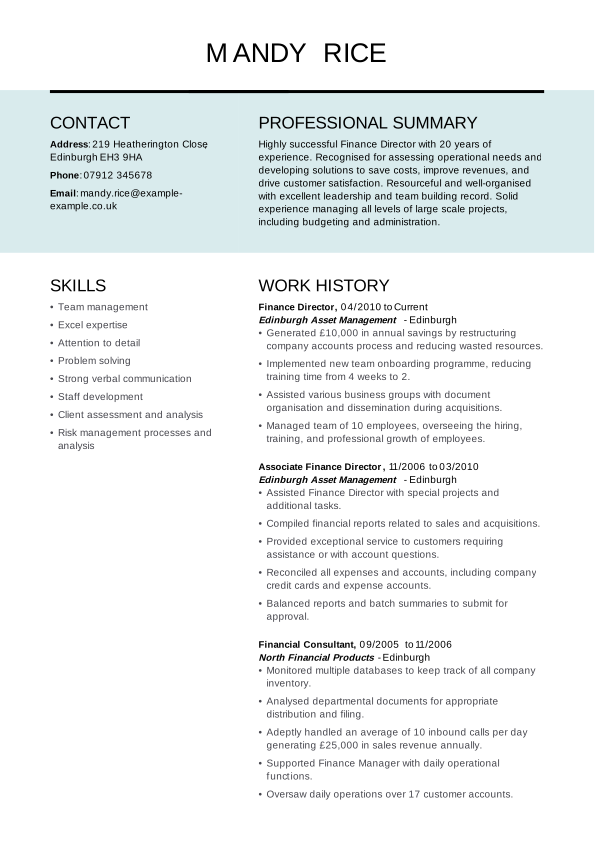
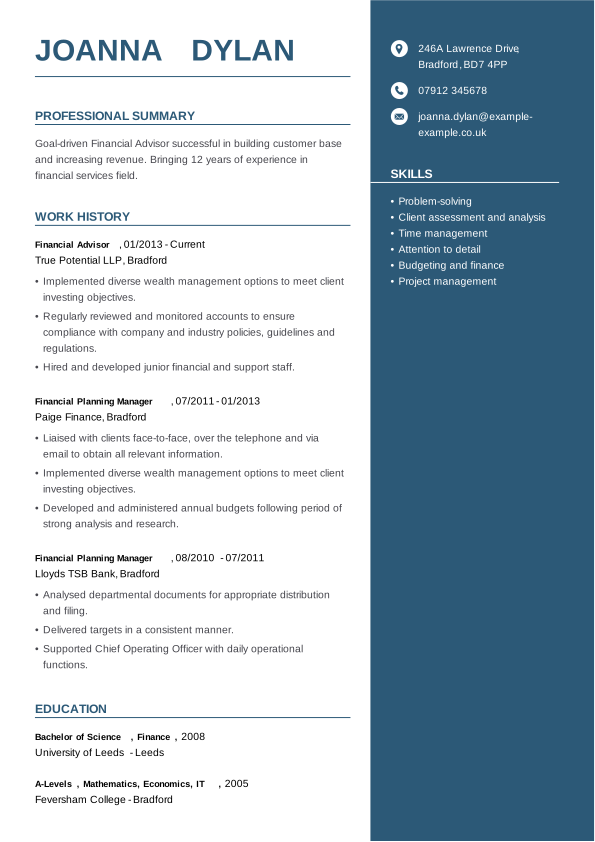
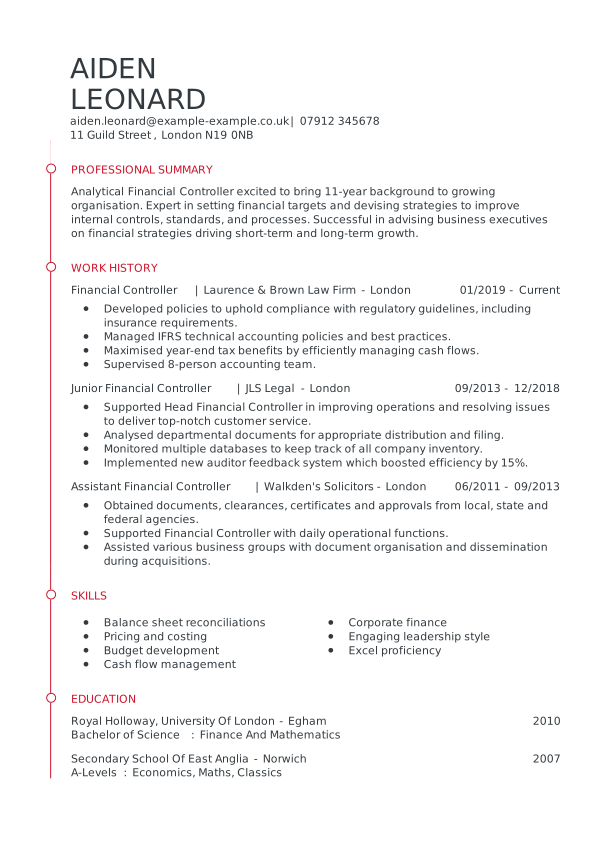
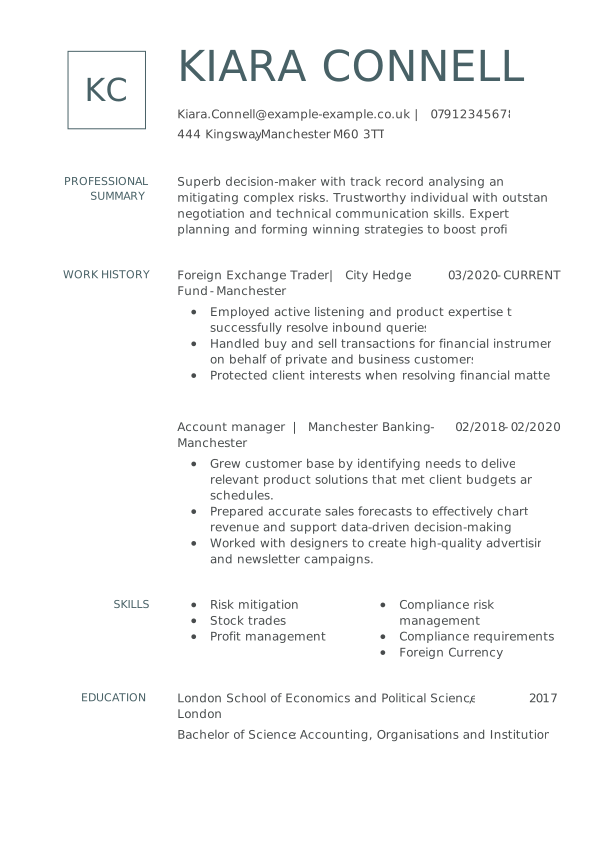
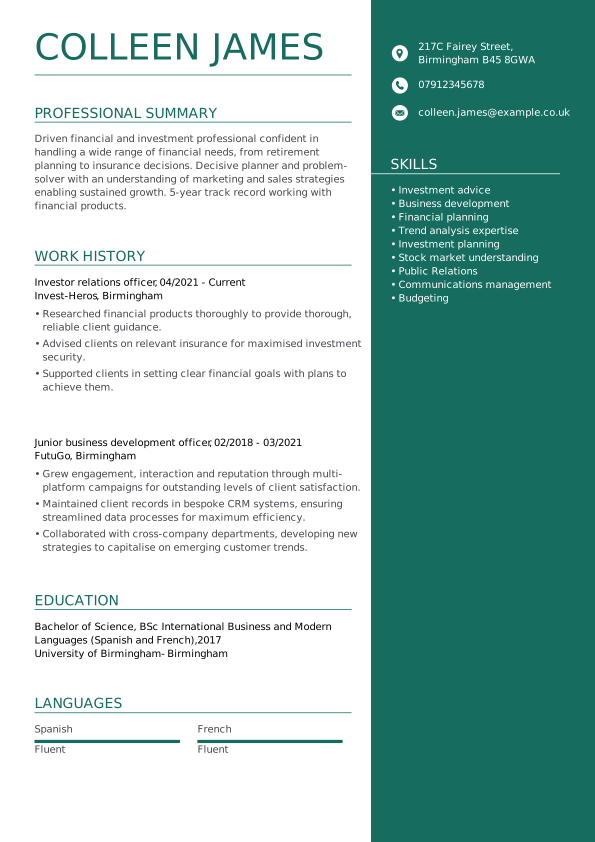
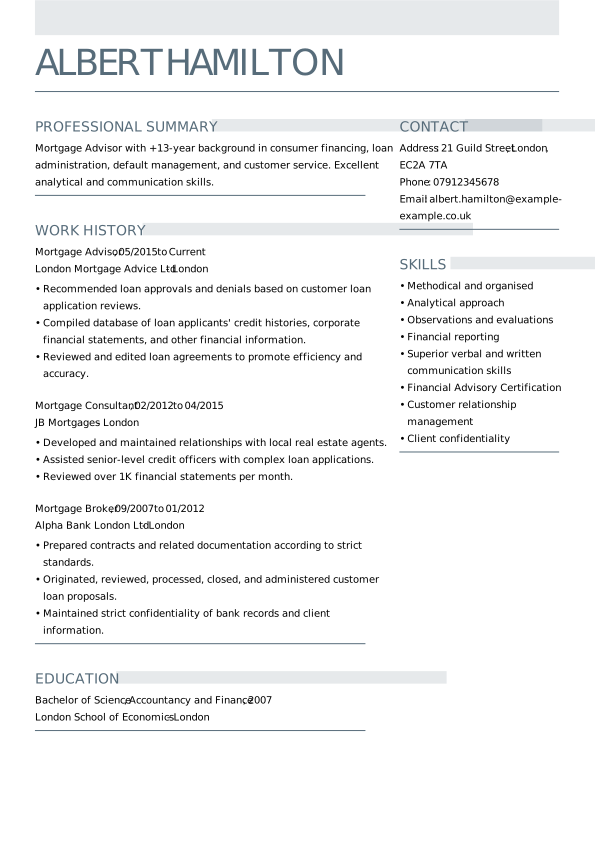
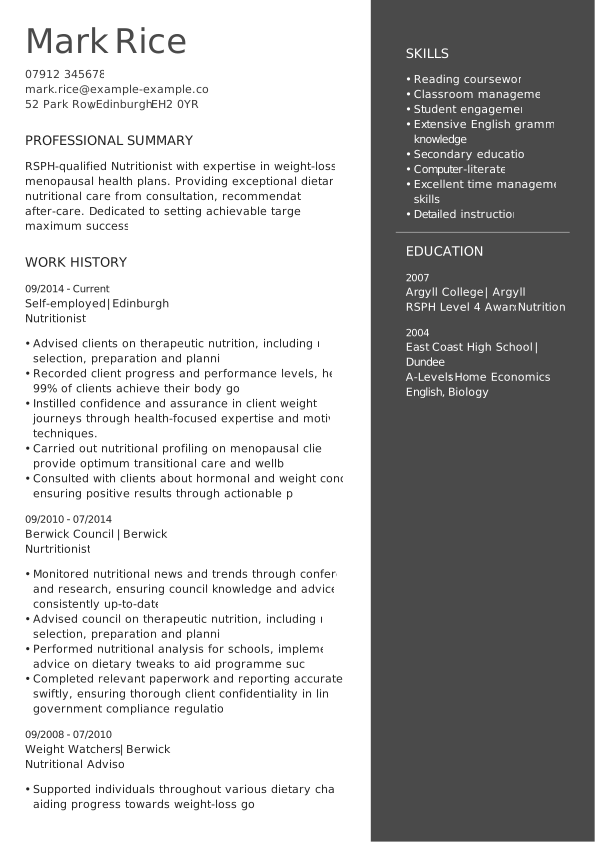
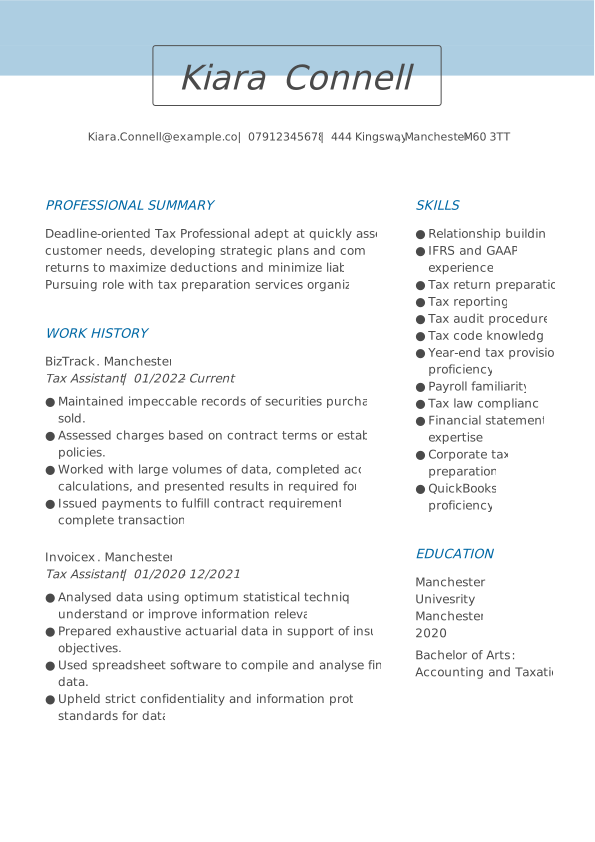
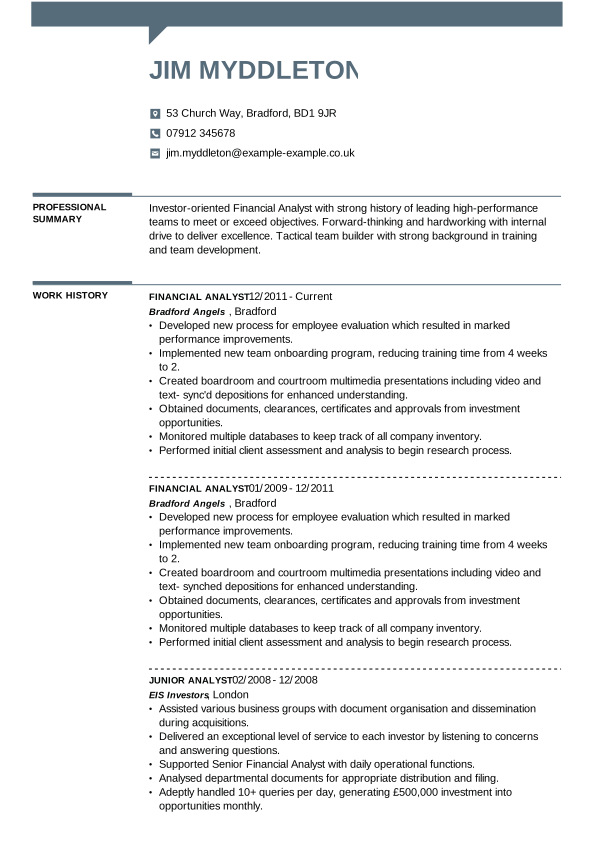
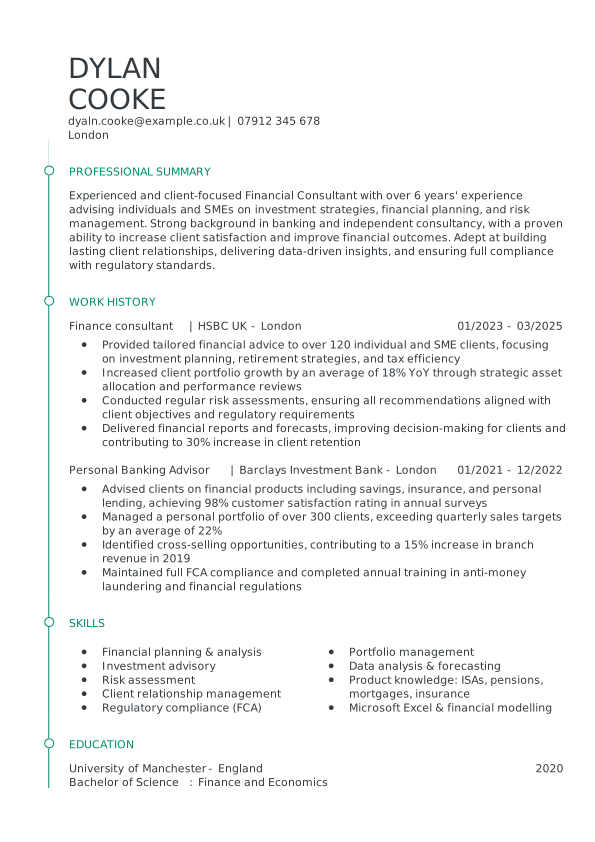
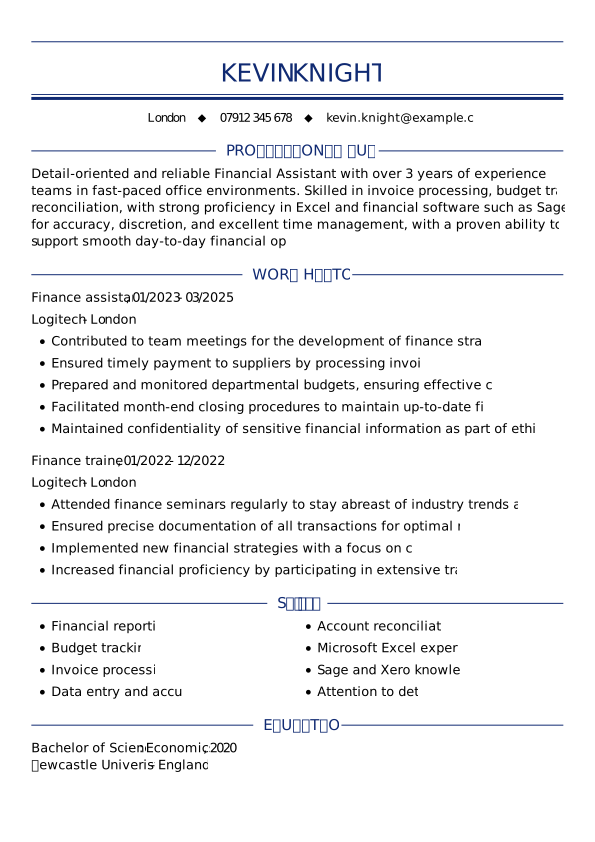
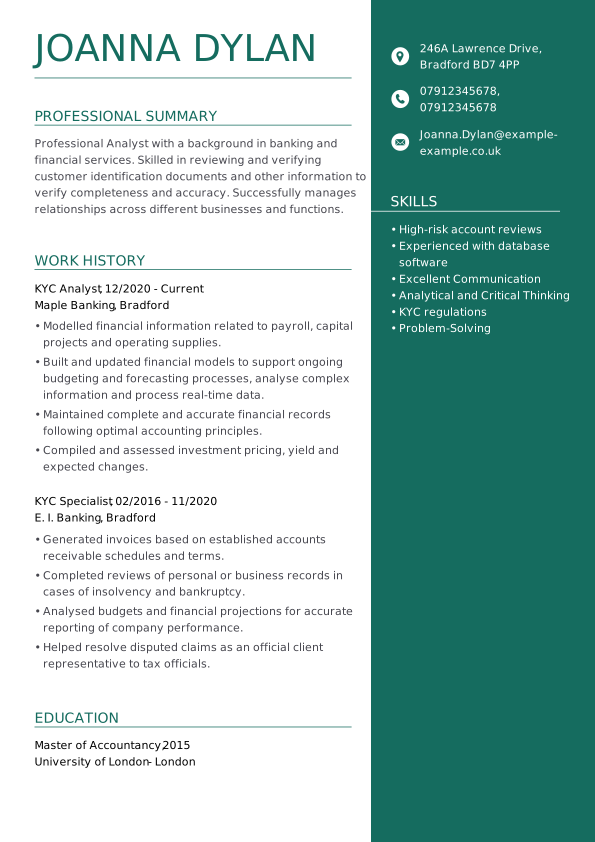
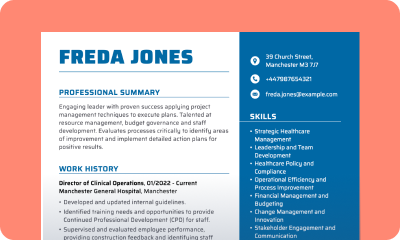
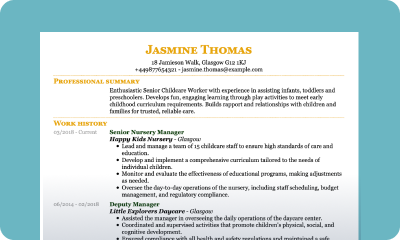
3 finance CV templates
Studying finance CV templates by experience level helps you understand exactly how to present your qualifications at each step of your career journey. These templates show you how to structure financial data, highlight regulatory knowledge, and position yourself for roles across banking, accounting, investment, and corporate finance.
Finance CV for an internship or first job
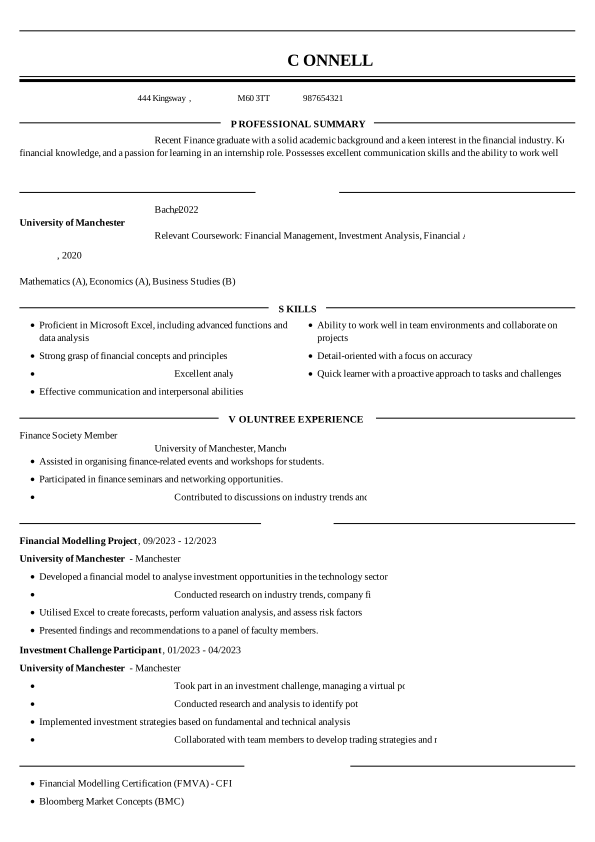
When creating an entry-level finance CV, focus on evidence of analytical thinking and financial aptitude rather than years of experience. Highlight coursework in areas like financial modelling, accounting principles, economics, or statistics. Include internships, university projects, volunteering, part-time roles with cash handling or numerical responsibilities, and memberships in finance societies. Emphasise transferable skills that matter in finance, such as Excel proficiency, attention to detail, and accuracy.
Mid-career finance CV template
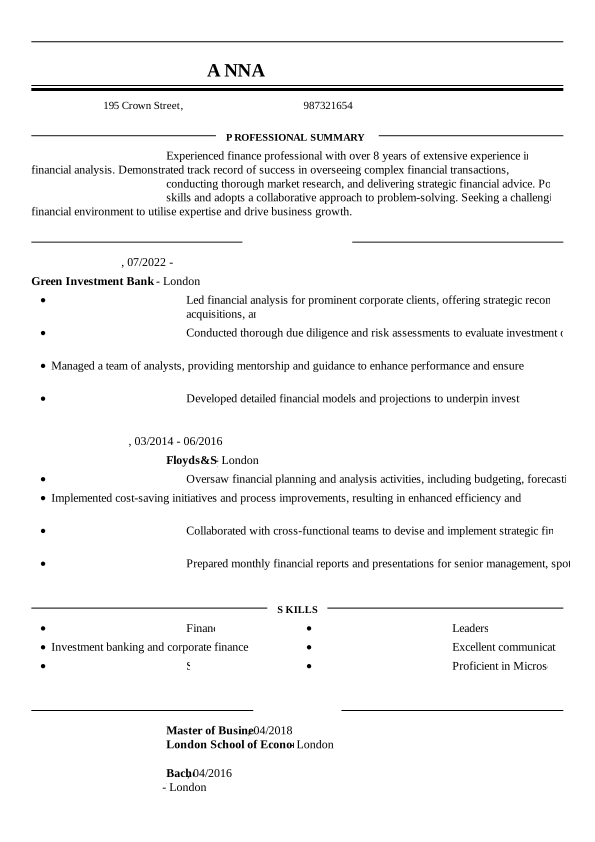
A mid-career finance CV example should demonstrate progression, ownership of financial processes, and measurable impact. Focus on achievements such as reducing reporting errors, improving forecasting accuracy, automating financial tasks, supporting audit compliance, or contributing to revenue growth. Recruiters expect to see business partnering experience, advanced Excel or ERP system skills, and examples of how your work improved financial decision-making within your organisation.
Finance CV template for a finance manager and senior-level specialists
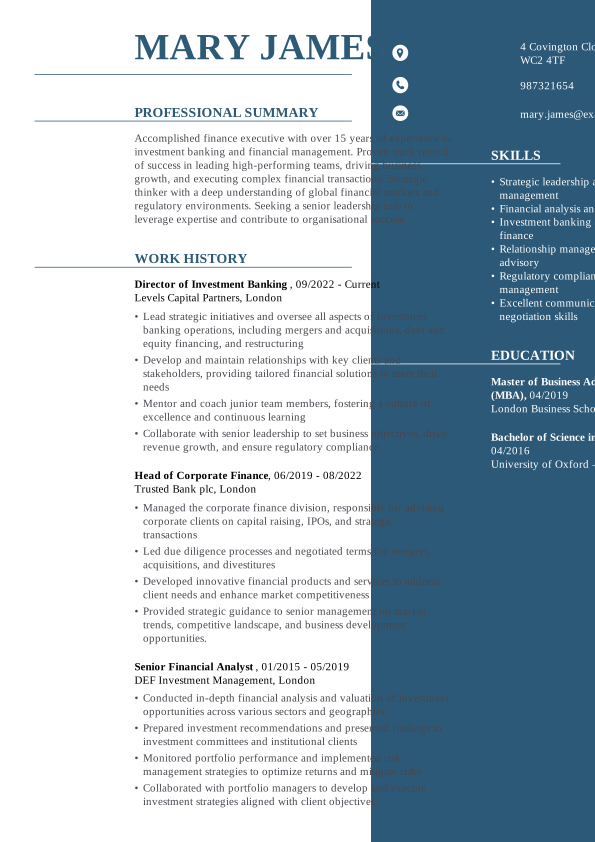
For senior finance roles, your CV must clearly show leadership, strategic influence, and a track record of delivering commercial results. Demonstrate achievements like leading budgeting cycles, managing multi-million-pound portfolios, improving financial controls, driving cost-saving initiatives, or shaping organisational financial strategy. Your senior finance CV should show that you can lead teams, influence stakeholders, and support long-term business performance.
How to write a finance CV
Finance hiring managers want numbers, accuracy, and evidence that you can spot an error faster than someone else can create it. This means your finance CV needs to read like a clean financial report.
In the steps below, you’ll learn how to write a CV for finance that speaks the language of the industry and proves you can deliver value where it counts: in the data, the decisions, and the bottom line.

Add your contact details
Start your finance CV with your contact details. Include your full name, location (just your city is enough), phone number, and a professional email address. Avoid informal or outdated email handles.
For finance roles, adding a LinkedIn profile is highly recommended, as many hiring managers use it to verify career history, certifications (like ACCA or CFA progress), and professional endorsements. If you work in financial analysis, data-heavy roles, or fintech, you can optionally add a link to a portfolio, GitHub, or online project showcase to demonstrate dashboards, models, or analytical work.
Finance CV example – contact details
Daniel Reed
London, UK
07941 728 990
daniel.reed@email.com
linkedin.com/in/danielreedfinance
Write a strong finance personal statement
Your personal statement is the first opportunity to show finance employers that you understand the job description and are eager to contribute to the company.
Keep this section short (3–4 sentences) and focused on your strongest technical abilities, relevant experience, and the value you bring to financial decision-making. Mention key skills such as financial reporting, modelling, forecasting, or regulatory knowledge, and try to include at least one quantified achievement to demonstrate real impact.
Adapt your statement to the role. Whether it’s accounting, banking, investment analysis, FP&A, or corporate finance, targeting your finance CV personal statement always yields better results.
Finance CV example – personal statement
Detail-oriented finance analyst with 3+ years’ experience improving forecasting accuracy and supporting month-end reporting across multi-department teams. Delivered a 12% reduction in reporting errors and automated key reconciliation tasks using advanced Excel and SAP. Skilled in financial modelling, variance analysis, and stakeholder communication, with ACCA progress underway. Ready to support data-driven decisions and improve financial performance at Company XYZ.
Add your work experience
Your work experience is the core of your finance CV, and it must show more than job duties. Finance employers want to see measurable impact, accuracy, and your ability to support financial decision-making.
Use a reverse-chronological order and focus each bullet point on achievements: reduced costs, improved reporting accuracy, automated processes, supported audits, enhanced controls, strengthened forecasting, or delivered insights that influenced business outcomes.
Show numbers on your finance CV wherever possible. Metrics like percentages, savings, error reduction, or portfolio size help recruiters understand the scale and value of your contribution. Keep each bullet point impactful by starting it with a CV power word.
Finance CV example – work experience section
Finance Assistant
Hargrove Retail Group
London, UK
July 2021 – December 2025
- Improved invoice reconciliation efficiency by 25% through redesigning the workflow and introducing automated checks.
- Supported monthly close across three business units, maintaining a 100% on-time submission rate for all reports.
- Analysed weekly sales data and identified pricing discrepancies worth £18,000, preventing potential revenue loss.
- Assisted with internal audit preparation, ensuring full documentation and reducing review queries by 30%.
Present your financial education
Your CV education section is especially important in finance, where employers look for strong academic foundations in accounting, mathematics, economics, or business. List your qualifications in reverse-chronological order, including your degree, university, and graduation date.
If your degree included finance-relevant modules, such as Corporate Finance, Financial Accounting, Econometrics, or Data Analytics, highlight them to show technical depth. If you’re an early-career candidate, you can also include academic achievements, high module grades, scholarships, or notable projects on your CV for finance jobs.
Finance CV example – education section
BSc Accounting & Finance (First-Class Honours)
University of Manchester
September 2020 – June 2023
- Dissertation: “The impact of automation on financial reporting accuracy” (Awarded 78%)
- Key modules: Corporate Finance, Audit & Assurance, Financial Markets, Financial Modelling, Econometrics
- Achievement: Top 10% of cohort in Financial Accounting and Investment Analysis
Highlight your finance skills
A competitive finance CV needs a strong skills section that blends technical ability with essential people skills. Finance recruiters look for candidates who can analyse data, manage risk, ensure accuracy, and communicate clearly with both financial and non-financial stakeholders.
Include hard skills such as financial modelling, forecasting, auditing, ERP systems, and advanced Excel. For many roles, experience with tools such as SAP, Xero, Power BI, or SQL is a significant advantage. Then balance these with the soft skills finance teams rely on: attention to detail, analytical thinking, time management, and commercial awareness.
Tailor your skills to the specific finance role you’re applying for. A financial analyst, for example, may prioritise modelling and variance analysis, while an accountant may emphasise compliance, reconciliations, and VAT knowledge.
Hard skills for a finance CV:
- Financial modelling
- Budgeting & forecasting
- Advanced Excel (PivotTables, INDEX/MATCH, Macros)
- SAP & Xero
- Variance analysis
- Power BI reporting
- Financial reporting
- Reconciliations (bank, balance sheet, accounts)
- SQL for data analysis
- Audit support & compliance
- Cost analysis
- Management accounting
Soft skills for a finance CV:
- Analytical thinking
- Attention to detail
- Stakeholder communication
- Problem-solving
- Deadline management
- Commercial awareness
- Accuracy under pressure
- Team collaboration
- Critical thinking
- Communication skills
- Organisation
- Process improvement mindset
- Leadership skills
Improve your finance CV with bonus sections
Bonus sections help you stand out in a competitive finance job market. They’re especially valuable if you’re early in your career or applying for roles that require specialised knowledge. Choose 1–3 sections that genuinely add value and support your target role.
The most useful bonus sections for a finance CV include:
- Certifications: Professional certifications show commitment and credibility. Even listing “in progress” certifications (ACCA, CIMA, CFA, AAT) can instantly strengthen your profile and reassure employers about your technical knowledge.
- Courses & training: Short courses in data analysis, financial modelling, accounting software, or programming help demonstrate continuous learning, which is a valuable trait for many finance companies.
- Personal projects: Projects allow you to demonstrate practical finance experience, especially if you’re early in your career or transitioning from another field.
- Awards & accomplishments: Use this section for quantifiable wins that don’t fit neatly into your work experience or education.
- Volunteering experience: Finance-related volunteering, like handling accounts for student societies, adds credibility and demonstrates real responsibility.
Learn how to create an ATS-friendly CV for finance jobs
Choosing the right finance CV format ensures your experience is presented clearly and professionally. The two main CV formats are:
- Chronological CV: This is the preferred format for finance roles, from junior analysts to senior managers. It highlights your most recent experience first, making it easy for employers to see your progression, responsibilities, and achievements.
- Functional CV: This format focuses on skills rather than employment history. It’s useful if you’re new to finance, switching careers, or returning to work after a break.
And when it comes to formatting rules, follow this blueprint for a flawless finance CV:
- Use professional CV fonts: Stick to clean, business-appropriate fonts such as Arial, Calibri, Helvetica, Cambria, or Lato. Avoid decorative or stylised fonts, as they look unprofessional in finance roles.
- Follow clear font-size guidelines: Use 16–18 pt for your name, 12–14 pt for headings, and 10–11 pt for body text. This keeps your finance CV easy to read and well-structured.
- Keep margins and spacing consistent: Use 1-inch (2.5 cm) margins, or slightly smaller (down to 1.5 cm) if necessary. Maintain consistent spacing and rely on bullet points rather than long paragraphs to present achievements clearly.
- Stick to the correct CV length: Aim for a one-page CV if you’re a graduate or early-career professional, and two pages if you’re mid-career or senior. Finance CVs rarely need more than two pages.
- Save your CV in the right file format: Submit your finance CV as a PDF to preserve formatting and ensure ATS compatibility. Only use a Word document (.docx) if an employer specifically requests it.
Key takeaways
- Quantify everything: Finance runs on data and numbers. Use metrics to show your impact: improved accuracy, cost savings, revenue growth, faster reporting, or reduced errors.
- Lead with your most relevant experience: Use a reverse-chronological format to highlight recent financial responsibilities and achievements.
- Show technical strength: Highlight finance-specific tools and systems such as Excel (advanced functions), SAP, Power BI, SQL, Xero, and financial modelling skills.
- Keep your CV clean and professional: Use consistent formatting, clear fonts, and structured bullet points. A finance CV should read like a well-organised report.
- Tailor your CV to each role: Mirror key skills and requirements from the job description to make your CV more relevant and more ATS-friendly.
It only takes
MINUTES for an average MyPerfectCV user to create a CV
Create your finance CV in 3 simple steps
- Fill in a quick and easy form
- Tailor the CV to your liking
- Download and apply